Use airy supports
Train young stems onto a rigid, open framework such as a wire hoop or small trellis so that heavy tubular flowers and fruits are well supported and less likely to snap or tear in wind or during handling.

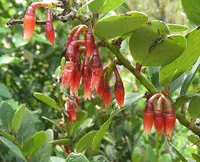
Macleania rupestris is an epiphytic shrub in the heath family, often grown for its tubular, brightly colored flowers and attractive, leathery foliage. It tends to form a branching, somewhat woody structure that looks delicate but is quite resilient when kept in stable conditions.
This species is native to cloud forests of the Andes, where it grows on trees or rocky slopes in cool, humid, bright environments. It can be moderately challenging for beginners because it dislikes extremes in temperature, drying out, or waterlogged roots.
Those who want to learn how to care for Macleania rupestris should focus on bright filtered light, evenly moist but airy, acidic substrate, and consistently high humidity.

Care Difficulty
Hard Care

Light Preference
Partial Shade

Water Requirements
Keep Soil Moist

Temperature Preference
Tropical / Frost Sensitive

Hardiness Zone
10–11

Soil Texture
Loamy, Peaty, Organic-rich

Soil pH
Strongly acidic (4.5–5.5), Acidic (5.5–6.5)

Soil Drainage
Moist but well-drained

Fertilization
Light (every 4–6 weeks)
Scan your plant to receive care tips personalized for your specific plant
Available on iOS and Android
This shrub prefers bright, gentle light that mimics high-elevation forest edges.
Moist but airy, well-draining soil is essential to support this epiphytic shrub’s fine roots.
Stable, cool- to mild-temperate conditions suit this cloud-forest species best.
This shrub prefers consistently moist air and reacts poorly to very dry conditions.
This species needs an acidic, airy, and sharply drained mix similar to that used for epiphytic ericaceous shrubs.
This species adapts well to container culture when provided with stable support and careful moisture management.
This epiphytic shrub benefits from light, thoughtful feeding rather than heavy fertilization.
Pruning is mainly used to maintain shape and remove weak growth on this shrub.
This species prefers stable conditions, so repot or transplant only when clearly needed.
Propagation is possible but somewhat slow, so expect modest success rates.
This plant dislikes hard freezes and benefits from modest winter protection in cold climates.

Plant Health Check
Not sure what's wrong with your plant? Check your plant's health inside the app.
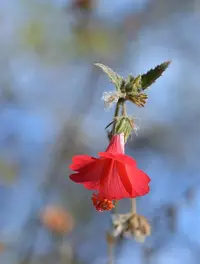
In its native Andean habitat, this species is pollinated mainly by hummingbirds attracted to its tubular, nectar-rich flowers, which are shaped and positioned for access by long beaks and hovering flight.
The species often grows on rocky outcrops and cliffs at higher elevations in Colombia, adapting to bright light, constant air movement, and well-drained, mossy or organic crevices.
Mature leaves can develop a characteristic blue-green to gray-green cast, a waxy surface bloom that helps reduce water loss and glare in exposed, high-elevation conditions.

This species is part of a group of Andean Ericaceae that often grow as epiphytes or lithophytes, forming miniature, shrub-like structures perched on trees or rocks rather than rooting in deep soil, which contributes to its rarity in conventional horticulture and adds complexity to Macleania rupestris care instructions.
This species performs best outdoors in mild, frost-free climates where humidity is moderate and air circulation is good. Indoors it can survive in bright, cool rooms, but flowering and overall vigor are usually reduced compared to outdoor conditions.
Keep your plants happy and healthy with plant identification, disease detection, and easy care guidance.