Wire training system
Install a 2–3 wire trellis before planting so vines can be tied loosely with soft ties as they grow, which improves airflow, sun exposure, and makes harvest and pruning safer and easier.

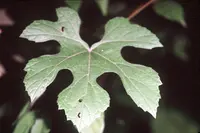
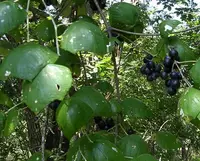
Summer grape, Vitis aestivalis, is a hardy North American grapevine grown for its juice, wine potential, and wildlife value. It is a woody climber that uses tendrils to scramble over fences, trees, or arbors, forming dense leafy screens.
In the wild, it occurs mainly in eastern and central United States, often along forest edges, rocky slopes, and open woodlands. The plant has medium to small clustered grapes, usually dark blue to black, with foliage that turns attractive colors in autumn.
Its deep root system and strong vigor give it good drought and cold tolerance, which can make it easier to manage than some European grape varieties. To care for summer grape successfully, provide full sun, free-draining soil, and support for its climbing growth.

Care Difficulty
Moderate Care

Light Preference
Full Sun

Water Requirements
Moderate Water

Temperature Preference
Cold Hardy

Hardiness Zone
4–9

Soil Texture
Sandy, Loamy, Clay

Soil pH
Acidic (5.5–6.5), Slightly acidic (6.5–7.0)

Soil Drainage
Well-drained

Fertilization
Minimal (feed rarely)
Scan your plant to receive care tips personalized for your specific plant
Available on iOS and Android
This species needs abundant direct light to fruit and ripen wood well.
Vitis aestivalis prefers deep, infrequent watering once established.
This vine is adapted to temperate climates with cold winters and warm summers.
Humidity is not a major factor for Vitis aestivalis, which adapts well to typical outdoor air in most regions.
Vitis aestivalis prefers well-structured, moderately fertile mineral soil that drains freely yet holds some moisture.
This species can be grown in large containers outdoors if the pot is managed for root space and stability.
This native grape typically needs modest feeding, especially in poor soils or containers.
Thoughtful pruning keeps Vitis aestivalis productive, healthy, and easier to manage.
This species is usually grown in the ground, so focus on correct transplanting rather than frequent repotting.
New plants are most reliably produced from hardwood or semi-ripe cuttings taken from healthy vines.
This grape is generally cold hardy in much of its native range and needs minimal winter attention in the ground.

Plant Health Check
Not sure what's wrong with your plant? Check your plant's health inside the app.
The berries of Vitis aestivalis, especially the well-known 'Norton' type, are naturally high in acidity and phenolic compounds, which makes them suitable for deeply colored, tannic red wines with good aging potential in suitable conditions.
This species shows strong adaptation to hot summers and periodic drought in its native eastern North American range, with deep, extensive roots and relatively small, thick leaves that help limit water loss.
Vitis aestivalis has notable resistance to several fungal diseases that severely affect Vitis vinifera, so its genetics have been used in breeding programs to improve disease tolerance in grape cultivars grown in humid climates.

Vitis aestivalis is one of the few North American grape species that has been used to produce commercially recognized varietal wines, most famously under the name Norton, which has a documented history in American viticulture dating back to the 19th century.
This vigorous vine usually extends 1–2 m per year once established, and can lengthen more in rich soil with good moisture. Pruning, sun exposure, and support structures strongly influence overall growth rate and density.
Keep your plants happy and healthy with plant identification, disease detection, and easy care guidance.