redwood-sorrel Care (Oxalis oregana)

Also known as: Oregon woodsorrel, redwood woodsorrel, Oregon Oxalis
redwood-sorrel

About redwood-sorrel

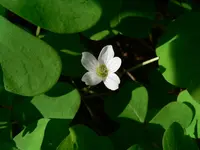
Redwood-sorrel (Oxalis oregana) is a low, carpeting woodland perennial that forms dense mats of clover-like leaves. It is often grown as a groundcover for shady spaces. The plant produces soft green leaflets that fold or droop in strong sun, and delicate white to pale pink flowers with fine streaks. It spreads slowly by rhizomes, creating a cool, green understory layer. In nature, Oxalis oregana occurs on the forest floor of coastal redwood and mixed evergreen forests of the Pacific Northwest and northern California. It prefers shade, consistently moist but well-drained soil, and mild temperatures, which makes care for redwood-sorrel easier in cool, humid climates or protected garden spots.

Main Plant Requirements

Care Difficulty

Moderate Care

Light Preference

Partial Shade

Water Requirements

Keep Soil Moist

Temperature Preference

Cool Climate

Hardiness Zone

7–9

Soil Texture

Loamy, Silty, Organic-rich

Soil pH

Strongly acidic (4.5–5.5), Acidic (5.5–6.5)

Soil Drainage

Moist but well-drained

Fertilization

Minimal (feed rarely)

Get Personalized Care Plan

Scan your plant to receive care tips personalized for your specific plant

Available on iOS and Android

How to Care for the redwood-sorrel

This woodland species prefers cool, filtered light that mimics a forest floor.

  • Provide bright shade or dappled light, such as under trees or north/east-facing exposures, with 1–3 hours of gentle morning sun and no harsh afternoon sun.
  • In hotter areas, use overhead shade cloth or shrub cover to prevent leaf scorch, which appears as brown, crispy patches on redwood-sorrel foliage.
  • In spring and fall it tolerates slightly more light, but in summer shift plants to deeper shade; pale, stretched leaves indicate too little light, while reddened, scorched tips signal excess sun.

This plant favors consistently moist, cool soil without staying waterlogged.

  • Outdoors in humus-rich ground, aim for soil that stays evenly damp; allow only the top 1–2 cm to begin drying before the next thorough watering during active growth.
  • Reduce watering in late fall and winter when Oxalis oregana growth slows, but do not let the root zone dry out completely, especially under trees that compete for moisture.
  • Watch for signals: wilting, folding leaves, and dry soil suggest underwatering, while yellowing, limp foliage and sour-smelling, soggy soil point to overwatering or poor drainage.

This species grows best in mild, forest-like temperatures with limited extremes.

  • Ideal growing temperatures are 55–70°F (13–21°C), which support steady leaf and rhizome growth in shaded garden settings.
  • Plants tolerate short drops to about 25°F (−4°C); in colder climates, top growth may die back after frost, but underground parts often resprout in spring if soil is not deeply frozen.
  • Heat above 80°F (27°C), especially with direct sun, can stress foliage, so provide extra shade and mulch to keep the root zone cool and reduce temperature swings between day and night.

This woodland species benefits from moderate, steady humidity but usually adapts to typical indoor levels.

  • Aim for 40–60% humidity to mimic its native forest floor environment and reduce edge browning on leaflets.
  • It tolerates short periods of drier air, but persistent <30% humidity can cause curling and crisping of foliage tips.
  • If air is dry, group redwood-sorrel near other plants or place the pot on a pebble tray with water, keeping the base above water.

Oxalis oregana prefers loose, humus-rich, evenly moist soil that drains freely.

  • Use a mix of 50–60% peat-free compost, 20–30% fine bark, and 10–20% perlite to copy a forest-floor texture.
  • Ensure the soil is consistently moist yet never waterlogged; water should drain through quickly without pooling at the surface.
  • Target a slightly acidic pH of 5.5–6.5, which supports nutrient uptake for healthy leaf growth and rhizome development.
  • Avoid compacted clay, heavy peat without structure, or mixes that stay soggy, as these reduce aeration and promote root rot.

This species can grow well in containers when moisture and root spread are carefully managed.

  • Choose a wide, shallow pot to match its creeping rhizomes, allowing lateral spread rather than deep rooting.
  • Use a container material that slows drying slightly, such as glazed ceramic or plastic, to keep the root zone evenly moist.
  • Place the pot on a stable, level surface, as its spreading foliage can make lightweight containers tip when soil is moist.

Oxalis oregana needs only light feeding when grown in garden or container conditions.

  • Use a balanced, dilute liquid fertilizer (around 10-10-10) at 1/4–1/2 strength during active spring–summer growth.
  • Apply every 4–6 weeks if soil is low in organic matter; rich woodland beds often need no extra feeding.
  • Avoid fertilizing during dormancy or in winter, as growth slows and salts can accumulate.
  • For caring for redwood-sorrel long term, prioritize compost-rich soil over frequent synthetic fertilizer use.

Oxalis oregana benefits from light, maintenance-style pruning rather than structural shaping.

  • Trim off dead, yellowing, or damaged leaves at the base throughout the growing season using clean scissors or pruners.
  • In late winter or early spring, remove any mushy or diseased foliage to reduce fungal problems.
  • Thin crowded patches slightly if needed to improve air flow and keep the groundcover even.
  • Snip spent flower stalks to maintain a tidy appearance and encourage fresh foliage growth.

This woodland groundcover is more often transplanted in beds than repotted in containers.

  • Transplant clumps in early spring or early fall when weather is cool and soil is moist.
  • Look for signs such as crowded patches, bare centers, or container roots circling drainage holes to decide on moving plants.
  • Divide dense clumps into smaller sections, keeping healthy roots and some soil attached to reduce shock.
  • Water thoroughly after transplanting and shade the area for a few days to help roots re-establish.

Oxalis oregana is commonly propagated by division and, less often, by seed.

  • Divide established clumps in early spring or early fall, when temperatures are mild and soil is workable.
  • Lift a section, tease apart natural clumps or rhizomes, and replant at the same depth in moist, humus-rich soil.
  • Space divisions 15–30 cm apart and water well to keep soil evenly moist until new growth appears.
  • Sow fresh seed on the soil surface in cool, shaded conditions, keeping it lightly moist for germination.

In most mild, woodland-type climates, Oxalis oregana is cold hardy and needs minimal winter care.

  • In regions with freezing winters, add a 5–7 cm mulch layer over the root zone after the first hard frost.
  • Allow top growth to die back naturally; the underground parts usually survive and resprout in spring.
  • For container plants in colder zones, move pots into a sheltered, frost-free but cool location.

Care Tips

Use leaf mulch

Apply a thin layer of fine leaf mold or shredded hardwood leaves around the clump to mimic forest duff, keeping it a few cm away from crowns to reduce rot while conserving moisture and supporting shallow roots.

Control stolon spread

Check the edges of beds 2–3 times per year and lift or cut back creeping stems with a hand fork where they cross boundaries, replanting usable pieces in desired areas to prevent unwanted spreading into paths or neighboring plantings.

Stage planting height

When planting under shrubs or trees, set plants slightly higher than the surrounding soil and slope soil gently away from the crown so surface water drains off and does not sit around the central growing point.

Summer dormancy management

If foliage thins or collapses in hot, dry conditions, allow partial dormancy by reducing but not stopping watering, then remove dead leaves and resume normal moisture as new shoots emerge when temperatures moderate.

Check for rust early

Inspect undersides of leaves every few weeks for small orange or brown pustules, promptly removing and discarding affected fronds so fungal spores do not spread through the patch when growing redwood-sorrel in shaded, humid beds.

Common Pests and Diseases

Slugs and snails

This pest is very attracted to the tender, shady foliage and can quickly skeletonize leaves, especially in moist woodland conditions.

Solution

Hand-pick at dusk or early morning, use iron phosphate slug bait around but not on the crowns, and reduce hiding spots such as boards or dense debris. In beds, copper tape barriers and rough mulches like coarse grit can significantly reduce damage when combined with regular monitoring.

Black vine weevil

These insects feed on leaf edges, leaving notched margins, while their larvae live in the soil and chew on roots and crowns, causing wilting and decline.

Solution

Inspect foliage at night and physically remove adults, then target larvae by applying beneficial nematodes (e.g., Heterorhabditis or Steinernema species) to moist soil in spring or late summer. Avoid using containers or beds with compacted, poorly drained soil that favors larval development and monitor plants for new notching each season.

Leaf spot

This disease causes small brown to purplish spots on leaflets that may enlarge and coalesce under cool, damp conditions, reducing the plant’s vigor and appearance.

Solution

Remove and discard infected leaves promptly and avoid overhead watering so foliage dries quickly. Improve air movement, thin crowded clumps if necessary, and if the problem recurs in the same site, rotate plantings or shift the main patch to a better-ventilated location.

Powdery mildew

This disease produces a white, powdery film on the upper leaf surface that can lead to yellowing and early leaf drop in shaded, stagnant air conditions.

Solution

Increase air circulation by thinning dense patches and removing nearby overcrowded vegetation, and water at soil level rather than over the leaves. Remove heavily affected foliage and, if conditions favor repeat outbreaks, consider an early-season preventative spray of a mild sulfur or potassium bicarbonate product labeled for ornamentals.

Aphids

These insects cluster on tender stems and undersides of leaves, sucking sap and sometimes causing curling or distortion of new growth and sticky honeydew on foliage.

Solution

Rinse colonies off with a firm stream of water, repeating every few days as needed, and encourage natural predators such as lady beetles by avoiding broad-spectrum insecticides. On persistent colonies, spot-treat undersides of leaves with insecticidal soap or a light horticultural oil, applied according to label directions to avoid leaf burn.

Interesting Facts

Coastal redwood understory

This species is a characteristic groundcover of old-growth coastal redwood forests in northern California and southern Oregon, thriving in very low light under dense tree canopies where many other herbs cannot persist.

Clonal forest carpets

Individual plants spread by slender rhizomes and can form large clonal patches, so what looks like a carpet of many plants often consists of only a few genetically identical individuals.

Leaf folding response

The trifoliate leaves close or droop in response to strong sun, mechanical disturbance, or at night, a movement called nyctinasty that helps reduce water loss and light stress in its naturally shaded habitat.

Botan icon

Did you know?

Genetic studies have shown that some coastal populations are highly localized and structured, reflecting long-term persistence in cool, moist refuges that likely date back to glacial periods, making the species an indicator of ancient, stable forest habitats.

FAQs about redwood-sorrel

This species spreads by creeping rhizomes and can form dense mats over time. In cool, moist shade it may slowly colonize beds, so use edging, root barriers, or periodic division where tight control is needed.

Grow Healthy Plants with Botan Care

Keep your plants happy and healthy with plant identification, disease detection, and easy care guidance.

Botan plant care app — identify plants on mobile

Explore More Plants