Anchor The Mats
Gently pin the plant mats to the substrate with small, inert plant weights or fine stainless-steel wire so they are not dislodged by water movement or grazing fish while roots establish.

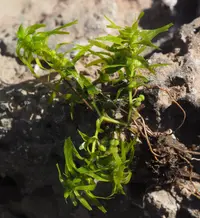
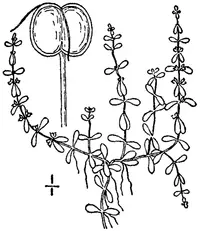
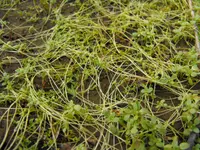
Short-leaved water-starwort, Callitriche truncata, is a small, aquatic or semi-aquatic plant often used in ponds, water gardens, and aquariums. It forms low, mat-like growth with tiny, closely packed leaves that can create a fine, bright green carpet under water or along muddy edges.
In nature, it occurs in shallow, still or slow-moving waters, ditches, and wetlands in parts of Europe and neighboring regions. Its compact size and relatively fast growth make it useful for softening hard edges and providing cover for small aquatic animals.
Callitriche truncata prefers clean, cool to mild water, good light, and stable moisture, which guides how to care for Short-leaved Water-starwort in cultivation.

Care Difficulty
Moderate Care

Light Preference
Partial Sun

Water Requirements
Aquatic

Temperature Preference
Cool Climate

Hardiness Zone
5–9

Soil Texture
Silty, Organic-rich

Soil pH
Slightly acidic (6.5–7.0), Neutral (7.0)

Soil Drainage
Waterlogged tolerant

Fertilization
Minimal (feed rarely)
Scan your plant to receive care tips personalized for your specific plant
Available on iOS and Android
This aquatic plant prefers bright conditions with gentle, filtered sun rather than harsh exposure.
This species is an aquatic plant that needs consistently submerged conditions rather than periodic surface watering.
This aquatic plant prefers cool to mild water temperatures and is sensitive to strong frost in shallow areas.
This aquatic species does not have specific air-humidity requirements when grown submerged or in shallow water.
Callitriche truncata prefers fine, waterlogged substrates that anchor its roots while allowing stable, shallow water coverage.
This plant is suitable for container culture in ponds, tubs, or small water features.
This aquatic species needs only modest nutrition, especially in natural or established ponds.
Light pruning keeps Callitriche truncata dense and prevents it from overtaking small water features.
This plant is more often managed by repositioning and thinning than by classic repotting.
Callitriche truncata is commonly propagated by simple vegetative methods in aquatic setups.
In many temperate climates this aquatic species is fairly cold tolerant and needs minimal winter care in ponds.

Plant Health Check
Not sure what's wrong with your plant? Check your plant's health inside the app.
This species is typically restricted to exposed, shallow, periodically disturbed habitats such as drawdown zones of ponds and slow streams, unlike many other Callitriche species that tolerate deeper or more permanent water.
The leaves are extremely short and broadly truncate at the tip, a distinctive character used by botanists to separate it from closely related water-starworts with longer or more tapered leaves.
It is a relatively local and scattered species in western and central Europe, often considered rare or threatened in several countries due to habitat loss and changes in water management.
This species spreads by branching stems and self-seeding, but it is usually modest rather than aggressively invasive. In small tanks or shallow ponds, regular thinning and removal of excess shoots keeps the mat controlled and prevents overcrowding.
Keep your plants happy and healthy with plant identification, disease detection, and easy care guidance.