Divide Dense Clumps
Every 2–3 years, lift and divide congested rhizomes in early spring, replanting only firm, healthy sections to keep plants vigorous and prevent dieback in the center of the clump.

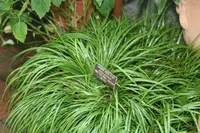
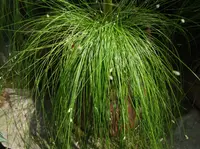
Japanese sweet flag, Acorus gramineus, is a compact, grass-like perennial often grown for its fine, arching foliage and tidy clumping habit. It stays low and forms neat tufts that suit edges, ponds, and containers.
This species is native to moist stream banks and wetlands in East Asia, so it naturally thrives in damp, cool conditions. Its preference for consistent moisture and tolerance of shallow standing water make it useful in water gardens.
Growth is generally slow to moderate, and it copes well with partial shade, which makes it relatively easy to care for Japanese sweet flag in many home gardens and indoor containers with stable moisture.

Care Difficulty
Easy Care

Light Preference
Partial Shade

Water Requirements
Aquatic

Temperature Preference
Cold Hardy

Hardiness Zone
5–9

Soil Texture
Loamy, Silty, Organic-rich

Soil pH
Acidic (5.5–6.5), Slightly acidic (6.5–7.0)

Soil Drainage
Waterlogged tolerant

Fertilization
Minimal (feed rarely)
Scan your plant to receive care tips personalized for your specific plant
Available on iOS and Android
This moisture-loving perennial prefers cool, gentle light rather than intense sun exposure.
This species is adapted to consistently wet conditions and tolerates brief standing water.
This plant prefers cool to mild conditions and tolerates a wide outdoor temperature range when established.
This semi-aquatic species prefers consistently moist conditions with relatively high humidity.
Acorus gramineus grows best in constantly moist, organic-rich soil that can hold water without turning sour.
This species is well-suited to container growing, especially for water gardens and damp niches.
This marginal aquatic grass benefits from light feeding but reacts poorly to heavy fertilizer applications.
Pruning Acorus gramineus is mainly hygienic, keeping the clump tidy and reducing disease risk.
This shallow-rooted grass-like perennial adapts well to transplanting in moist garden or container settings.
Division is the standard and most reliable method for increasing Acorus gramineus plants.
This species is generally cold hardy but may need some protection in colder climates or exposed containers.

Plant Health Check
Not sure what's wrong with your plant? Check your plant's health inside the app.
This species stays evergreen in mild climates and naturally grows along stream banks, pond margins, and wet soils, where its dense, grasslike clumps help stabilize the substrate and reduce erosion.
Although it looks like a grass, it is a monocot with fanlike leaves emerging from a creeping rhizome, and its leaf arrangement and internal anatomy place it in Acoraceae rather than the true grass family Poaceae.
Its flowers are packed on a short, fingerlike spadix that partially hides among the leaves, reflecting its close relationship to arum family plants, even though the species is mostly grown for foliage rather than bloom display.

Molecular phylogenetic studies place Acorus, including Acorus gramineus, as one of the earliest-diverging lineages of monocot flowering plants, so this humble wetland plant represents a very ancient branch of monocot evolution.
Yellowing usually comes from water issues, root rot, or natural aging of older blades. Constantly soggy, stagnant water or compacted soil restricts oxygen to roots. Check rhizomes for rot, improve drainage or water movement, and trim old foliage.
Keep your plants happy and healthy with plant identification, disease detection, and easy care guidance.