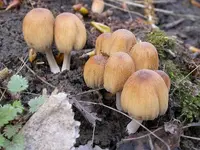
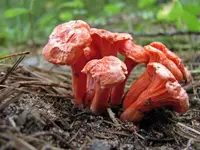
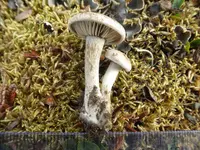
Witch's Hat Care (Hygrocybe conica)

Also known as: Conical Wax Cap, Blackening Waxcap
Witch's Hat

About Witch's Hat

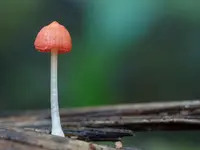
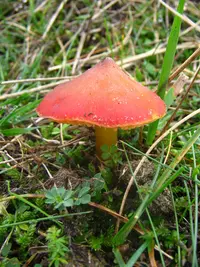
Witch's Hat, Hygrocybe conica, is a small waxcap mushroom known for its bright orange to red conical cap that often darkens to black as it ages. It forms delicate, slender fruiting bodies rather than a leafy or woody plant structure.

This species typically appears in unimproved grasslands, mossy clearings, and open woodland edges, especially in cool, damp climates. It often indicates low-disturbance, low-fertility soils.

H. conica can be challenging to cultivate because it relies on complex relationships with soil fungi and microorganisms that are hard to reproduce in gardens or containers. Attempts to care for Witch's Hat at home rarely succeed, as it prefers natural, undisturbed, moist but well-aerated soil and seasonal light changes.

Main Plant Requirements

Care Difficulty

Hard Care

Light Preference

Partial Shade

Water Requirements

Keep Soil Moist

Temperature Preference

Cool Climate

Hardiness Zone

Unknown

Soil Texture

Loamy, Silty, Organic-rich

Soil pH

Strongly acidic (4.5–5.5), Acidic (5.5–6.5)

Soil Drainage

Moist but well-drained

Fertilization

Minimal (feed rarely)

Get Personalized Care Plan

Scan your plant to receive care tips personalized for your specific plant

Available on iOS and Android

How to Care for the Witch's Hat

This fungus prefers cool, moist habitats with soft, filtered light rather than strong, direct sun.

  • Provide bright dappled shade or light woodland conditions with 2–4 hours of gentle morning sun and no harsh afternoon sun.
  • Allow partial shade for most of the day; dense, deep shade reduces fruiting, while prolonged full sun dries the substrate and shortens cap life.
  • In summer, protect Witch's Hat from exposed, sun-baked sites; in cooler seasons, slightly more open light is acceptable if moisture is maintained.

This mushroom depends on consistently moist, not waterlogged, soil or leaf litter to produce healthy fruiting bodies.

  • Aim for evenly damp substrate; if the top 1–2 cm of soil or litter feels dry and crumbly, conditions are too dry for reliable fruiting.
  • Ensure excellent drainage with loose, humus-rich soil so Hygrocybe conica does not sit in stagnant water, which encourages rot and competing fungi.
  • During hot or windy periods, monitor closely for shriveling caps or cracking surfaces as signs of drying, and reduce added moisture if caps appear slimy or waterlogged.

This species favors mild, cool conditions and is sensitive to both hard frost and intense heat.

  • Optimal fruiting usually occurs around 50–65°F (10–18°C), with mycelium growth possible slightly outside this range if moisture stays stable.
  • It tolerates short dips near 32°F (0°C) but repeated hard frost or frozen ground can stop fruiting and damage exposed mushrooms.
  • Sustained heat above 77–82°F (25–28°C) quickly dries the substrate and caps, so sites with summer shade and steady moisture support more reliable seasonal flushes.

This woodland mushroom prefers consistently moist, humid air rather than dry conditions.

  • Aim for 70–90% humidity by growing in shaded, sheltered, naturally damp spots such as mossy lawns or leaf litter pockets.
  • Dry air and wind cause caps to crack, fade, and shrivel faster, and gills may dry before spores mature.
  • Increase humidity by leaving surrounding leaf litter undisturbed, adding coarse mulch nearby, and avoiding airflow that accelerates evaporation.

This fungus fruits best in light, undisturbed grassland or woodland soil with steady moisture and high organic content.

  • Use a thin turf or woodland edge area with fine-textured, humus-rich soil over firm, well-drained mineral subsoil rather than deep, fluffy beds.
  • Target slightly acidic to neutral conditions around pH 5.5–7, avoiding limed or heavily fertilized lawns, which suppress Hygrocybe conica.
  • Encourage structure by top-dressing with well-rotted leaf mould or fine compost instead of digging, which disrupts mycelium threads.
  • Avoid compacted, waterlogged, or heavily mulched ground; promote drainage and aeration by preventing heavy trampling and standing surface water.

This species is not well suited to container growing because it depends on complex soil and microhabitat conditions that pots rarely provide.

In gardens and natural settings, Hygrocybe conica rarely benefits from added fertilizer and usually thrives in low-nutrient soils, so extra feeding is not recommended.

Pruning Hygrocybe conica is not part of normal care because this is a wild, short-lived mushroom rather than a landscape plant.

Hygrocybe conica is a soil-dwelling mushroom that is not suited to typical container culture, so transplanting focuses on conserving its habitat rather than moving individual specimens.

  • Avoid disturbing established colonies; these fungi rely on specific soil conditions and microbial partners that do not transplant well.
  • If habitat must be altered, retain existing turf and topsoil layers where the mushrooms appear, moving them gently as intact sod blocks.
  • Time any necessary soil relocation for cool, moist seasons, reducing desiccation and stress on the underlying fungal network.
  • After disturbance, keep the area evenly moist and avoid fertilizers or lime so the fungal community can re-establish.

Propagation of Hygrocybe conica is difficult for home growers because it depends on complex soil biology rather than simple cuttings or seed-style methods.

In most temperate climates, Hygrocybe conica needs no special winter care because the fungus persists in the soil while fruiting bodies die back naturally.

Care Tips

Spore-rich habitat

Leave a few mature caps in place and avoid raking or compacting the surrounding leaf litter so spores can drop and establish a stable colony over several seasons.

Low-competition ground

Keep nearby turf slightly open and lower in fertility by mowing high and removing clippings so coarse grasses and weeds do not outcompete the waxcap mycelium.

Gentle foot-traffic control

Use stepping stones or defined paths through the area to reduce soil compaction and disturbance in the exact patches where fruiting bodies appear.

Careful mowing timing

Delay mowing until most caps have fully expanded and begun to fade, then mow high (7–10 cm) to protect mycelium and allow continued fruiting in following years.

Minimal chemical use

Avoid fungicides, broad-spectrum herbicides, and high-salt de-icing products in and around the fruiting zone, as these can quickly suppress or eliminate growing Witch's Hat populations.

Common Pests and Diseases

Mycophagous springtails

These insects often feed on fruiting bodies of waxcap mushrooms, grazing the cap surface and gills. Symptoms include small pits, roughened cap texture, and reduced spore production.

Solution

Limit heavy disturbance around fruiting areas and keep leaf litter and coarse organic matter in place so springtails stay dispersed rather than concentrated on the mushrooms. For serious collection or study sites, gently brush springtails off caps before storage and improve air circulation so surfaces dry between dew events, which reduces prolonged grazing activity.

Slugs and snails

These pests feed directly on the caps and stipes, leaving large irregular bite marks and slime trails on or around the mushrooms. Symptoms include missing sections of the cap, ragged margins, and collapsed young fruiting bodies.

Solution

Hand-pick slugs and snails in the evening or early morning and use physical barriers like copper tape or rough grit bands around small study or display plots. Avoid broad slug pellet use in sensitive grasslands; instead, reduce nearby dense groundcover where they hide and irrigate only as needed so the site does not stay constantly wet.

Fungal parasitism by Hypomyces

This disease is caused by parasitic fungi that overgrow waxcap fruiting bodies, sometimes forming a whitish, yellow, or orange crust on caps and gills. Symptoms include distorted, thickened, or discolored tissues and loss of normal spore-bearing surfaces.

Solution

Remove and discard obviously parasitized fruiting bodies from the site to reduce spore load and slow spread to nearby mushrooms. Avoid over-enriching the soil with fertilizers or imported organic material, and maintain good habitat conditions for waxcaps so healthy fruiting bodies are less likely to be overrun by secondary parasites.

Mite grazing

These tiny arthropods feed on the surface tissues and spores, often creating a finely pitted or dusty-looking cap and gill surface. Symptoms include subtle surface scarring, spore loss, and occasionally small brown specks that move when closely inspected.

Solution

Encourage balanced soil fauna by avoiding broad-spectrum insecticides that can disrupt predator populations. For research or display specimens, collect promptly at maturity and store in clean, ventilated containers; gently brushing caps before storage helps remove mites and reduces further damage, which is useful when growing Witch's Hat for identification or educational use.

Interesting Facts

Color-changing waxcap

This waxcap mushroom famously shifts from bright red or orange when young to black as it ages, due to pigments that darken and cells that collapse over time. The dramatic color change is so distinctive that it underlies common names like witch's hat and conical waxcap.

Ink-like blackening

The flesh and gills progressively blacken from the tip downward, often resembling soot or ink. This blackening is a diagnostic feature mycologists use in the field to separate it from other similar red or orange waxcaps.

Old-meadow specialist

In Europe it is strongly associated with long-unfertilized grasslands and mossy lawns, and its presence can indicate low-nutrient, unimproved habitats. Because such grasslands are declining, some regions treat it as a conservation interest species linked to traditional, low-intensity land use.

Botan icon

Did you know?

Genetic and ecological studies suggest that what has long been called Hygrocybe conica is actually a complex of several closely related, cryptic species that look very similar but differ in microscopic traits and DNA, so older field records may group multiple species under this single name.

FAQs about Witch's Hat

This mushroom is considered inedible and potentially poisonous. It contains unstable compounds that may cause gastrointestinal upset. It should not be collected for food, and any similar waxcap species must be identified by an experienced mycologist before consumption.

Grow Healthy Plants with Botan Care

Keep your plants happy and healthy with plant identification, disease detection, and easy care guidance.

Botan plant care app — identify plants on mobile

Explore More Plants