American mountain ash Care (Sorbus americana)

Also known as: American Rowan, Rocky Mountain Ash
American mountain ash

About American mountain ash

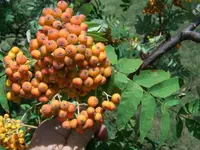
American mountain ash (Sorbus americana) is a small deciduous tree native to northeastern North America, often found in cool woods, slopes, and rocky sites. It typically has an upright, open crown, pinnate leaves that turn warm colors in fall, and showy clusters of white spring flowers followed by bright orange-red berries. Birds are strongly attracted to its fruit, which adds seasonal interest but can also mean seedling volunteers nearby. This species prefers cool climates, moist but well-drained, slightly acidic soils, and full sun to light shade. With the right site and soil, it is relatively low-maintenance, so learning how to care for American mountain ash mainly involves good placement and monitoring for common pests or diseases.

Main Plant Requirements

Care Difficulty

Moderate Care

Light Preference

Full Sun

Water Requirements

Moderate Water

Temperature Preference

Cold Hardy

Hardiness Zone

2–5

Soil Texture

Sandy, Loamy, Rocky

Soil pH

Acidic (5.5–6.5), Slightly acidic (6.5–7.0)

Soil Drainage

Moist but well-drained

Fertilization

Minimal (feed rarely)

Get Personalized Care Plan

Scan your plant to receive care tips personalized for your specific plant

Available on iOS and Android

How to Care for the American mountain ash

This small native tree prefers bright, cool conditions to support dense foliage and fruiting.

  • Provide 6–8 hours of direct sun daily, with a preference for morning sun and light afternoon shade in hotter regions to limit leaf scorch.
  • Tolerates light partial shade (about 3–4 hours direct sun) but flowering and berry set decline as shade increases.
  • In summer, protect from reflected heat and intense late-afternoon sun; in winter, full exposure helps American mountain ash maximize cold-season light at high latitudes.

This species prefers consistently moist but not saturated soil, especially during establishment.

  • During the first 2–3 years, water when the top 5–7 cm of soil feels dry, applying a slow, deep soak to reach the root zone.
  • Mature trees usually rely on rainfall; in dry spells or heat waves, watch for limp or curling leaves and water deeply rather than with light, frequent sprinkling.
  • Ensure soil drains freely; persistent puddles, yellowing leaves, or dieback of small twigs suggest overwatering or poor drainage, while crisp, browning leaf edges indicate drought stress.

This cold-hardy tree is adapted to cool climates with distinct winters and mild summers.

  • Best growth occurs around 55–75°F (13–24°C), with cool nights supporting strong bud and fruit development.
  • Dormant trees tolerate winter lows near -40°F (-40°C), but sudden temperature swings and late spring frosts can damage opening buds and young shoots.
  • Heat tolerance is limited; extended periods above 85°F (29°C) can stress Sorbus americana, so mulch the root zone and avoid planting in heat-trapping urban spots.

This species handles typical outdoor humidity well, so humidity management is rarely critical.

This tree prefers cool, moist, well‑drained mineral soils with moderate organic matter.

  • Use a loamy or sandy loam soil that holds moisture but does not stay waterlogged.
  • Aim for slightly acidic to neutral pH, around 5.0–7.0, which suits Sorbus americana in most temperate gardens.
  • Incorporate compost and small amounts of sharp sand to improve structure, drainage, and nutrient availability.
  • Avoid heavy, compacted clay or sites with standing water, which promote root suffocation and rot.

This species is generally unsuited to long‑term container growing due to its eventual size and root needs.

This native tree usually needs minimal feeding in average garden soil, but light fertilization can support establishment and growth of American mountain ash.

  • Apply a balanced slow-release fertilizer (for example 10-10-10) once in early spring for young or nutrient-starved trees.
  • Use a light rate at the lowest label recommendation; avoid high-nitrogen lawn products around the root zone.
  • Supplement with a thin layer of compost over the root area in spring, keeping it away from the trunk flare.
  • Stop additional feeding by late summer and do not fertilize in winter dormancy to prevent soft, frost-prone growth.

Pruning Sorbus americana focuses on safety, structure, and light, rather than heavy shaping.

  • Carry out main pruning in late winter or very early spring before bud break, when branch structure is visible.
  • Remove dead, diseased, or storm-damaged branches first, cutting back to healthy wood with clean bypass pruners or a sharp saw.
  • Thin lightly crowded interior branches to improve airflow and light penetration, maintaining the natural oval crown.
  • Limit cuts on mature trees to smaller branches to reduce stress and preserve flower and berry production.

Sorbus americana is usually grown in the ground, so care centers on correct transplanting rather than frequent repotting.

  • Transplant bare-root or container-grown trees in early spring or early fall when temperatures are mild and soil is workable.
  • Look for circling or pot-bound roots in nursery stock; gently tease them loose and trim any girdling roots before planting.
  • Set the tree so the root flare is level with the soil surface, then backfill with native soil and water deeply to settle air pockets.
  • Mulch the root zone 5–8 cm deep, keep mulch off the trunk, and water consistently for the first 1–2 years to limit transplant shock.

Propagation of Sorbus americana is possible from seed or semi-ripe cuttings but requires patience and attention to conditions.

  • Collect ripe berries in fall, clean seeds, and subject them to cold stratification (moist chilling) for 2–3 months to break dormancy.
  • Sow stratified seeds in a free-draining seed mix, keep evenly moist, and place in bright, cool conditions for gradual germination.
  • Take semi-ripe cuttings in mid to late summer, 10–15 cm long, and treat the base with rooting hormone to improve success.
  • Insert cuttings into a sterile, well-drained medium, maintain high humidity and bright shade, and avoid overwatering to prevent rot.

This species is naturally cold hardy in much of its native range and usually needs little special winter care once established.

  • Young or newly planted trees benefit from 5–8 cm of mulch over the root zone to moderate soil temperature and moisture.
  • Keep mulch a few cm away from the trunk to avoid rot and rodent damage during winter.
  • Container-grown specimens in colder regions should be moved into an unheated garage or sheltered spot to prevent root freezing.

Care Tips

Trunk protection

Install a white tree guard or wrap around the lower trunk from late fall to early spring to prevent sunscald and rodent damage, especially on young trees.

Cluster thinning

If heavy fruit clusters start to bend young branches, selectively remove some clusters in midsummer to reduce breakage and maintain a balanced canopy.

Targeted root mulching

Extend a 5–8 cm layer of mulch out to at least the drip line but keep it 8–10 cm away from the trunk to protect shallow roots, conserve moisture, and reduce weed competition.

Preventing fire blight

Inspect new shoots during warm, wet periods and promptly prune out any blackened, wilted tips 20–25 cm back into healthy wood, disinfecting pruners between each cut to limit fire blight spread.

Wildlife management

If birds strip the fruit too early and you want to observe berries longer, use loose, reflective bird tape on outer branches rather than netting, so wildlife can still move freely while you are caring for American mountain ash.

Common Pests and Diseases

Mountain-ash sawfly

These insects are leaf-feeding larvae that can quickly strip foliage, starting at leaf edges and skeletonizing leaflets. This pest often appears in dense groups on branch tips in late spring to early summer.

Solution

Handpick and destroy larvae on small trees or lightly infested branches, and prune out heavily infested twigs before larvae spread. For larger trees, use a targeted spinosad or Bacillus thuringiensis (Bt) product labeled for sawflies, and monitor new growth closely during the next season as part of broader Sorbus americana care instructions.

Fire blight

This disease causes sudden blackening and wilting of blossoms, shoots, and young branches, which often look scorched and may bend into a shepherd’s-crook shape. Symptoms include dark, sunken cankers on branches and sometimes oozing bacterial exudate.

Solution

Prune out infected shoots and branches at least 20–30 cm below visible symptoms during dry weather, disinfecting pruning tools between each cut with 10% bleach or 70% alcohol. Avoid high-nitrogen fertilization and heavy pruning during active growth, and in high-risk areas consider resistant nearby plantings to reduce local infection pressure.

Apple scab

This disease produces olive-green to brown, velvety spots on leaves and sometimes fruit, leading to yellowing and premature leaf drop. Symptoms include thinning crowns and reduced vigor over repeated years of infection.

Solution

Rake and remove fallen leaves in autumn to reduce overwintering spores, and improve airflow by thinning nearby vegetation or selective crown pruning. In areas with a history of scab, apply a labeled fungicide at bud break and during early leaf expansion if recommended by local extension services, timing sprays around wet weather periods.

Borers

These insects tunnel into trunks and larger branches, causing wilting of sections of the canopy and dieback above the affected area. Symptoms include small exit holes, sawdust-like frass on the bark, and weakened wood that can break in storms.

Solution

Reduce stress on the tree through proper watering during drought and avoiding trunk injury, since healthy trees are less attractive to borers. Remove and destroy severely infested limbs, keep mulch pulled slightly back from the trunk, and where pressure is high, consult an arborist about timing preventive trunk or soil treatments labeled for borers on mountain ash.

Powdery mildew

This disease creates a white to gray powdery coating on leaf surfaces, especially in shaded or crowded sites with poor air movement. Symptoms include distorted new leaves and reduced growth if infections are repeated over multiple seasons.

Solution

Increase sunlight and airflow by selective pruning of dense branches and nearby plants, and avoid overhead watering late in the day. Remove heavily infected leaves and, in persistent cases, use a labeled fungicide such as a horticultural oil or potassium bicarbonate, applied according to label directions during early infection periods.

Interesting Facts

Native to eastern uplands

This species is native to cool upland regions of eastern North America, especially the Appalachian and Adirondack ranges, where it grows naturally on rocky slopes, ridges, and open woods.

Cold-adapted small tree

American mountain ash is relatively short-lived and usually remains a small tree or large shrub, rarely exceeding 9–12 m, and is adapted to cold climates with good winter hardiness in its native range.

High-wildlife-value berries

The bright orange-red fruit clusters are an important late-summer and autumn food source for many songbirds and small mammals, and the tree often serves as a focal feeding site during migration periods.

Botan icon

Did you know?

In parts of its native range, American mountain ash acts as a natural indicator of cooler, moist, higher-elevation forest habitats, and its presence often signals transitional zones between hardwood forests and boreal or spruce–fir communities.

FAQs about American mountain ash

Leaf browning usually results from drought stress, hot drying winds, salt spray, or root damage. Check soil moisture, mulch the root zone, avoid de-icing salt, and prune only lightly to reduce additional stress on the tree.

Grow Healthy Plants with Botan Care

Keep your plants happy and healthy with plant identification, disease detection, and easy care guidance.


Botan plant care app — identify plants on mobile

Explore More Plants