scrub cherry Care (Syzygium australe)

Also known as: Brush Cherry, creek lilly-pilly, creek satinash
scrub cherry

About scrub cherry

Scrub cherry (Syzygium australe) is an evergreen shrub or small tree grown mainly for its dense foliage and neat, formal shape. It is often used as a hedge or screening plant in gardens and landscapes.

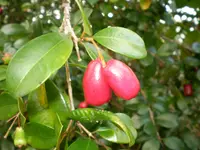
The plant has glossy green leaves, often with bronzed new growth, and small white flowers followed by red to purple berries that attract birds. It comes from coastal regions of eastern Australia, where it naturally grows in warm, humid conditions.

Syzygium australe is generally considered easy to grow if provided with consistent moisture, well-drained soil, and good light. Understanding how to care for scrub cherry helps keep it compact, healthy, and well-shaped over time.

Main Plant Requirements

Care Difficulty

Moderate Care

Light Preference

Full Sun

Water Requirements

Moderate Water

Temperature Preference

Warm Climate

Hardiness Zone

9–11

Soil Texture

Sandy, Loamy, Organic-rich

Soil pH

Acidic (5.5–6.5), Slightly acidic (6.5–7.0)

Soil Drainage

Moist but well-drained

Fertilization

Minimal (feed rarely)

Get Personalized Care Plan

Scan your plant to receive care tips personalized for your specific plant

Available on iOS and Android

How to Care for the scrub cherry

Syzygium australe grows best with consistent bright light and some direct sun.

  • Provide 4–6 hours of direct sun daily, ideally gentle morning sun with light afternoon shade to protect leaves from scorch.
  • Tolerates partial shade (2–4 hours sun), but dense shade causes weak, sparse growth and reduced foliage density in scrub cherry hedges.
  • In hot summers, use filtered light or dappled shade during harsh afternoon sun; in winter, allow more direct light by pruning overhanging branches if needed.

This plant prefers evenly moist, well-drained soil rather than constant wetness or drought.

  • Water when the top 3–5 cm of soil feels dry, applying enough to moisten the root zone without leaving standing water around the base.
  • In spring and summer, expect faster drying and check soil more often; in cooler months, allow slightly longer drying between waterings.
  • Watch for yellowing, soft leaves as a sign of overwatering and crisp leaf edges or wilting as signs the Syzygium australe is too dry or heat-stressed.

Stable mild to warm temperatures support dense, healthy growth.

  • Optimal growth occurs around 65–80°F (18–27°C), which supports active shoot and root development in hedges and screens.
  • The plant tolerates brief drops to about 30°F (−1°C) but young growth is easily damaged; protect from frost and cold, drying winds where possible.
  • In hot climates, it copes with 90–100°F (32–38°C) if soil moisture is maintained and roots are mulched to reduce heat stress and moisture loss.

This species handles a wide humidity range but benefits from moderately moist air when grown indoors.

  • Aim for 40–60% humidity for scrub cherry to limit leaf tip browning and stress.
  • Tolerates short dry-air spells, but repeated exposure to <30% can cause crispy edges and slowed growth.
  • Increase humidity with a nearby pebble tray or grouped plants rather than misting, which adds little lasting moisture.

Syzygium australe grows best in moderately fertile, aerated, and consistently moist but well-drained soil.

  • Use a loamy mix with 40–60% organic matter (compost, fine bark) blended with mineral components like coarse sand or perlite.
  • Ensure fast drainage so water passes through in seconds, preventing waterlogging that leads to root rot.
  • Aim for slightly acidic to neutral pH around 6.0–7.0, which supports balanced nutrient availability.
  • Avoid heavy clay or dense peat-only mixes; lighten them with coarse sand, perlite, or fine pine bark to improve aeration and root health.

This species is suitable for container growing, including large patio tubs and balcony planters.

  • Choose a deep, wide container that allows a fibrous root system to spread, which reduces drought stress between waterings.
  • Use a weighty or low, broad pot shape to keep tall, clipped hedges stable in wind and prevent tipping.
  • Select slightly porous materials like unglazed clay only if you can water more often, as they speed moisture loss compared with plastic or glazed pots.

Syzygium australe benefits from modest, structured feeding during the active growing season.

  • Use a balanced slow-release fertilizer (for example 10-10-10) or well-rotted compost in spring for scrub cherry grown in containers or poor soil.
  • Apply slow-release granules every 3–4 months during spring–summer, following label rates, and avoid over-applying nitrogen to limit weak, sappy growth.
  • For liquid feeds, use a balanced NPK at 1/2 strength every 4–6 weeks during active growth if extra vigor is needed.
  • Stop feeding in late fall and winter to allow natural slowing of growth and reduce the risk of soft, frost-sensitive shoots.

Pruning Syzygium australe helps maintain dense, healthy hedges and clear branch structure.

  • Carry out main pruning in late winter to early spring before strong new growth begins, with light touch-ups in summer if needed.
  • Remove dead, diseased, crossing, or inward-growing branches first to improve airflow and reduce fungal problems.
  • Shorten long shoots to a leaf node to control height and width, encouraging bushy side-branching for a tight hedge form.
  • Use clean, sharp hand pruners or hedge shears, disinfecting blades between plants to limit disease spread.

Container-grown or newly planted Syzygium australe may need periodic transplanting to maintain stable, healthy growth.

  • Plan major transplanting or pot changes for early spring or early fall, avoiding the hottest and coldest months.
  • Look for roots circling the pot, water running straight through, or declining vigor as cues the plant has outgrown its container.
  • Shift to a container 1–2 sizes larger with a free-draining, slightly acidic mix, keeping the root ball intact and at the same soil level.
  • Water thoroughly after planting, shade from harsh sun for 3–7 days, and keep soil evenly moist to reduce transplant shock.

New Syzygium australe plants are commonly produced from semi-hardwood cuttings and seeds under controlled conditions.

  • Take semi-hardwood tip cuttings 8–12 cm long in late spring to summer from healthy, non-flowering shoots.
  • Remove lower leaves, dip bases in rooting hormone, and insert into a sterile, free-draining mix such as 1:1 perlite and peat or coco coir.
  • Maintain high humidity (for example with a clear cover) and bottom warmth around 70–75°F with bright, indirect light for reliable rooting.
  • Sow fresh seed in spring in a well-drained seed mix, keep just moist, and provide warmth and light to support steady germination.

Syzygium australe is moderately frost sensitive and benefits from basic winter protection in cooler regions.

  • In ground, add a 5–8 cm mulch layer around the root zone in late fall, keeping it slightly away from the trunk.
  • In regions below about 25°F, grow in large containers that can be moved into a bright, frost-free space over winter.
  • Wrap young or exposed plants with breathable horticultural fleece during forecast freezes to limit leaf and shoot damage.

Care Tips

Wind-hardening young plants

Expose young plants to light, steady air movement and gradually reduce staking over several weeks so stems thicken and form a self-supporting hedge or screen.

Regular hedge renovation

Every 3–5 years, thin out a portion of the oldest branches at the base to open the interior, improve airflow, and stimulate dense new foliage rather than only shearing the outer surface.

Growth direction training

While stems are still flexible, tie or clip them gently to canes or mesh in the direction you want the hedge or screen to fill, which helps avoid gaps and reduces the need for heavy corrective pruning later.

Root-zone mulching strategy

Maintain a 5–8 cm layer of coarse organic mulch over the root zone, keeping it a few cm away from the trunk, to stabilize soil moisture and temperature and to protect fine feeder roots from heat and compaction.

Targeted myrtle rust checks

Inspect new flushes of soft, reddish growth during warm, humid periods for yellow-orange pustules and remove infected shoots early to limit spread, which is especially important when growing scrub cherry in coastal or subtropical climates.

Common Pests and Diseases

psyllids

This pest feeds on young leaves and shoots, causing pitting, distortion, and sometimes a bumpy, blistered appearance. Symptoms include sticky honeydew on foliage and sooty black mold growing on the residue.

Solution

Prune and dispose of heavily infested shoot tips, then hose down foliage to remove nymphs and honeydew. For persistent infestations, use a ready-to-use horticultural oil or insecticidal soap, making sure to coat the undersides of leaves, and repeat applications as new flushes of growth appear.

lilly pilly pimple gall

This disease causes raised, pimple-like galls and blistering mainly on young leaves, leading to distortion and reduced vigor. Symptoms include rough, corky swellings that may turn brown and make hedges look uneven or sparse.

Solution

Regularly trim out and bin affected foliage to remove gall tissue and reduce reinfection, then encourage strong new growth with consistent watering and balanced fertilizer. Maintain good hedge airflow and avoid frequent light clipping of only the outer surface, which leaves old infected tissue inside the canopy.

scale insects

These insects attach along stems and leaf veins as small bumps, sucking sap and weakening plants. Symptoms include sticky honeydew, sooty mold, yellowing leaves, and reduced new growth, especially on dense hedges.

Solution

Gently scrape or wipe off accessible scale with a soft cloth or gloved fingers, then wash foliage with a firm water spray to remove remaining insects and honeydew. For heavier populations, apply horticultural oil to smother scale, paying attention to stems and leaf undersides, and repeat after 7–14 days if needed.

myrtle rust

This disease produces yellow to orange powdery pustules on young leaves, stems, and new shoots, often leading to leaf distortion, browning, and dieback. Symptoms include patches of bright yellow spores on the underside of leaves and a general decline in new growth quality.

Solution

At the first sign of infection, remove and bag affected shoots and fallen leaves and dispose of them in household waste, not compost. Improve air circulation, avoid overhead watering, and in high-risk areas use a myrtle rust–registered fungicide according to label directions, focusing on protecting new flushes of growth.

leaf spot

This disease causes small brown to purplish spots on leaves that may enlarge, merge, and lead to premature leaf drop, especially in humid, shaded hedges. Symptoms include thinning foliage in the lower and inner parts of the plant and a generally untidy appearance.

Solution

Prune to open the canopy and increase light and airflow, and remove and discard heavily spotted leaves and prunings. Reduce leaf wetness by watering at soil level, and if the problem persists, use a broad-spectrum ornamental fungicide as directed, targeting new and inner foliage where moisture lingers longest.

Interesting Facts

Australian rainforest origins

Syzygium australe is naturally distributed in subtropical and tropical rainforests along the eastern coast of Australia, especially in New South Wales and Queensland, where it grows as an understory tree in moist, sheltered gullies and river edges.

Edible bird-dispersed fruit

The pink to red berry-like fruits are eaten by native birds such as pied currawongs and figbirds, which disperse the seeds through their droppings and help maintain natural populations in the wild.

Myrtle rust susceptibility

Like many members of the myrtle family, this species can be affected by myrtle rust, a fungal disease caused by Austropuccinia psidii that produces yellow spores on young leaves and shoots and can distort new growth.

Botan icon

Did you know?

In coastal Australian cities, this species is one of the most widely planted native hedging trees, and its dense foliage and rapid regrowth mean clipped hedges can reach several meters tall and provide effective visual and noise screening in a relatively short time.

FAQs about scrub cherry

This species is an evergreen, retaining foliage year-round in mild climates. Leaves may thin slightly in colder or exposed positions, but it does not shed all foliage seasonally like a deciduous shrub or tree.

Grow Healthy Plants with Botan Care

Keep your plants happy and healthy with plant identification, disease detection, and easy care guidance.


Botan plant care app — identify plants on mobile

Explore More Plants