Sweet pea shrub Care (Polygala myrtifolia)

Also known as: Sweet Pea Shrub, September Falsepea, Septemberbushes, September bush, September Butterfly Bush, Myrtle Leaved Milkwort, Septemberbush Polygala
Sweet pea shrub

About Sweet pea shrub

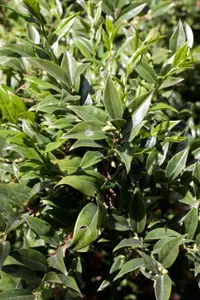
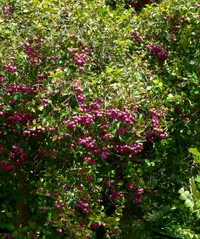
Sweet pea shrub (Polygala myrtifolia) is an evergreen shrub known for its pea-like purple to pink flowers and fine, narrow leaves. It forms a rounded, bushy shape that suits mixed borders and coastal gardens.

This species is native to South Africa, where it grows in mild, frost-free climates with good light and well-drained soils. Flowers appear over a long season, which makes it attractive to pollinators and valued as an ornamental shrub.

Polygala myrtifolia grows best in bright light, moderate moisture, and soil that drains freely. These traits make it relatively easy to care for Sweet pea shrub in suitable outdoor climates, though it dislikes hard frost or waterlogged conditions.

Main Plant Requirements

Care Difficulty

Moderate Care

Light Preference

Full Sun

Water Requirements

Moderate Water

Temperature Preference

Warm Climate

Hardiness Zone

9–11

Soil Texture

Sandy, Loamy, Organic-rich

Soil pH

Acidic (5.5–6.5), Slightly acidic (6.5–7.0)

Soil Drainage

Well-drained

Fertilization

Light (every 4–6 weeks)

Get Personalized Care Plan

Scan your plant to receive care tips personalized for your specific plant

Available on iOS and Android

How to Care for the Sweet pea shrub

Polygala myrtifolia needs bright outdoor light to flower well and keep compact growth.

  • Provide full sun for 6–8 hours daily, ideally with morning sun and some light afternoon shade in hotter climates.
  • It tolerates light or dappled shade for part of the day, but Sweet pea shrub may flower less and grow looser with under 4–5 hours of direct sun.
  • In summer heatwaves, protect from intense late-afternoon sun to prevent leaf scorch; in winter, choose the sunniest, most open position.

Polygala myrtifolia prefers evenly moist but never waterlogged soil once established.

  • Water deeply when the top 3–5 cm of soil feels dry, allowing water to soak the root zone rather than giving frequent shallow sips.
  • Use well-drained soil and, if in heavy clay, improve drainage or plant on a slight mound to reduce root rot risk from standing water.
  • In cooler seasons reduce watering as growth slows; wilting, dry, crispy leaves indicate underwatering, while yellowing and leaf drop can signal overwatering.

This shrub thrives in mild, frost-free climates with warm, not extreme, temperatures.

  • Aim for 60–75°F (16–24°C) for best growth and flowering during the main growing season.
  • It tolerates brief drops to about 28–30°F (-2 to -1°C) but young growth is easily damaged; protect from frost with covers or by choosing a sheltered site.
  • In hot regions, it copes with 85–95°F (29–35°C) if soil moisture is stable and roots are mulched, but prolonged heat above this can stress the plant and reduce flowering.

Humidity is a minor factor, as this shrub tolerates a wide range of indoor and outdoor air moisture levels.

This shrub prefers free-draining, moderately fertile soil that does not stay wet for long.

  • Use a light loam or sandy loam with 30–40% coarse sand or fine grit to keep the root zone airy.
  • Incorporate 20–30% compost or well-rotted organic matter to support steady growth without waterlogging.
  • Aim for slightly acidic to neutral pH, around 6.0–7.0, which supports nutrient uptake in Polygala myrtifolia.
  • Avoid heavy clay, compacted ground, or sites where water pools after rain, as these promote root rot.

This species suits container growing when given stable, well-drained conditions and adequate root volume.

  • Choose a pot that is wider than it is deep to balance the naturally bushy, sometimes top-heavy canopy in wind-exposed spots.
  • Select sturdy terracotta or thick-walled containers outdoors to reduce tipping risk and moderate rapid moisture swings in hot weather.
  • Raise the pot slightly on feet or spacers so drainage holes stay clear and excess water escapes quickly, especially during heavy rain.

This shrub responds well to moderate feeding during the main growing season.

  • Use a balanced NPK fertilizer (such as 10-10-10) or slow-release granules for Sweet pea shrub in spring.
  • Feed every 4–6 weeks from spring to late summer, skipping very hot or drought-stressed periods.
  • Dilute liquid feeds to half strength to reduce root burn risk, especially in containers.
  • Stop feeding in fall and winter so new growth can harden before cold weather.

Polygala myrtifolia benefits from light, timely pruning to maintain shape and flowering.

  • Carry out main pruning after peak flowering in late spring or early summer.
  • Remove dead, damaged, or crossing stems first, then thin crowded interior shoots for light and airflow.
  • Shorten soft new growth by 1/3 to encourage bushier branching and more flower buds.
  • Use sharp, clean hand pruners and make cuts just above a leaf node or side branch.

Container-grown plants and young shrubs handle moving best when growth is active but heat is mild.

  • Look for roots circling the pot drainage holes, soil drying very fast, or stunted growth as signals to repot.
  • Plan repotting or transplanting in early spring, every 2–3 years for pots, or when garden plants outgrow their space.
  • Shift to a container 1–2 sizes larger, using free-draining, slightly acidic mix to limit waterlogging stress.
  • Water thoroughly before and after moving, keep the plant shaded for 3–5 days, and avoid heavy pruning at the same time.

New plants are most often raised from semi-ripe cuttings rather than seed.

  • Take 7–10 cm semi-ripe stem cuttings in late summer, choosing non-flowering shoots.
  • Remove lower leaves, dip the base in rooting hormone, and insert into a free-draining mix of perlite and peat or coco coir.
  • Maintain bright, indirect light, 70–75°F warmth, and high humidity until roots form in 4–8 weeks.
  • Sow fresh seed in spring in a gritty seed mix, keeping it just moist and lightly warm to improve germination.

This shrub is best suited to mild-winter climates and needs protection in colder regions.

  • Plants in the ground tolerate brief light frosts but may be damaged below about 25°F.
  • Apply a 5–8 cm mulch layer around the root zone in late fall, keeping mulch off the stems.
  • Move container plants indoors or into a frost-free greenhouse when nights fall below freezing.
  • Use a breathable frost cloth over young or exposed shrubs during cold snaps to limit leaf and stem injury.

Care Tips

Salt-wind tolerance

In coastal areas, position the shrub where it still gets airflow but is slightly shielded from the strongest salt-laden winds, such as behind a low wall or hedge, to prevent leaf burn and distorted new growth.

Selective stem renewal

Every 1–2 years, remove 1–3 of the oldest, woodiest stems at the base rather than lightly trimming all over; this renewal pruning keeps flowering wood young and maintains a dense, floriferous canopy.

Container root management

If grown in a pot for several years, slide the plant out annually to check for circling roots, cutting and teasing them out lightly and up-potting only 1 pot size when needed to maintain vigor without excessive top growth.

Targeted phosphorus check

If flowering declines despite good light and water, have the soil tested and, if phosphorus is low, use a balanced, slow-release fertilizer with a modestly higher middle number to support reliable bloom production without overfeeding nitrogen.

Cold spell protection

In regions with occasional light frost, move container plants against a warm wall and wrap the pot in insulating material, or for in-ground plants, mulch the root zone 5–8 cm deep before winter to buffer roots from short cold snaps when growing Sweet pea shrub.

Common Pests and Diseases

Mirid bugs

This pest feeds on young shoots, buds, and seed pods, causing distortion, dieback of tender tips, and scarring on developing pods. Symptoms include wilting of soft growth and small brown puncture marks where sap has been sucked out.

Solution

Prune and dispose of badly affected shoot tips and pods, then monitor new growth closely. Shake branches over a white tray to confirm activity, and if populations are high, use a contact insecticidal soap or pyrethrum spray directed at young shoots in the early morning, repeating at 7–10 day intervals as needed while protecting pollinators.

Scale insects

These insects attach to stems and leaf midribs, sucking sap and weakening the plant over time. Symptoms include sticky honeydew, black sooty mold, and rough or blister-like bumps along stems.

Solution

Wipe light infestations with a cotton pad dipped in diluted alcohol or soapy water, targeting each scale. For heavier infestations, prune and discard heavily encrusted stems, improve light and airflow, and use a horticultural oil spray to smother remaining scales, repeating once or twice according to label directions as part of ongoing Polygala myrtifolia plant care.

Leaf spot

This disease causes small purple, brown, or tan spots on leaves that may enlarge and merge, leading to premature leaf drop. Symptoms include a speckled or blotchy canopy, often starting on lower or inner branches in humid or overcrowded conditions.

Solution

Remove and discard affected leaves and thin crowded branches to improve airflow and light penetration. Avoid overhead watering, water at the base in the morning, and if spots continue to spread in warm, humid weather, apply a copper-based or other registered ornamental fungicide according to label directions until new growth emerges clean.

Phytophthora collar canker

This disease attacks the crown area at soil level, causing dark, sunken lesions on the lower stem and a general decline in vigor. Symptoms include yellowing leaves, branch dieback from the tips, and in advanced cases, sudden collapse of the shrub despite apparently moist soil.

Solution

Cut away and destroy affected branches and inspect the crown; if girdling lesions encircle the stem, the plant cannot be saved and should be removed and discarded, not composted. Improve drainage, avoid waterlogging and trunk injury, keep mulch a few cm away from the stem base, and in high-risk sites consider preventative drenches with a phosphonate (phosphorous acid) product following label guidance.

Interesting Facts

Winged flower structure

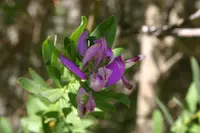
The flowers have two large purple lateral petals that form a wing-like structure around a central keel petal, which gives the blooms a superficial resemblance to pea flowers even though the plant is not a true legume.

Specialist bee pollinators

In its native South African range, the flowers are mainly pollinated by carpenter bees, which are heavy enough to depress the keel petal and access nectar while transferring pollen efficiently between plants.

Coastal wind tolerance

This shrub naturally occurs in coastal areas of the Western and Eastern Cape, where it is adapted to withstand salt-laden winds and sandy, well-drained soils, making it useful for coastal gardens in similar climates.

Botan icon

Did you know?

In parts of South Africa, this species has become a natural component of fynbos and coastal scrub vegetation mosaics, where its dense branching habit provides shelter and nesting substrate for small birds such as sunbirds that also visit the nectar-rich flowers.

FAQs about Sweet pea shrub

Lack of flowers usually comes from insufficient light, heavy or late pruning, or excess nitrogen fertilizer. Old, exhausted plants also flower less. Light annual pruning after flowering and balanced feeding improve blooming over time.

Grow Healthy Plants with Botan Care

Keep your plants happy and healthy with plant identification, disease detection, and easy care guidance.

Botan plant care app — identify plants on mobile

Explore More Plants