Monitor dormancy cycle
Mark the date when foliage yellows and collapses, then store the dry pot in a labeled, airy spot so you can track each tuber’s individual rest period and restart watering only when a new sprout tip appears.

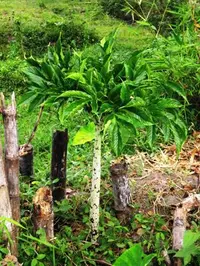
Amorphophallus variabilis is a tropical, tuber-forming aroid grown mainly for its unusual, often dramatic flowering structure and finely divided foliage. It grows seasonally, with the tuber resting leafless for part of the year.
This species occurs naturally in parts of Southeast Asia, typically in warm, humid forests and shaded to semi-shaded sites. Its growth cycle, including a pronounced dormant phase, is the main factor that makes it a bit challenging for beginners.
Those who learn how to care for Amorphophallus variabilis usually focus on respecting its rest period, avoiding excess water when dormant, and providing a loose, well-drained growing medium.

Care Difficulty
Hard Care

Light Preference
Partial Shade

Water Requirements
Keep Soil Moist

Temperature Preference
Tropical / Frost Sensitive

Hardiness Zone
10–12

Soil Texture
Loamy, Sandy, Organic-rich

Soil pH
Acidic (5.5–6.5), Slightly acidic (6.5–7.0)

Soil Drainage
Moist but well-drained

Fertilization
Moderate (every 2–4 weeks)
Scan your plant to receive care tips personalized for your specific plant
Available on iOS and Android
This species prefers bright, indirect light with some protection from intense midday sun.
This tuberous plant needs consistently moist but not saturated soil during active growth.
This tropical species prefers warm, stable temperatures during its growing season.
This species prefers moderately humid air but tolerates typical indoor levels if not kept overly dry.
Amorphophallus variabilis grows best in loose, airy, organic-rich soil that drains quickly yet retains some moisture.
This species is well suited to container cultivation when the pot supports its large tuber and seasonal growth pattern.
During active growth, Amorphophallus variabilis responds well to modest, steady nutrition in loose, well-drained soil.
Pruning needs for Amorphophallus variabilis are minimal and focus on hygiene rather than shaping.
Container-grown Amorphophallus variabilis benefits from periodic repotting to refresh soil and allow tuber expansion.
Amorphophallus variabilis is most commonly propagated by dividing tubers and planting offsets formed during the growing cycle.
This species is not frost tolerant, so winter care focuses on keeping the tuber dry and above freezing.

Plant Health Check
Not sure what's wrong with your plant? Check your plant's health inside the app.
The inflorescence produces a smell reminiscent of decaying organic matter, which attracts carrion-loving insects such as flies that act as pollinators.
True to its name, this species shows striking variation in the shape, size, and coloration of the spadix and spathe across different populations in Indonesia.
It grows from an underground tuber that supports a single, highly divided umbrella-like leaf during the growing season, then enters a pronounced dormancy when the leaf dies back.

This species is one of the smaller members of its genus and can flower at a relatively modest tuber size compared with giants like Amorphophallus titanum, making it more practical for enthusiasts interested in growing Amorphophallus variabilis.
This species usually flowers only after the tuber reaches sufficient size and energy reserves. Lack of dormancy, inadequate warmth, or stress from repotting can delay flowering for several years, even if foliage looks healthy.
Keep your plants happy and healthy with plant identification, disease detection, and easy care guidance.