Encourage Deep Roots
In the first growing season, space irrigation less frequently but water a bit longer so the soil profile is moistened 15–20 cm deep, which trains Nuttall's evening primrose to form a deeper, more drought-tolerant root system.

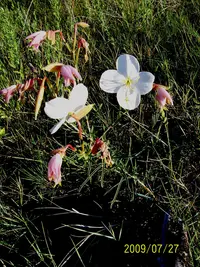
Nuttall's evening primrose (Oenothera nuttallii) is a perennial wildflower known for its narrow leaves and showy, pale yellow flowers that often open in the evening. It usually forms low clumps or loose colonies, giving a soft, airy look in garden borders or naturalized plantings.
This species is native to central and western North America, where it grows in prairies, open fields, and dry, sandy or rocky sites. It is generally hardy, drought tolerant once established, and prefers full sun and well-drained soil, which makes it relatively simple to care for Nuttall's evening primrose in low-maintenance gardens.

Care Difficulty
Easy Care

Light Preference
Full Sun

Water Requirements
Low Water

Temperature Preference
Cold Hardy

Hardiness Zone
3–8

Soil Texture
Sandy, Loamy, Rocky

Soil pH
Slightly acidic (6.5–7.0), Neutral (7.0)

Soil Drainage
Well-drained

Fertilization
Minimal (feed rarely)
Scan your plant to receive care tips personalized for your specific plant
Available on iOS and Android
This drought-tolerant prairie perennial performs best in strong, direct light.
This species is adapted to dry, fast-draining sites and dislikes prolonged soil moisture.
This hardy perennial tolerates a wide temperature range once established in the landscape.
This species tolerates a wide humidity range and rarely needs special humidity management indoors or outdoors.
This species prefers lean, sandy, fast-draining soil that mimics dry prairie or roadside conditions.
This species can be grown in containers if the pot is set up to drain quickly and stay relatively dry between waterings.
This drought-tolerant native needs very light feeding, especially when grown in lean, sandy soil.
Pruning Oenothera nuttallii is mainly done to maintain tidy growth and sustained flowering.
This species is better suited to in-ground planting, with transplanting done sparingly to limit root disturbance.
Oenothera nuttallii is commonly propagated by seed and occasional division of established clumps.
This perennial is generally cold hardy in much of the US and needs minimal winter attention in the ground.

Plant Health Check
Not sure what's wrong with your plant? Check your plant's health inside the app.
This species opens its pale yellow flowers in the evening and night, aligning peak nectar availability with the activity of nocturnal moths that serve as its main pollinators.
It is native to dry prairies and open plains of central North America, where it tolerates sandy or rocky soils, strong sun, and periodic drought better than many other evening primroses.
The plant forms a somewhat thickened, carrot-like taproot that stores resources and helps it survive grazing, fire, and harsh winter conditions on the plains.

In parts of its native range, this species can act as a pioneer plant on disturbed, nutrient-poor sites, gradually stabilizing soil and creating slightly better conditions for other native prairie species to establish.
Lack of flowering usually comes from too much shade, overly rich or wet soil, or plants that are still juvenile. Avoid heavy fertilization, ensure full sun, and allow a cool period, which supports natural bud formation.
Keep your plants happy and healthy with plant identification, disease detection, and easy care guidance.