Tawny Grisette Care (Amanita fulva)

Also known as: Fulvous Ringless Amanita, American Orange-Brown Ringless Amanita
Tawny Grisette

About Tawny Grisette

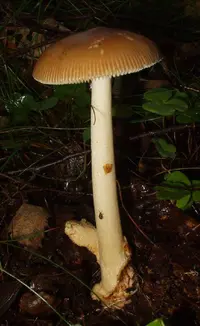
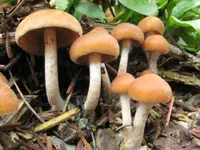
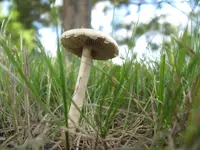
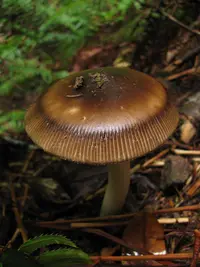
Tawny grisette, Amanita fulva, is a mycorrhizal mushroom that forms a close association with tree roots rather than growing as a typical houseplant. It has a slender, hollow stem, a smooth tawny-brown cap, and a fragile, sack-like volva at the base. In nature it appears in summer and autumn, mainly in damp woodlands and heathlands across Europe, parts of Asia, and some regions of North America. This species is considered delicate and demanding in cultivation because it relies on specific tree partners and soil fungi communities. Anyone looking into how to care for Tawny Grisette should know it prefers cool, moist, acidic soils and undisturbed, shaded sites that mimic its woodland habitat.


Main Plant Requirements

Care Difficulty

Hard Care

Light Preference

Partial Shade

Water Requirements

Keep Soil Moist

Temperature Preference

Cool Climate

Hardiness Zone

Unknown

Soil Texture

Loamy, Silty, Organic-rich

Soil pH

Strongly acidic (4.5–5.5), Acidic (5.5–6.5)

Soil Drainage

Moist but well-drained

Fertilization

Minimal (feed rarely)

Get Personalized Care Plan

Scan your plant to receive care tips personalized for your specific plant

Available on iOS and Android

How to Care for the Tawny Grisette

This woodland fungus prefers gentle, filtered light beneath trees rather than direct, open exposure.

  • Provide dappled or filtered light with 2–4 hours of weak morning sun and full shade by early afternoon, similar to a mixed deciduous forest floor.
  • Avoid strong midday or afternoon sun, which can overheat the leaf litter layer and dry the soil surface, reducing fruiting of Tawny Grisette.
  • Site it near light gaps in woodland or at woodland edges where tree canopy breaks give shifting shade through the day and brighter light in late summer.

This species relies on consistently moist, freely draining forest soil rather than scheduled watering.

  • Aim for soil that stays evenly moist in the top 3–5 cm, never waterlogged; in dry spells, natural rainfall of 1–2 in per week is usually enough in its native habitats.
  • Overly wet, stagnant conditions reduce oxygen around tree roots and Amanita fulva mycelium; signs include sour smell and slimy, persistently saturated leaf litter.
  • Prolonged dryness causes brittle leaf litter and shrinking mushroom caps; in managed woodlands, supplemental watering should re-wet the upper soil but drain within 12–24 hours.

This fungus fruits best in mild, temperate conditions typical of late spring to early autumn.

  • Optimal fruiting usually occurs around 60–75°F (16–24°C), when soil stays cool to slightly warm and moisture levels remain stable under trees.
  • It tolerates down to about 40°F (4–5°C) in the soil, but hard frost or freezes below 32°F (0°C) typically halt visible mushroom production.
  • Sustained heat above 85°F (29°C) with dry conditions shrinks caps and shortens lifespan; partial shade and moist leaf litter buffer extreme summer temperatures.

Humidity is not a practical care factor, as this species is a wild mycorrhizal fungus rather than a plant for controlled cultivation.

This ectomycorrhizal fungus depends on natural forest soil rather than a prepared potting substrate.

  • Amanita fulva typically associates with birch or other deciduous trees in light, humus-rich, well-structured forest soil.
  • The fruiting body appears in moist, well-drained substrates where leaf litter decomposes, adding organic matter and maintaining aeration.
  • Soil is usually mildly acidic to neutral (roughly pH 5.0–7.0), under undisturbed woodland conditions.
  • Avoid compacted, fertilized, or heavily disturbed ground, as these conditions reduce suitable tree root partners and fungal activity.

This species is not suitable for container growing, as it requires a living tree partner and complex forest soil relationships that are not reproducible in pots.

Amanita fulva is a wild mycorrhizal fungus and should not be fertilized like a garden or houseplant.

Amanita fulva does not require or benefit from pruning, since the visible mushroom is only a short-lived fruiting body.

This fungus forms symbiotic relationships with tree roots in soil and is not suited to standard repotting or transplanting.

  • Avoid lifting or moving soil and associated tree roots where Amanita fulva appears, since this disrupts the underground mycelium network.
  • If construction or landscaping is planned, leave undisturbed buffer zones around host trees to conserve fungal partners.
  • Container culture is not recommended, as mycorrhizal fungi rely on complex soil and root interactions that pots rarely provide.
  • To encourage future fruiting, focus on maintaining healthy host trees and minimally disturbed, leaf-litter-rich soil rather than moving the fungus.

Practical home propagation of Amanita fulva is unreliable and generally not recommended for typical gardeners.

Tawny Grisette is a cold-hardy woodland fungus that usually needs no specific winter care from gardeners.

Care Tips

Spore-friendly substrate

When setting up an outdoor area for growing Tawny Grisette, lightly fork the top 5–10 cm of soil and mix in a thin layer of well-rotted leaf litter to mimic the loose, organic forest floor that encourages mycorrhizal partnership with nearby trees.

Host tree selection

Establish colonies near suitable host trees such as birch, oak, or beech, avoiding heavily fertilized lawns or compacted ground, since this mushroom depends on forming mycorrhizae (mutual root–fungus associations) with appropriate tree species.

Minimal disturbance zones

Mark and protect the inoculated area from digging, raking, or heavy foot traffic, as disturbance of the fine fungal mycelium in the soil can sharply reduce future fruiting.

Clean harvest method

When collecting fruiting bodies, cut the stem cleanly at soil level with a knife instead of twisting or pulling, and leave a few healthy specimens in place to permit continued spore release and maintain the underground colony.

Chemical exposure control

Avoid using fungicides, insecticides, or herbicides within several meters of the fruiting zone, since many common landscape chemicals can damage or kill the mycelium even at low doses.

Common Pests and Diseases

Mycophagous springtails

These insects feed on fungal tissue and can chew young fruiting bodies, leaving pitted, ragged caps and stems. Symptoms include small surface holes and a general thinning or collapse of delicate mushrooms in humid conditions.

Solution

Limit standing moisture around developing mushrooms, improve air movement at the fruiting site, and gently remove heavily damaged fruiting bodies to reduce attraction. In contained cultivation, use fine mesh barriers and keep the substrate surface only slightly moist rather than saturated to discourage large springtail populations.

Slug and snail grazing

This pest rasps soft mushroom tissue, creating irregular holes, missing cap margins, and slime trails on or near the fruiting bodies. Damage often appears overnight, especially in damp woodland or garden habitats.

Solution

Hand-pick slugs and snails at dusk or early morning and use physical barriers such as copper tape or coarse grit around the fruiting area. Reducing dense ground cover and excess debris near the colony lowers hiding sites and grazing pressure while still maintaining the moist environment needed for growing Tawny Grisette.

Fungal parasitism

This disease involves parasitic fungi colonizing developing or mature fruiting bodies, leading to distorted shapes, off-color patches, or rapid decay. Symptoms include areas of unusual white, gray, or greenish growth on the cap or stem surface that overtake the mushroom tissue.

Solution

Remove and discard affected mushrooms promptly to limit spread of parasitic spores in the immediate area. Maintain good spacing between fruiting bodies where possible, avoid excessive watering that leaves mushrooms constantly wet, and keep surrounding leaf litter moderately thin to improve airflow while preserving mycorrhizal roots.

Interesting Facts

Distinctive tawny cap

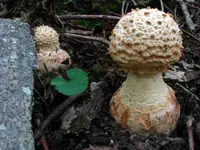
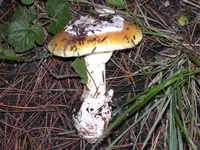
This species has a smooth, non-warty cap in warm tawny to orange-brown shades, a key feature that separates it from many other Amanita species with white warts or patches left from the universal veil.

Missing ring structure

Unlike many better-known Amanita relatives, this mushroom lacks a ring (annulus) on its stem, which is an important field character used by mycologists to distinguish it from closely related toxic species.

Bog and wetland associate

It commonly forms mycorrhizal partnerships with birch and other trees on wet, acidic soils in bogs, heaths, and damp woodlands, so its presence often indicates cool, nutrient-poor but moist habitats.

Botan icon

Did you know?

A distinctive feature of this species is its strongly sheathing, bag-like volva at the base of the stem, which can be deeply buried in moss or soil and is crucial for safe identification because some deadly Amanita species have different, more fragmented volva structures.

FAQs about Tawny Grisette

This mushroom is considered toxic if eaten and should never be consumed by humans or animals. Identification mistakes with deadly Amanita species are common. Treat it as poisonous and prevent children and pets from handling or ingesting it.

Grow Healthy Plants with Botan Care

Keep your plants happy and healthy with plant identification, disease detection, and easy care guidance.

Botan plant care app — identify plants on mobile

Explore More Plants