Peach-Colored Fly Agaric Care (Amanita persicina)

Peach-Colored Fly Agaric

About Peach-Colored Fly Agaric

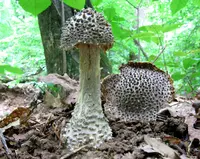
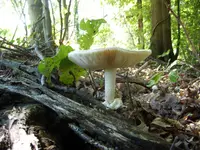
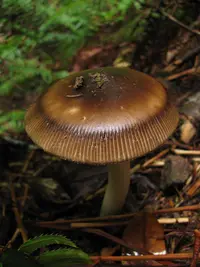
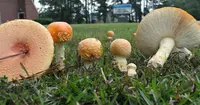
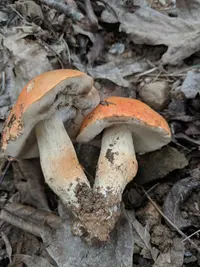
Peach-colored fly agaric, Amanita persicina, is a fleshy, mushroom-forming fungus rather than a leafy houseplant. It produces rounded caps in soft peach to salmon tones, often with pale warts on top and a sturdy, pale stem. In nature it is found in eastern North America, usually forming mycorrhizal partnerships with pine and other trees, meaning it relies on tree roots for nutrients.

Because of this specialized relationship, it is not practical to grow Amanita persicina like a typical potted plant. Attempts to care for Peach-Colored Fly Agaric indoors are generally unsuccessful, as it needs a suitable host tree, undisturbed soil, and natural forest conditions to complete its life cycle.

Main Plant Requirements

Care Difficulty

Hard Care

Light Preference

Partial Shade

Water Requirements

Regular Water

Temperature Preference

Warm Climate

Hardiness Zone

8–10

Soil Texture

Loamy, Sandy, Organic-rich

Soil pH

Acidic (5.5–6.5)

Soil Drainage

Moist but well-drained

Fertilization

Minimal (feed rarely)

Get Personalized Care Plan

Scan your plant to receive care tips personalized for your specific plant

Available on iOS and Android

How to Care for the Peach-Colored Fly Agaric

This ectomycorrhizal mushroom prefers dappled woodland light rather than open sun.

  • Provide bright shade or filtered light under pines or oaks, with 1–3 hours of gentle morning sun and full protection from strong midday and afternoon sun.
  • Allow partial shade to near-full shade; dense summer canopy is suitable as long as some indirect light reaches the forest floor for several hours daily.
  • Protect Peach-Colored Fly Agaric from exposed, reflective sites; intense sun and drying winds quickly desiccate caps and substrate, reducing fruiting reliability season to season.

This forest-dwelling fungus depends on stable, evenly moist soil around its tree partners.

  • Aim for consistently moist, not saturated, soil; the top 2–5 cm should feel cool and slightly damp, never muddy or soupy, where Amanita persicina associates with roots.
  • Use well-drained, humus-rich, slightly acidic soil so rain or irrigation percolates through rather than pooling, which encourages rot around fine tree and fungal tissues.
  • In dry periods, watch for shrinking, cracking soil and brittle leaf litter as signs of underwatering, while standing water, sour smells, or slimy organic matter indicate excess moisture.

This species fruits best in mild, temperate conditions rather than temperature extremes.

  • Optimal fruiting usually occurs around 60–75°F (16–24°C), especially during moist autumn periods following rain in mixed pine and hardwood habitats.
  • Tissues tolerate brief drops near 30–32°F (-1–0°C), but repeated hard freezes below 28°F (-2°C) damage caps and can halt fruiting until conditions moderate.
  • Sustained heat above 85°F (29°C), particularly when dry, shortens cap lifespan and suppresses new mushrooms, so shaded, cooler forest microclimates are important in hot summers.

This species does not rely on ambient air humidity, so targeted humidity management is unnecessary.

This fungus requires specific outdoor soil conditions rather than a standard potting substrate.

  • Growth depends on a natural, undisturbed, sandy to sandy-loam mineral soil with a substantial surface litter layer of pine needles or oak leaves.
  • The soil must drain freely, with no standing water after rain, yet retain slight, even moisture in the upper 5–10 cm.
  • Amanita persicina forms mycorrhizae with tree roots, so it should be placed where host trees grow in slightly acidic soil around pH 4.5–6.0.
  • Avoid compacted, heavily amended garden beds, peat-heavy potting mixes, or fertilized lawns, which disrupt the required tree–fungus partnership.

This species is not suitable for container growing because it depends on complex mycorrhizal relationships with living trees in open ground.

Amanita persicina forms nutrient-sharing mycorrhizal partnerships with trees and should not be fertilized directly like a typical houseplant or garden plant.

Pruning is not applicable to Amanita persicina, which is a wild mycorrhizal mushroom rather than a pruned ornamental plant.

This fungus is not suited to normal repotting, since it lives in symbiosis with tree roots in soil rather than as an independent potted plant.

  • Avoid attempting to grow Amanita persicina in containers; cultivation depends on compatible host trees and natural soil communities.
  • If moving young host trees, accept that existing fungal mycelium may not transplant successfully and may be lost.
  • Transplant trees only during cool, moist seasons to reduce stress and preserve some associated soil fungi.
  • Keep as much original root-zone soil around the tree roots as possible to retain existing mycorrhizal networks.

Intentional propagation is complex and unreliable, so this mycorrhizal mushroom is typically left to spread naturally rather than being actively multiplied.

Amanita persicina is a wild, cold-tolerant forest mushroom that needs no deliberate winter care in natural conditions.

Care Tips

Host Tree Matching

Select outdoor sites under mature pine or oak species known from the mushroom’s natural range, since this fungus relies on forming ectomycorrhizae (a root-fungus partnership) with compatible trees for reliable fruiting.

Minimal Soil Disturbance

Keep the soil and leaf litter under host trees undisturbed, avoiding raking, deep digging, or heavy foot traffic so that the underground mycelium network remains intact and productive.

Leaf Litter Management

Allow a thin, natural layer of needles or leaves to remain over the colonized area, topping up lightly each fall to maintain moisture and a stable microclimate without smothering the fruiting zone.

Targeted Irrigation Zones

When irrigating, water the drip line area around the host tree rather than the trunk base, as this is where the highest density of mycorrhizal root tips and fruiting bodies typically develops when growing Peach-Colored Fly Agaric.

Spore Distribution Method

After collecting mature caps, gently crumble gill tissue or pour a homemade spore slurry (spores mixed with non-chlorinated water) around suitable host trees to increase the chance of new mycelium establishment over several seasons.

Common Pests and Diseases

Fungal gnat larvae

This pest uses the moist substrate around fruiting bodies to develop, and larvae can tunnel through young tissue of the mushroom and its mycelial mat. Symptoms include soft, tunneled stems, distorted caps, and a decline in new fruiting at heavily infested sites.

Solution

Reduce excess surface moisture by allowing the top organic layer to dry slightly between waterings, remove heavily infested fruiting bodies, and use fine-mesh covers over trays or beds to block adult gnats. Yellow sticky cards help monitor and reduce adults, and a targeted biological control such as Bacillus thuringiensis israelensis (Bti) can be applied to the substrate according to label directions if infestation is severe.

Mushroom fly maggots

These insects lay eggs on or near developing caps, and their maggots quickly burrow into the flesh, causing tunnels, soft spots, and rapid decay of the fruiting bodies. Symptoms include small entry holes, premature collapse of caps, and visible larvae inside cut mushrooms.

Solution

Physically remove and discard infested fruiting bodies to reduce the local breeding population, and protect emerging mushrooms with breathable covers or fine netting to prevent egg-laying by adults. Keeping the fruiting area clean of old, decaying tissue and maintaining good airflow lowers attraction and slows population buildup when caring for Peach-Colored Fly Agaric.

Mycelial parasitic mold

This disease involves competitive molds colonizing the same substrate, overgrowing the white mycelium with patches of green, gray, or black fuzzy growth. Symptoms include stalled or reduced fruiting, off odors, and visible discolored mold mats on the casing or substrate surface.

Solution

Promptly remove and discard heavily contaminated sections of substrate and any affected fruiting bodies, avoiding disturbance that spreads spores. Improve hygiene by sterilizing or pasteurizing future substrate, cleaning tools and containers thoroughly, and maintaining moderate, stable humidity with good air exchange to reduce stagnant, mold-favoring microclimates.

Bacterial blotch

This disease is caused by opportunistic bacteria that attack wet mushroom surfaces, leading to yellow, amber, or brown greasy spots that may expand and soften the cap tissue. Symptoms include localized discoloration, slimy patches, and sometimes an unpleasant odor on affected caps.

Solution

Limit prolonged surface wetness by using fine misting rather than heavy watering directly on caps, and increase gentle airflow to dry surfaces between humidification cycles. Remove and discard blotched fruiting bodies, clean surrounding surfaces, and avoid handling mushrooms with dirty or wet tools to prevent spreading the bacteria.

Interesting Facts

Southeastern look‑alike

This species was long confused with the classic red and white Amanita muscaria but is now recognized as a distinct, peach‑to‑salmon colored taxon native mainly to the sandy pine and oak forests of the southeastern United States.

Southern pine associate

It forms ectomycorrhizal partnerships with pines and some oaks, exchanging mineral nutrients and water from the soil for sugars from tree roots, and is especially associated with coastal plain pine ecosystems.

Distinct chemical profile

Although related to other fly agarics, it shows a somewhat different mix and proportion of psychoactive and toxic compounds such as ibotenic acid and muscimol, which has drawn attention from mycologists studying chemical variation within the fly agaric group.
Botan icon

Did you know?

Molecular phylogenetic studies using DNA sequencing helped confirm that this peach‑colored fungus represents a separate species rather than just a color form of Amanita muscaria, refining the understanding of species diversity in the fly agaric complex.

FAQs about Peach-Colored Fly Agaric

Yes. This mushroom contains psychoactive and toxic compounds that can cause nausea, vomiting, confusion, hallucinations, and neurological symptoms in humans and pets. Ingestion requires urgent medical or veterinary attention. It is not safe as an ornamental “edible” species.

Grow Healthy Plants with Botan Care

Keep your plants happy and healthy with plant identification, disease detection, and easy care guidance.
Botan plant care app — identify plants on mobile