Aureoboletus projectellus Care

Aureoboletus projectellus

About Aureoboletus projectellus

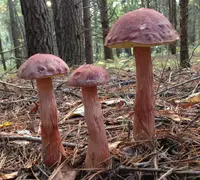
Aureoboletus projectellus is a fleshy mushroom-forming fungus, not a leafy houseplant. It produces tall, slender stems with yellowish to brown caps and a pore surface instead of gills. In nature it grows on sandy soils, often under pine trees, and is found in parts of North America and Europe. This species is considered a choice edible in some regions, which shapes how to care for Aureoboletus projectellus in cultivation or foraging contexts. It prefers humus-rich, well-drained soil, consistent moisture, and shaded to semi-shaded woodland conditions that mimic its natural forest habitat.

Main Plant Requirements

Care Difficulty

Moderate Care

Light Preference

Partial Shade

Water Requirements

Regular Water

Temperature Preference

Warm Climate

Hardiness Zone

Unknown

Soil Texture

Loamy, Sandy, Organic-rich

Soil pH

Acidic (5.5–6.5), Slightly acidic (6.5–7.0)

Soil Drainage

Moist but well-drained

Fertilization

Minimal (feed rarely)

Get Personalized Care Plan

Scan your plant to receive care tips personalized for your specific plant

Available on iOS and Android

How to Care for the Aureoboletus projectellus

This mycorrhizal bolete forms fruiting bodies only under specific woodland light conditions.

  • Choose bright, dappled shade under pines or mixed conifers, with about 2–4 hours of filtered morning sun and full shade by early afternoon.
  • Avoid full, open sun; strong midday exposure dries the forest litter and mycelium, sharply reducing chances of Aureoboletus projectellus fruiting.
  • Maintain a stable light environment year-round; limit canopy opening or heavy pruning that suddenly increases sun reach, especially in late spring and early summer.
  • ,

This woodland fungus depends on consistently moist, not waterlogged, soil around its tree partners.

  • Aim for evenly moist, freely draining sandy or sandy-loam soil; avoid spots where water pools for more than 24 hours after rain.
  • Allow the upper 2–5 cm of forest litter to dry slightly between rain events or irrigation, then re-moisten with a gentle soak rather than frequent light sprinkling.
  • Watch for signs of excess moisture such as sour smell, persistent standing water, or moss overgrowth, which can indicate conditions unsuitable for Aureoboletus projectellus.
  • ,

This species fruits best in mild to warm conditions typical of late summer forest floors.

  • Optimal fruiting usually occurs around 65–80°F (18–27°C), with soil staying cool and slightly moist beneath the litter layer.
  • Short drops to about 45–50°F (7–10°C) are tolerated, but hard frost below 32°F (0°C) generally halts or damages developing fruiting bodies.
  • Sustained heat above 86°F (30°C), especially with dry winds and low humidity, can desiccate caps and pore surfaces, sharply reducing quality and longevity.
  • ,

Humidity is not a meaningful factor for this outdoor ectomycorrhizal fungus, so general ambient conditions are sufficient.

This ectomycorrhizal bolete relies on suitable host trees and specific ground conditions rather than conventional potting soil.

  • Favor loose, sandy to sandy-loam forest soil with abundant organic litter such as decomposing pine needles and leaf mold.
  • Ensure the site drains quickly after rain; avoid compacted, waterlogged, or puddling areas that stay saturated for more than a few hours.
  • Aim for slightly acidic conditions, roughly pH 4.5–6.0, often found under conifers or mixed pine-oak woods.
  • Maintain a deep, undisturbed duff layer by adding leaf mold or fine bark mulch instead of cultivating or turning the soil.

This species is not suitable for container growing because it depends on complex ectomycorrhizal relationships with tree roots in undisturbed soil.

This mycorrhizal fungus partners with trees and normally needs no additional fertilizer in natural or woodland-style plantings.

As a wild ectomycorrhizal fungus, Aureoboletus projectellus is not managed by pruning in typical cultivation.

This bolete is rarely container-grown; management focuses on establishing compatible host trees in suitable soil rather than repotting.

  • Choose a well-drained, low-input site with compatible pines or other known hosts before introducing any inoculated material.
  • Avoid frequent disturbance; fungal mycelium forms long-lived networks that resent repeated moving or soil turning.
  • Transplant young host trees only during cool, moist seasons to limit root stress and maintain mycorrhizal contact.
  • Water transplanted hosts consistently after planting, keeping soil evenly moist but not waterlogged while roots and fungal partners re-establish.

Propagation of this ectomycorrhizal fungus is specialized and not typically attempted by home growers.

This species is naturally cold hardy in its native range and usually needs no dedicated winter care.

Care Tips

Host tree selection

Establish this ectomycorrhizal fungus with compatible pines (especially pitch or Scots pine) or other local conifers, as it relies on their roots for nutrients rather than traditional pot culture or standalone beds.

Minimal soil disturbance

Mark the area where fruiting bodies appear and avoid raking, deep hoeing, or tilling there, since disturbing the upper 10–15 cm of soil can break the mycelial network and reduce future mushroom production.

Leaf litter management

Maintain a light, continuous layer of pine needles or leaf litter around host trees to conserve moisture and provide a natural surface for fruiting, but remove thick, compacted mats that stay soggy and may promote rot.

Targeted irrigation zone

When irrigating host trees in dry periods, water slowly over the root zone out to the drip line rather than directly onto emerging mushrooms, which helps the mycelium stay active without damaging the fruiting bodies.

Spore spread assistance

After maturity, place collected caps on the soil under suitable host trees on the same site so spores can fall and potentially colonize new root tips, which can support long-term success when growing Aureoboletus projectellus in managed landscapes.

Common Pests and Diseases

Mycophagous insects

These insects feed directly on the fruiting bodies, creating pits, tunnels, and rapid decay in caps and stems. Symptoms include soft, collapsing tissue and small entry holes, especially in older or weathered mushrooms.

Solution

Harvest fruiting bodies promptly when they appear and discard any that show tunneling or soft, collapsing areas. Where allowed, use fine mesh netting or floating row cover over small collection areas to physically exclude insects, and remove spent mushrooms from the substrate to break their life cycle.

Fungal larvae (maggots)

This pest consists of fly larvae that hatch inside the developing mushroom, leading to spongy, hollow stems and caps that quickly rot. Symptoms include small pinholes, soft texture, and larvae visible when the mushroom is cut open.

Solution

Collect mushrooms as soon as caps expand and avoid leaving overmature specimens in place, since they host and spread larvae. Destroy heavily infested fruiting bodies and consider using breathable netting over known fruiting spots to reduce egg-laying on young mushrooms.

Slugs and snails

These mollusks rasp the surface of caps and stems, leaving irregular holes, slime trails, and partially eaten fruiting bodies. Symptoms include ragged edges and shallow craters in the cap, often appearing overnight in damp conditions.

Solution

Hand-pick slugs and snails in the evening or early morning and remove debris that provides hiding places near fruiting areas. Where appropriate, use physical barriers such as copper tape around small cultivation or observation plots, or place beer traps nearby to reduce local populations.

Bacterial soft rot

This disease causes wet, slimy, foul-smelling breakdown of the mushroom tissue, often starting where insects or mechanical damage occurred. Symptoms include water-soaked patches that rapidly turn mushy and discolored.

Solution

Remove and dispose of rotting fruiting bodies promptly to limit bacterial spread and odor, and avoid handling mushrooms when surfaces are very wet to reduce small injuries. Improving airflow at ground level by thinning dense ground vegetation can help surfaces dry faster after rain and reduce bacterial activity.

Interesting Facts

Native coastal specialist

This bolete is native to northeastern North America, where it grows almost exclusively with pitch pine and other pines in sandy, often coastal soils, forming ectomycorrhizal partnerships with their roots.

Extremely long stipe

It is notable for its unusually long, often slender stipe that can reach well over 20 cm in height, which makes the fruiting body look disproportionately tall compared with many other boletes.

Pore surface color change

The pore surface starts pale yellow and tends to become more olive or brownish with age, but unlike some other boletes it shows only weak or no blue staining when bruised, which helps distinguish it in the field.

Botan icon

Did you know?

This species is a relatively recent arrival in Europe, first noted in the late 20th century and now spreading along coastal pine forests of countries such as Lithuania and Poland, making it a well-documented example of a North American bolete expanding its range across the Atlantic.

FAQs about Aureoboletus projectellus

This bolete is generally considered edible but of modest culinary value. Identification must be certain, as boletes vary widely. Always cook thoroughly, test a small portion first, and avoid specimens from polluted or roadside areas.

Grow Healthy Plants with Botan Care

Keep your plants happy and healthy with plant identification, disease detection, and easy care guidance.

Botan plant care app — identify plants on mobile

Explore More Plants