


Use hardwood blocks
Establish cultures on untreated hardwood blocks or logs with intact bark, as this gives more stable moisture and structure than loose chips and supports more reliable fruiting over several seasons when growing poplar bells.

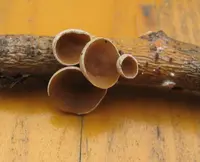
Poplar bells, Auriculariopsis ampla, is a wood-inhabiting fungus rather than a traditional leafy plant. It forms soft, ear-shaped fruiting bodies on decaying hardwood, often in overlapping clusters. Colors range from gray-brown to dark brown, with a somewhat gelatinous texture.
This species occurs mainly in temperate forests, especially in North America and parts of Europe, where it helps break down dead wood. It is not commonly cultivated, so information on how to care for poplar bells at home is limited. In nature it favors shaded, consistently moist habitats on well-rotted logs or branches.

Care Difficulty
Moderate Care

Light Preference
Partial Shade

Water Requirements
Keep Soil Moist

Temperature Preference
Warm Climate

Hardiness Zone
Unknown

Soil Texture
Loamy, Silty, Organic-rich

Soil pH
Acidic (5.5–6.5)

Soil Drainage
Moist but well-drained

Fertilization
Minimal (feed rarely)
Scan your plant to receive care tips personalized for your specific plant
Available on iOS and Android
Auriculariopsis ampla, often found on decaying poplar wood, prefers low, indirect light similar to a shaded forest floor.
Watering for Auriculariopsis ampla focuses on keeping its woody substrate evenly moist without prolonged saturation.
This species prefers cool to mild conditions that mimic a shaded woodland environment throughout the year.
This wood-decaying fungus prefers consistently moist air rather than very dry conditions.
Auriculariopsis ampla develops on decaying wood, but similar conditions can be created in cultivation using wood-rich, moist substrates.
This species can be grown in containers that mimic a moist, decaying wood environment.
Auriculariopsis ampla usually needs minimal fertilization when grown on suitably nutrient-rich woody substrate.
Pruning needs for Auriculariopsis ampla are limited and focus on habitat hygiene rather than shaping the organism itself.
Auriculariopsis ampla is typically grown on fixed logs or woody debris, so transplanting focuses on moving or renewing its substrate rather than classic repotting.
Propagation of Auriculariopsis ampla is specialized and usually handled through fungal culture rather than casual home methods.
Auriculariopsis ampla growing outdoors on hardy wood generally tolerates normal temperate winters with minimal attention.

Plant Health Check
Not sure what's wrong with your plant? Check your plant's health inside the app.
This jelly fungus is strongly associated with dead or decaying wood of poplars and related broadleaf trees, reflecting a high degree of host preference compared to many other wood-decaying fungi.
It forms thin, ear-like, gelatinous fruiting bodies that can rehydrate and revive their texture after drying out, a common adaptation among jelly fungi to fluctuating moisture conditions.
Auriculariopsis ampla is a white-rot fungus, meaning it breaks down lignin in wood and leaves a whitish, fibrous residue, playing an important role in nutrient cycling in temperate forests.
Brown leaf edges usually result from irregular moisture, excess fertilizer salts, or low humidity. Check soil moisture, flush the pot occasionally to remove salts, and avoid drying the substrate completely between waterings to prevent further damage.
Keep your plants happy and healthy with plant identification, disease detection, and easy care guidance.

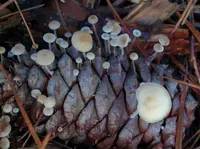
Conifercone Cap
Baeospora myosura
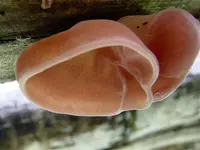
Auricularia fuscosuccinea
Auricularia fuscosuccinea
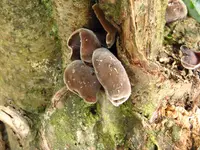
Auricularia nigricans
Auricularia nigricans
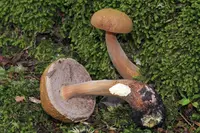
Graceful Bolete
Austroboletus gracilis
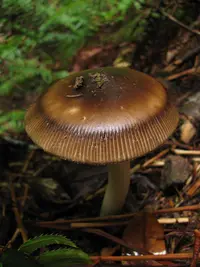
Western Grisette
Amanita pachycolea
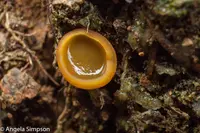
fleshy cup fungus
Aleurina ferruginea
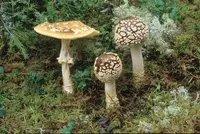
Royal fly agaric
Amanita regalis
Shoehorn Oyster
Hohenbuehelia petaloides