Gunpowder Amanita Care (Amanita onusta)

Also known as: Gunpowder Lepidella
Gunpowder Amanita

About Gunpowder Amanita

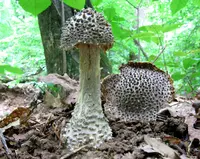
Gunpowder Amanita, Amanita onusta, is a gilled mushroom rather than a leafy houseplant. It forms compact, grayish caps often dusted with darker, powdery warts that suggest its common name. The sturdy white stem typically carries a ring and a swollen base, as is typical for many Amanita species.

This fungus occurs in woodlands of eastern North America, growing from the ground in association with trees. It forms mycorrhizae, a symbiotic relationship with roots, which makes it unsuitable for pots or standard indoor culture. For those curious about how to care for Gunpowder Amanita, the most realistic approach is careful observation in its natural habitat rather than active cultivation.

Main Plant Requirements

Care Difficulty

Hard Care

Light Preference

Partial Shade

Water Requirements

Regular Water

Temperature Preference

Cool Climate

Hardiness Zone

Unknown

Soil Texture

Loamy, Sandy, Organic-rich

Soil pH

Acidic (5.5–6.5)

Soil Drainage

Moist but well-drained

Fertilization

Minimal (feed rarely)

Get Personalized Care Plan

Scan your plant to receive care tips personalized for your specific plant

Available on iOS and Android

How to Care for the Gunpowder Amanita

This mycorrhizal mushroom prefers dappled woodland light rather than open, direct sun.

  • Provide 2–4 hours of soft morning sun with bright, filtered light the rest of the day under trees or tall shrubs, mimicking a forest edge environment for Gunpowder Amanita.
  • Avoid harsh midday and afternoon sun, which can overheat the substrate and dry the upper soil layer, reducing fruiting potential and damaging developing caps.
  • Site patches where partial shade persists in summer but some additional light reaches the area in spring and fall, before and after full canopy leaf-out.

This forest-dwelling fungus needs consistently moist, not waterlogged, soil around its tree partners.

  • Aim for evenly moist soil to a depth of 5–10 cm; the surface can dry slightly between rains, but the underlying layer should stay cool and damp when touched.
  • Improve drainage with loose, organic-rich material so water does not pool for more than a few hours, as prolonged saturation encourages anaerobic conditions and decay of mycelium.
  • In dry spells, monitor the site every few days; cracked soil, shriveling nearby fine roots, and brittle leaf litter indicate the need for deep, gentle soaking around Amanita onusta habitats.

This species favors temperate woodland conditions with cool to mild temperatures during fruiting.

  • Optimal fruiting typically occurs around 55–70°F (13–21°C), with stable, cool nights and mild days supporting steady mycelial activity in the upper soil layers.
  • The mycelium can endure brief drops near 30°F (-1°C) in dormant periods, but repeated hard frosts below 25°F (-4°C) or deep ground freezing reduce survival and later fruiting.
  • Sustained heat above 80–85°F (27–29°C) combined with dry soil stresses the organism, so shade, leaf litter, and regular moisture help buffer summer temperature extremes in woodland sites.

This ectomycorrhizal fungus does not rely on indoor air humidity control but responds strongly to overall site moisture.

  • Fruiting is favored where air humidity often exceeds 70% around moist, shaded forest soil.
  • Dry, windy conditions quickly desiccate caps and gills, leading to shriveling margins and brittle, cracking flesh.
  • Increase local humidity outdoors by retaining leaf litter, avoiding soil disturbance, and limiting direct sun and wind exposure near fruiting areas.

Amanita onusta relies on specific outdoor soil and tree partners rather than potting mixes.

  • Prefers natural, well-structured forest soil that is sandy to loamy, with abundant organic litter from host trees.
  • Requires freely draining but consistently moist ground; standing water or compacted, waterlogged areas suppress mycelium development.
  • Typically occurs in slightly acidic soil around pH 5.0–6.5, common in mixed or oak-dominated woodlands.
  • To support Amanita onusta, maintain an undisturbed leaf and twig layer, avoid tilling, and prevent heavy fertilizer or salt inputs that disrupt soil fungi.

This species is not suitable for container growing because it depends on complex ectomycorrhizal relationships with trees in undisturbed soil ecosystems.

Amanita onusta forms mycorrhizal partnerships with trees and should not be fertilized like a typical garden or house plant.

Amanita onusta is a wild mycorrhizal fungus and is not managed through pruning in cultivated settings.

This species is not suited to normal repotting or transplanting, as Amanita onusta depends on living tree roots in soil ecosystems.

  • Avoid lifting or moving fruiting bodies; they are only the visible part of a larger underground network.
  • Do not attempt container culture; the fungus requires a stable association with suitable host tree roots.
  • If habitat disturbance is unavoidable, leave surrounding soil and roots as intact and undisturbed as possible.
  • For study or monitoring, mark sites instead of relocating material to reduce stress on the fungal network.

Amanita onusta is not practically propagated by home growers because it relies on complex mycorrhizal relationships with host trees.

In natural conditions, Amanita onusta requires no specific winter care from gardeners.

Care Tips

Spore contamination control

Collect and dispose of spent caps and gills in sealed bags rather than composting them, especially near edible mushroom beds, to reduce unwanted spread and potential confusion with other Amanita species.

Site rotation planning

If possible, shift planting or host-tree sites every few years so that new inoculations are placed in slightly different spots, which can reduce buildup of soil pathogens around older mycelial colonies.

Disturbance-free mulch zone

Maintain a stable, undisturbed leaf-litter or wood-chip layer around the host tree roots and avoid frequent raking or digging so the mycelium network remains intact and fruiting stays consistent.

Moisture monitoring routine

Install a simple soil moisture probe at the edge of the mycelium zone and use readings to time irrigation of the host tree, rather than watering on a schedule, to keep the fungal partner in a stable, lightly moist environment.

Labeling and safety checks

Use durable outdoor labels and keep clear records with photos of cap, gills, and stem features so that anyone caring for Gunpowder Amanita on the property can distinguish it from other wild mushrooms and handle it appropriately.

Common Pests and Diseases

Fungal cap spots

This disease causes dull gray to black spotting or blotching on the cap surface, often making the cap look soot-stained or dirty. Symptoms include irregular patches that may coalesce as the fruiting body matures.

Solution

Remove and discard affected fruiting bodies promptly to limit local spore spread, and avoid disturbing or kicking mushrooms so spores are not widely dispersed. If fruiting bodies appear in a managed area like a lawn, keeping the surface layer of leaf litter thinner and improving air movement around the ground surface can reduce humidity and make conditions less favorable for heavy spotting.

Slug feeding damage

These pests chew ragged holes in the cap and gills and may leave shiny slime trails on or around the fruiting bodies. Symptoms include collapsed, partially eaten caps, especially in damp, shaded areas.

Solution

Hand-pick slugs in the evening or early morning and remove them from the area, focusing on moist hiding spots such as boards, stones, and dense groundcover. Reducing excess moisture and ground clutter, and using simple barriers such as copper tape or coarse sand around high-value garden areas, can limit contact between slugs and developing mushrooms without needing broad-spectrum chemicals.

Mycophagous mites

These insects are tiny soil-dwelling arthropods that feed on fungal tissue, leading to pitted, roughened, or deformed caps and stems. Symptoms include fine speckling or erosion on the surface of the mushroom, sometimes accompanied by a dusty appearance from mite movement and debris.

Solution

Gently remove and dispose of heavily damaged mushrooms to reduce local mite populations and food sources. In garden or yard settings, limiting thick, constantly wet organic layers and turning over surface leaf litter periodically can disrupt mite habitat while still preserving general soil health.

Interesting Facts

Gunpowder-like cap warts

This species is named for the dark gray, granular warts on its pale cap, which resemble scattered gunpowder against a whitish background.

Oak-associated mycorrhizal partner

Amanita onusta forms ectomycorrhizal associations with oaks and related hardwoods, exchanging mineral nutrients from the soil for sugars produced by the tree.

Restricted eastern range

This mushroom is known from the eastern United States, especially in oak forests, and is considered uncommon compared with many other woodland Amanita species.

FAQs about Gunpowder Amanita

This species is considered poisonous and should never be eaten. It may cause serious gastrointestinal and neurological symptoms if ingested. Children and pets must be kept away from all parts, including dried fragments in soil or lawn debris.

Grow Healthy Plants with Botan Care

Keep your plants happy and healthy with plant identification, disease detection, and easy care guidance.

Botan plant care app — identify plants on mobile

Explore More Plants