Use hardwood substrates
Prepare a substrate with well-decayed hardwood chips, sawdust, or small branches from non-resinous trees and avoid fresh conifer or treated wood, which can inhibit fruiting and favor contaminant fungi instead.

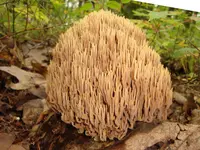
Upright coral fungus (Ramaria stricta) is a coral-like woodland fungus, not a true plant, valued mainly for its unusual form rather than for food use. It forms tight, upright, repeatedly branched clusters that resemble small beige to tan coral bushes emerging from decaying wood. This species occurs in temperate forests, often on rotting conifer logs or buried wood, across parts of North America and Europe. It plays an important role in breaking down dead wood, helping recycle nutrients in the forest. Many people find it challenging to care for Upright Coral Fungus in cultivation because it depends on specific wood-based substrates and stable, moist, cool conditions that are hard to reproduce indoors or in gardens.

Care Difficulty
Hard Care

Light Preference
Shade

Water Requirements
Keep Soil Moist

Temperature Preference
Cool Climate

Hardiness Zone
Unknown

Soil Texture
Loamy, Organic-rich

Soil pH
Acidic (5.5–6.5)

Soil Drainage
Moist but well-drained

Fertilization
Minimal (feed rarely)
Scan your plant to receive care tips personalized for your specific plant
Available on iOS and Android
This fungus prefers cool, shaded woodland conditions rather than direct open sun.
This species needs consistently moist, not waterlogged, forest soil to fruit well.
This fungus is adapted to cool to mild woodland temperatures, especially in autumn.
This fungus requires consistently moist, cool air rather than a specific indoor-style humidity regime.
This species grows best in cool, consistently moist, organic-rich substrate, usually associated with decaying wood.
This species is generally unsuitable for typical ornamental container growing and is best cultivated on outdoor logs or forest-like beds.
This wild, wood-decaying fungus is not a conventional potted plant and generally does not need supplemental fertilizer when growing on natural woody substrates.
Ramaria stricta does not require horticultural pruning, since its fruiting bodies are temporary structures that emerge, mature, and decompose on their own.
This fungus is best left on its natural woody substrate, so transplanting is rarely attempted outside controlled cultivation.
Propagation of this species is specialized and usually carried out only in research or controlled mushroom-culture settings, not typical home care.
This is a cold-hardy woodland fungus that overwinters in the wood it inhabits and usually needs no special winter care in its natural range.

Plant Health Check
Not sure what's wrong with your plant? Check your plant's health inside the app.
This coral fungus grows almost exclusively on well-decayed conifer wood, especially spruce and fir logs, helping break down tough lignin and returning locked-up nutrients to the forest soil.
The fruiting body forms dense, straight, antler-like branches that are often nearly parallel and sharply pointed at the tips, which helps distinguish it from many more bushy Ramaria species.
Unlike some edible coral fungi, this species has a distinctly bitter taste that does not disappear with cooking, which is one reason it is generally regarded as inedible.

Ramaria stricta can fruit year after year from the same buried mycelial network on a log, sometimes appearing in roughly the same spot each season as long as enough decaying wood remains to support it.
This fungus forms fruiting bodies fairly quickly once conditions are right, often appearing within days to weeks after sustained moisture. Growth is episodic, tied to rainfall and cool temperatures, rather than steady like most vascular plants.
Keep your plants happy and healthy with plant identification, disease detection, and easy care guidance.