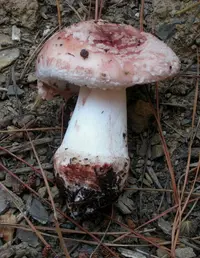
Smith's Amanita Care (Amanita smithiana)

Also known as: Smith's Lepidella
Smith's Amanita

About Smith's Amanita

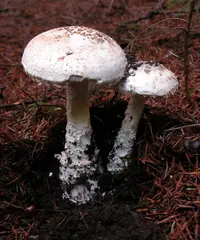
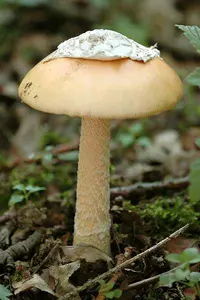
Smith's Amanita, Amanita smithiana, is a wild mushroom-forming fungus rather than a traditional houseplant. It produces sturdy white to pale brown caps with a thick stem and forms mycorrhizal partnerships, meaning it lives in close association with tree roots.

This species is typically found in coniferous forests of the Pacific Northwest, often in moist, cool, higher-elevation habitats. It does not adapt well to containers or indoor life, so how to care for Smith's Amanita is mostly a question of understanding its forest ecology rather than practical home cultivation.

In nature, it prefers cool temperatures, consistent moisture, and well-drained, organic-rich soils under suitable host trees.


Main Plant Requirements

Care Difficulty

Hard Care

Light Preference

Partial Shade

Water Requirements

Regular Water

Temperature Preference

Cool Climate

Hardiness Zone

Unknown

Soil Texture

Loamy, Sandy, Organic-rich

Soil pH

Acidic (5.5–6.5)

Soil Drainage

Moist but well-drained

Fertilization

Minimal (feed rarely)

Get Personalized Care Plan

Scan your plant to receive care tips personalized for your specific plant

Available on iOS and Android

How to Care for the Smith's Amanita

This ectomycorrhizal fungus prefers cool, shaded forest conditions with limited direct sun exposure.

  • Provide dappled or filtered light under conifers or mixed woodland, with no more than 1–2 hours of weak morning sun and full protection from harsh midday and afternoon sun.
  • Favor partial to full shade; canopy cover of 60–90% helps keep soil and roots cool, which supports host trees and indirectly benefits Smith's Amanita.
  • In summer, increased shade and leaf litter reduce drying; in early spring or fall, slightly more open light is acceptable as long as the ground surface does not bake or crack.

This woodland species depends on consistently moist, cool soil rather than direct watering of the fruiting bodies.

  • Aim for soil that stays evenly moist but not saturated, with the top 2–5 cm never turning powder-dry; use well-drained, humus-rich forest-type soil to prevent standing water.
  • If supporting Amanita smithiana around host trees, rely on rainfall when possible and supplement only when soil is drying, using gentle, low-pressure watering at soil level.
  • Watch for signs of excess moisture such as sour, swampy odor or persistent puddling, and signs of drought such as cracked soil, wilted groundcover, or prematurely browning mosses.

This fungus is adapted to cool, moist forest climates and does best in moderate temperatures.

  • Optimal fruiting usually occurs around 50–65°F (10–18°C), with mycelium growth continuing in soil roughly from 40–70°F (4–21°C) if moisture is stable.
  • Short exposures down to about 25°F (-4°C) are often tolerated in dormant mycelium, but repeated hard freezes without insulating leaf litter can reduce survival.
  • Sustained heat above 80°F (27°C), especially with dry soil, suppresses activity; deep mulch, shade, and maintained moisture help buffer summer temperature extremes.

Humidity management is not a primary factor for Amanita smithiana, which occurs naturally in outdoor forest conditions.

This ectomycorrhizal fungus depends on natural, undisturbed forest soil rather than prepared mixes.

  • Grows in cool, moist, well-aerated, sandy to sandy-loam soils typically under conifers, often where organic litter accumulates.
  • Requires free-draining substrate; avoid compacted, waterlogged, or heavily clay-based ground that holds standing water after rain.
  • Usually associates with slightly acidic soils, roughly pH 4.5–6.5, often in coniferous or mixed woodland settings.
  • Do not amend with rich compost, manure, or fertilizers, which can disrupt the native fungal–root balance and favor competitors.

This species is not suitable for container growing because it relies on complex root associations in natural forest soil.

This ectomycorrhizal fungus relies on its tree host for nutrients, so direct fertilization of Amanita smithiana is neither needed nor recommended.

Pruning is not applicable to Amanita smithiana, as it is a wild ectomycorrhizal fungus rather than a conventional garden or house plant.

Transplanting this ectomycorrhizal fungus is rarely successful, since Amanita smithiana depends on a stable, mature tree-root partnership.

  • Avoid disturbing soil where the fungus fruits; moving the mushroom alone breaks its connection to host roots.
  • Transplant attempts usually fail because the fine mycelial network cannot be lifted intact.
  • If research conditions require relocation, move a large, intact soil block with associated tree seedlings.
  • Minimize handling, vibration, and drying of the soil to reduce stress on the fungal mycelium.

Practical propagation of Amanita smithiana is highly specialized and not considered a routine horticultural task for home growers.

No active winter care is used for this wild ectomycorrhizal fungus, which follows the hardiness and soil conditions of its host trees.

Care Tips

Dedicated host trees

Establish and maintain a stable stand of compatible conifers (such as Douglas fir or hemlock) in the same area, since this fungus depends on long-term mycorrhizal association with living tree roots rather than isolated log or substrate culture.

Minimal soil disturbance

Avoid tilling, heavy raking, or compaction around the host trees so that the fine mycelial network in the upper soil layer is not broken, which helps fruiting bodies return in future seasons.

Careful mulching zone

Use a thin, loose mulch layer of untreated conifer needles or leaf litter rather than thick wood chips directly over likely fruiting areas, so moisture is conserved without smothering the soil surface where mushrooms emerge.

Seasonal moisture tracking

Monitor local rainfall and soil moisture near host trees during late summer to fall and, only where legally allowed and ecologically appropriate, apply light supplemental irrigation around the drip line to reduce drought stress on trees and the fungal partner when growing Smith's Amanita.

Strict handling safety

Mark and photograph locations instead of frequently touching or moving the mushrooms, and always use gloves and dedicated tools when collecting samples, because this species is highly toxic and can contaminate surfaces and mixed harvests.

Common Pests and Diseases

larval mycophagous insects

These insects feed on developing mushroom tissue, tunneling through caps and stems and increasing the risk of decay by secondary fungi and bacteria. Symptoms include soft, discolored patches, small entry holes, and accelerated collapse of fruiting bodies.

Solution

Remove and discard heavily infested fruiting bodies to reduce breeding sites, and harvest mushrooms promptly at mature stage to limit exposure time. In outdoor situations, maintain good sanitation by removing old or decaying mushrooms and organic debris where larvae can develop; in controlled culture setups, use fine mesh barriers and clean substrate to reduce egg laying on pins and young fruiting bodies.

fungal parasitism (Hypomyces)

This disease is caused by parasitic fungi such as Hypomyces species that overgrow the mushroom surface, deforming the cap and gills and preventing normal spore release. Symptoms include a dense, often white to colored crust on the cap, distorted shape, and failure of the gills to develop or remain visible.

Solution

Remove and destroy affected mushrooms as soon as parasitic overgrowth is noticed to limit local spread. Improve spacing and airflow around developing fruiting bodies and avoid overly wet, stagnant microclimates in cultivation beds, as drier, better-ventilated conditions make it harder for the parasite to spread across neighboring mushrooms.

bacterial soft rot

This disease develops in very wet, warm conditions and leads to water-soaked, slimy, and foul-smelling mushroom tissue. Symptoms include rapid softening of the stem and cap, surface slime, and collapse of the fruiting body.

Solution

Harvest mushrooms promptly and avoid overhead watering directly onto caps to limit free moisture on the surface. Remove and discard any soft, slimy fruiting bodies and improve drainage and airflow around the fruiting area; in culture conditions, adjust humidity to the lowest level that still supports normal development and avoid standing water on substrate surfaces.

slugs and snails

These pests feed on the caps and stems, leaving irregular holes, rasped surfaces, and silvery slime trails. This pest can quickly destroy young fruiting bodies and expose damaged tissue to secondary infections.

Solution

Hand-pick slugs and snails during damp periods and remove sheltering debris such as boards, dense groundcover, and thick leaf piles close to fruiting areas. Where allowed, use physical barriers such as copper tape or coarse diatomaceous earth rings around culture beds, and keep the immediate area relatively dry to reduce slug and snail activity.

Interesting Facts

Serious renal toxin

This species is known to cause delayed kidney failure in humans after ingestion, with symptoms often appearing many hours after eating, which makes diagnosis more difficult.

Dangerous look‑alike

The mushroom often resembles edible white Tricholoma species in coniferous forests, and several poisonings have occurred when foragers mistook it for these edible look‑alikes.

Conifer forest specialist

It forms ectomycorrhizal associations with conifer trees such as Douglas-fir and pines, exchanging mineral nutrients for sugars in a mutualistic root partnership.

Botan icon

Did you know?

This species has been implicated in clusters of mushroom poisoning cases in the Pacific Northwest of North America, which led to increased public health surveillance and specific warnings to foragers in that region.

FAQs about Smith's Amanita

This mushroom is highly poisonous to both humans and pets. Ingestion can cause severe kidney failure and can be life‑threatening. It must never be eaten and should be removed from areas accessible to children or animals.

Grow Healthy Plants with Botan Care

Keep your plants happy and healthy with plant identification, disease detection, and easy care guidance.

Botan plant care app — identify plants on mobile

Explore More Plants