


Site sanitation
Remove and discard old caps and decaying organic matter around the mushrooms to reduce spore load of competing fungi and limit habitat for fungus gnats and other pests when growing Bearded Amanita.

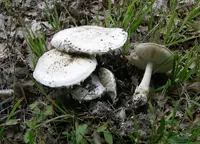
Bearded amanita (Amanita ovoidea) is a large, ground-dwelling mushroom, not a leafy houseplant. It forms stout white to cream fruiting bodies with a thick stem, broad cap, and a distinctive volva or cup at the base. In nature it grows in association with tree roots, especially in Mediterranean woodlands and scrub, where it forms a mycorrhizal partnership that helps trees absorb nutrients. This specialized relationship makes it difficult to cultivate reliably at home, even for experienced growers. Anyone wanting to care for Bearded Amanita should focus on understanding its woodland origin, preference for undisturbed soil, and reliance on living host trees rather than typical potted-plant conditions.

Care Difficulty
Hard Care

Light Preference
Partial Shade

Water Requirements
Keep Soil Moist

Temperature Preference
Cool Climate

Hardiness Zone
Unknown

Soil Texture
Loamy, Silty, Organic-rich

Soil pH
Acidic (5.5–6.5), Slightly acidic (6.5–7.0)

Soil Drainage
Moist but well-drained

Fertilization
Minimal (feed rarely)
Scan your plant to receive care tips personalized for your specific plant
Available on iOS and Android
This ectomycorrhizal fungus prefers stable woodland light rather than open, exposed sun.
This species depends on evenly moist, well‑drained soil rather than frequent surface soaking.
This woodland fungus responds strongly to seasonal temperature patterns and soil warmth.
Humidity plays a minor role for Amanita ovoidea compared with soil and host tree conditions.
Amanita ovoidea depends on undisturbed, specific outdoor soil conditions rather than prepared mixes.
This species is not suitable for container growing because it requires a long-term association with living tree roots in natural soil.
This wild mycorrhizal fungus does not need routine fertilization and usually thrives without added nutrients when left in suitable soil.
Amanita ovoidea is not managed like a garden shrub or tree and does not benefit from intentional pruning.
This species is a mycorrhizal woodland fungus, so it is not suited to normal repotting; focus on minimizing disturbance to its natural soil and host roots.
Intentional propagation of Amanita ovoidea is technically complex and rarely attempted outside specialist research or forestry work.
This woodland fungus is naturally cold hardy in its native range and needs no deliberate winter care in the landscape.

Plant Health Check
Not sure what's wrong with your plant? Check your plant's health inside the app.
This species is naturally confined to Mediterranean and sub-Mediterranean regions, especially coastal and montane areas with mild, dry summers and wetter, cooler winters.
It shows a marked preference for calcareous soils, often occurring where underlying bedrock or surface soils are rich in limestone, which influences its distribution compared with related Amanita species.
It forms ectomycorrhizal associations with trees such as oaks, pines, and chestnuts, exchanging mineral nutrients and water from the soil for sugars produced by the host tree.

Some regional field guides historically listed Amanita ovoidea as edible, but modern mycologists strongly discourage consumption because it can be confused with deadly white amanitas, leading to serious poisoning incidents in parts of southern Europe.
This species is considered poisonous and potentially deadly. It contains toxic compounds that can cause severe gastrointestinal and liver damage. Never eat it, and prevent children and pets from handling or ingesting any part of the mushroom.
Keep your plants happy and healthy with plant identification, disease detection, and easy care guidance.

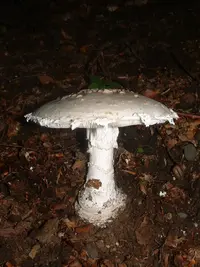
European Pine Cone Lepidella
Amanita strobiliformis
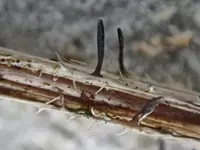
Acrospermum compressum
Acrospermum compressum
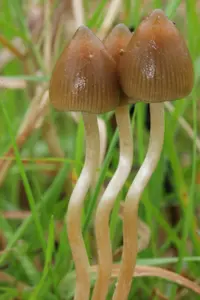
liberty cap
Psilocybe semilanceata
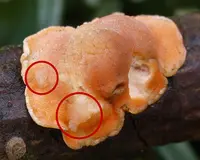
Orange Disco
Aleurodiscus amorphus
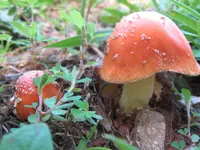
False Caesar's Mushroom
Amanita parcivolvata
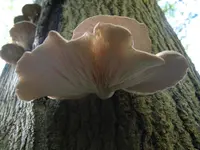
oyster mushroom
Pleurotus ostreatus
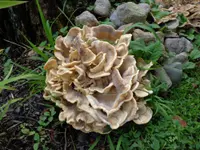
Black-staining Polypore
Meripilus sumstinei
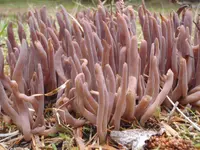
Purple Spindles
Alloclavaria purpurea