Shaggy Legged Ringless Amanita Care (Amanita rhacopus)

Shaggy Legged Ringless Amanita

About Shaggy Legged Ringless Amanita

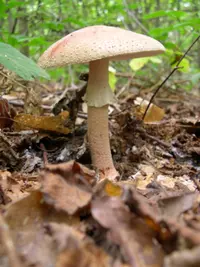
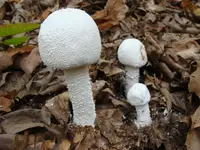
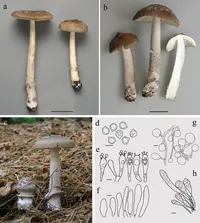
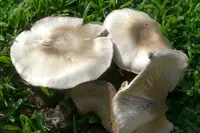
Shaggy Legged Ringless Amanita (Amanita rhacopus) is a woodland mushroom, not a true plant, most often found in temperate conifer and mixed forests. It forms mycorrhiza, a nutrient-sharing partnership, with nearby trees and usually appears in soil rich in leaf litter or moss. Caps are typically pale to gray-brown with a fibrous or scaly surface, and the slender stem often shows a shaggy texture but lacks the ring seen on many other Amanita species. Because it depends on a complex relationship with tree roots, it is not practical to cultivate indoors or in standard garden beds, so attempts to care for Shaggy Legged Ringless Amanita at home are rarely successful.

Main Plant Requirements

Care Difficulty

Hard Care

Light Preference

Partial Shade

Water Requirements

Keep Soil Moist

Temperature Preference

Cool Climate

Hardiness Zone

Unknown

Soil Texture

Loamy, Organic-rich

Soil pH

Acidic (5.5–6.5)

Soil Drainage

Moist but well-drained

Fertilization

Minimal (feed rarely)

Get Personalized Care Plan

Scan your plant to receive care tips personalized for your specific plant

Available on iOS and Android

How to Care for the Shaggy Legged Ringless Amanita

This ectomycorrhizal fungus prefers woodland light conditions rather than open, direct sun exposure.

  • Provide bright to medium shade, such as dappled light under deciduous trees, with 1–3 hours of gentle morning sun and no harsh afternoon sun.
  • Avoid full, unfiltered sun for more than 3–4 hours, which can overheat the soil surface and dry leaf litter where Shaggy Legged Ringless Amanita typically fruits.
  • In summer, rely on canopy shade and leaf litter to buffer light and temperature; in late fall, reduced day length and lower sun angle are usually sufficient without extra shading.

Moist but not waterlogged soil supports healthy fruiting of this woodland Amanita.

  • Aim for consistently moist soil with no standing water; surface leaf litter can feel slightly damp while the top 2–3 cm of mineral soil stays evenly moist.
  • Good drainage is essential; prolonged puddling, sour or rotten odor, and moldy litter suggest overwatering or poor drainage around Amanita rhacopus habitat.
  • During hot, dry periods, moisture may need supplementing so soil does not fully dry or crack, while shriveling or aborting caps often indicate repeated drying cycles.

This species favors cool to mild woodland temperatures and is sensitive to both hard frost and extreme heat.

  • Optimal fruiting usually occurs around 50–68°F (10–20°C), with cool nights and mild days common in temperate forests during spring or fall.
  • It tolerates brief drops near 32°F (0°C), but repeated freezes or hard frost can damage or halt fruiting bodies and reduce visible activity.
  • Sustained heat above 80°F (27°C) with dry conditions can limit fruiting; shade, mulch, and stable soil moisture help moderate temperature swings around the mycelium.

This mycorrhizal fungus does not require managed air humidity and is adapted to natural outdoor fluctuations.

This species relies on a loose, forest-type substrate rather than conventional potting soil.

  • Use a mix that mimics woodland litter: roughly 40% leaf mold, 40% well-decomposed compost, and 20% coarse mineral material such as sand or fine grit.
  • Aim for moist, free-draining structure where water percolates quickly yet the upper organic layer stays slightly damp, never waterlogged.
  • Keep pH slightly acidic to neutral (pH 5.5–7.0), avoiding limed or heavily fertilized garden beds that can disrupt mycorrhizal partners.
  • Maintain a deep, undisturbed layer of organic debris to protect fungal mycelium threads and improve aeration over time for Amanita rhacopus.

This woodland ectomycorrhizal fungus is not suitable for container growing because it depends on living tree roots in stable ground.

This mycorrhizal fungus typically gains nutrients through its tree partners, so extra fertilization is rarely helpful for Shaggy Legged Ringless Amanita.

Pruning is not applicable to Amanita rhacopus, as it is a wild ectomycorrhizal fungus rather than a cultivated garden plant.

Transplanting this ectomycorrhizal fungus is generally impractical because it relies on intimate root partnerships with host trees in stable soil.

  • Avoid disturbing established woodland soil where the fungus fruits, since breaking tree root connections usually prevents future fruiting.
  • Container culture is not recommended; the complex tree–fungus relationship does not adapt well to pots or artificial substrates.
  • If soil must be moved for construction, leave undisturbed buffer zones around host trees to preserve some of the underground network.

Meaningful propagation of Amanita rhacopus is highly specialized and not suited to routine home or garden methods.

No specific winter care is required, as this woodland fungus is adapted to local seasonal conditions in its native range.

Care Tips

Host tree selection

Establish this mycorrhizal fungus near compatible host trees such as birch, spruce, fir, or hemlock, as it relies on their roots for carbohydrates and will not fruit well in lawns or beds without suitable partners.

Minimal soil disturbance

Avoid tilling, deep digging, or frequent raking in the fruiting area, because breaking fine tree roots and fungal mycelium can significantly reduce or delay mushroom production.

Manage leaf litter

Maintain a light, natural layer of leaf litter or conifer needles over the colonized area to conserve moisture and protect mycelium, but thin out thick, matted layers that prevent gas exchange and trap excess water.

Careful foot traffic

Limit walking and equipment use over the main colony zone, marking its outline with discreet stones or flags if needed, because repeated compaction reduces soil aeration and damages both roots and fungal networks.

Seasonal moisture monitoring

During dry periods in late summer to fall, check the upper 5–10 cm of soil near host trees and use gentle, infrequent deep watering only when this layer is very dry, which better supports growing Shaggy Legged Ringless Amanita than frequent light sprinkling.

Common Pests and Diseases

Mycophagous springtails

These insects feed on fungal tissue, grazing caps and gills and sometimes tunneling into the stipe, which can deform or stunt fruiting bodies. Symptoms include pitted or roughened cap surfaces and small moving white or gray insects in the substrate or around the base.

Solution

Reduce excess surface moisture by improving drainage and aeration of the substrate, and avoid standing water around developing mushrooms. Remove and discard heavily damaged fruiting bodies, then use sticky traps and, if necessary, targeted soil-safe biological controls containing predatory mites or beneficial nematodes to lower springtail populations without disrupting the fungal colony.

Fungus gnat larvae

This pest develops in moist organic substrates, where larvae chew through young fungal tissue and mycelium. Symptoms include collapsing pins, hollow or water-soaked stipes, and tiny black adult gnats hovering near the substrate surface.

Solution

Allow the upper layer of the substrate to dry slightly between irrigations, improve air movement, and remove any heavily infested mushrooms. Apply a biological control such as Bacillus thuringiensis israelensis (BTI) to the moist substrate according to label directions and use yellow sticky traps to catch adults and reduce egg laying.

Bacterial blotch

This disease causes greasy, water-soaked, or yellow-brown spots on caps, often appearing where free water sits on the surface. Symptoms include soft, slimy patches that spread under persistently wet, stagnant conditions.

Solution

Limit overhead wetting of fruiting bodies, irrigate at the substrate level, and ensure strong but gentle air circulation to keep caps dry. Remove and discard blotched mushrooms promptly, clean nearby tools and containers with a mild disinfectant, and avoid overcrowding fruiting clusters so surfaces dry quickly.

Mite infestation

These pests include various soil and mycophagous mites that feed on surface mycelium and developing fruiting bodies. Symptoms include rough, scarred cap surfaces, slowed growth, and visible tiny moving dots in substrate crevices or on caps under close inspection.

Solution

Reduce organic debris and thoroughly clean collection trays, containers, or benches between flushes, then discard highly damaged fruiting bodies. Introduce predatory mites suited to fungus-growing environments, maintain moderate rather than excessive humidity, and avoid bringing in contaminated leaf litter or compost that can carry mite populations.

Competing mold contamination

This disease involves fast-growing molds that colonize the same substrate, forming green, blue, or gray fuzzy patches that overrun the native mycelium. Symptoms include stalled or aborted fruiting, discolored substrate, and off-odors distinct from normal mushroom smell, which strongly affects Amanita rhacopus care instructions in managed or observational setups.

Solution

Physically remove and discard heavily contaminated substrate sections and any nearby affected fruiting bodies, taking care not to spread spores. Improve sanitation by cleaning tools and containers, increase fresh air exchange, and adjust moisture so the substrate stays evenly moist rather than saturated, which favors aggressive mold competitors over established Amanita mycelium.

Interesting Facts

Ringless cap features

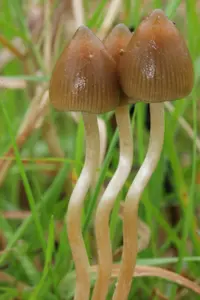
This species lacks a ring on the stem, unlike many familiar Amanita species, and shows a brownish to grayish cap that often appears slightly shaggy or fibrillose when mature.

Forest partnership fungus

It forms ectomycorrhizal associations with coniferous and mixed forests, exchanging mineral nutrients and water for sugars from tree roots, which supports both the fungus and its host trees.

Seasonal fruiting pattern

Fruiting bodies typically appear on the forest floor from late summer into autumn in temperate regions, reflecting the species’ adaptation to cooler, moist conditions for spore production and dispersal.

FAQs about Shaggy Legged Ringless Amanita

This species is not recommended for consumption. Identification within the genus is difficult, and some related species contain dangerous neurotoxins. For safety, treat it as inedible and avoid foraging or eating any similar mushrooms.

Grow Healthy Plants with Botan Care

Keep your plants happy and healthy with plant identification, disease detection, and easy care guidance.

Botan plant care app — identify plants on mobile

Explore More Plants