Host tree selection
Establish culture only near compatible ectomycorrhizal hosts such as oaks and other native hardwoods, since this species depends on a living tree root system rather than standard mushroom substrate blocks or compost.

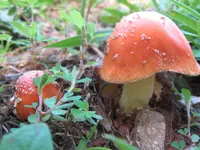
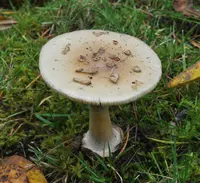
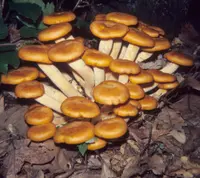
False Caesar's mushroom, Amanita parcivolvata, is a medium-sized gilled fungus rather than a true houseplant. It forms bright orange to reddish caps with pale gills and a slender stem, creating a striking but deceptive appearance.
This species occurs naturally in eastern North America, usually in association with oaks and other hardwood trees, forming mycorrhizal relationships that help both fungus and tree exchange nutrients. Because it depends on these tree partnerships, it is not practical to grow indoors or in containers, and attempts to care for False Caesar's Mushroom at home are rarely successful.
In nature it prefers well-drained, organic-rich forest soils with consistent moisture and dappled light on the forest floor.

Care Difficulty
Hard Care

Light Preference
Partial Shade

Water Requirements
Keep Soil Moist

Temperature Preference
Warm Climate

Hardiness Zone
7–10

Soil Texture
Loamy, Sandy, Organic-rich

Soil pH
Acidic (5.5–6.5)

Soil Drainage
Moist but well-drained

Fertilization
Minimal (feed rarely)
Scan your plant to receive care tips personalized for your specific plant
Available on iOS and Android
This ectomycorrhizal mushroom prefers dappled woodland light rather than open, direct sun.
This forest-dwelling fungus depends on consistently moist, free-draining soil rather than direct surface watering.
This species fruits best in mild to warm conditions typical of late summer to early fall in many temperate forests.
Humidity is not a major controllable factor for this wild ectomycorrhizal fungus and is best managed by maintaining its natural outdoor woodland conditions.
This mushroom forms mycorrhizal partnerships with tree roots and does not adapt to standard potting mixes.
This species is not suitable for container growing, as it depends on complex soil ecosystems and live tree roots that cannot be replicated in pots.
This woodland mushroom forms nutrient-sharing partnerships with trees and does not benefit from direct fertilization.
Amanita parcivolvata is a wild mycorrhizal mushroom and is not pruned in the way ornamental plants are.
This species is not suited to normal container culture, so any attempt to move it focuses on preserving the tree–fungus association.
This wild ectomycorrhizal fungus is not practically propagated by home growers, since it requires complex relationships with tree roots.
This native woodland mushroom is cold hardy in its natural range and does not need targeted winter care.

Plant Health Check
Not sure what's wrong with your plant? Check your plant's health inside the app.
This species has a bright orange to red-orange cap that can resemble edible Caesar-type amanitas, which makes field identification tricky and increases the risk of dangerous confusion with similar-looking species.
The species name parcivolvata refers to its reduced or fragmentary volva, the cup-like tissue at the base of many Amanita species, which in this fungus appears only as small patches or bands on the stem rather than a full sac.
This fungus forms ectomycorrhizal relationships with oaks in the eastern United States, exchanging mineral nutrients and water from the soil for sugars provided by the tree, and is typically found in oak-dominated woodlands.
This species is considered poisonous and should never be eaten. It can be confused with edible amanitas, making identification risky even for experienced foragers. Avoid all consumption and teach children not to handle unknown wild mushrooms.
Keep your plants happy and healthy with plant identification, disease detection, and easy care guidance.