parsley Care (Petroselinum crispum)

Also known as: garden parsley, Italian parsley
parsley

About parsley

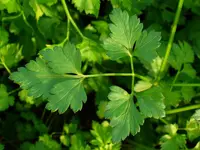
Parsley, Petroselinum crispum, is a short-lived herbaceous plant grown mainly for its fresh, aromatic leaves. It forms a compact rosette of finely divided, flat or curly foliage. In its second year it can send up taller flower stalks with small umbels of white or greenish flowers.

This species originates from the Mediterranean region but is now widely cultivated in gardens and containers worldwide. It is generally easy to grow when given moderate light, consistent moisture, and well-drained soil. Understanding how to care for parsley helps keep plants productive for a longer harvest season.

Main Plant Requirements

Care Difficulty

Moderate Care

Light Preference

Full Sun

Water Requirements

Regular Water

Temperature Preference

Cool Climate

Hardiness Zone

4–9

Soil Texture

Loamy, Sandy, Organic-rich

Soil pH

Acidic (5.5–6.5), Slightly acidic (6.5–7.0)

Soil Drainage

Moist but well-drained

Fertilization

Light (every 4–6 weeks)

Get Personalized Care Plan

Scan your plant to receive care tips personalized for your specific plant

Available on iOS and Android

How to Care for the parsley

This herb needs consistent light for dense, flavorful leaves.

  • Provide 4–6 hours of direct sun daily, ideally morning sun with light afternoon shade, especially in hot summer climates.
  • Allow partial shade (as little as 3–4 hours sun) in warm regions; parsley may grow slower but foliage often stays softer and greener.
  • Watch for pale, stretched stems as a sign of too little light, and scorched, crispy leaf edges as a sign of harsh afternoon sun.

Watering should keep the root zone evenly moist but never saturated.

  • Check soil before watering; water when the top 2–3 cm (about 1 in) feels dry, allowing water to soak to the full root depth.
  • Use well-drained soil so excess water can escape; yellowing, limp leaves and a sour soil smell suggest overwatering and possible root rot.
  • In hot, windy periods, expect faster drying and more frequent watering, while in cool or rainy seasons Petroselinum crispum may need far less.

This herb prefers cool to mild conditions and tolerates light chill better than intense heat.

  • Aim for 60–75°F (16–24°C) for best growth; plants stay leafy longer and are slower to bolt at the cooler end of this range.
  • Tolerates down to about 25°F (−4°C) with some damage; repeated freezes below this can kill crowns, so use mulch in cold climates.
  • Handles short spells of 80–90°F (27–32°C), but prolonged heat increases bolting; provide afternoon shade and consistent moisture in hot summers.

Indoor-grown Petroselinum crispum manages well in typical household humidity if watering is consistent.

  • Aim for 40–60% humidity; levels much below 30% combined with heat can speed leaf wilting.
  • Dry indoor air shows as curled, crispy leaf edges and faster soil drying between waterings.
  • Increase humidity slightly by grouping herbs together and keeping a shallow tray of water near, not under, the pot.

Petroselinum crispum prefers evenly moist, loose soil that drains freely but does not dry out too fast.

  • Use a loamy mix with 40–60% compost plus standard potting mix to provide organic matter and moisture retention.
  • Aim for pH 6.0–7.0, avoiding strongly acidic or chalky soils that can limit nutrient uptake.
  • Improve drainage and aeration by blending in 10–20% perlite or coarse sand, especially for container growing.
  • Avoid heavy clay, compacted beds, or mixes with a high peat content that either stay waterlogged or become hydrophobic when dry.

This species grows well in containers when the pot supports its deep taproot and steady moisture.

  • Choose a pot at least 20–25 cm deep so the taproot can develop without becoming constricted early.
  • Select a wider container to allow multiple plants and reduce surface drying speed in sunny positions.
  • Use a slightly heavier material, such as ceramic or clay, to keep tall, leafy growth stable in outdoor wind exposure.

This herb benefits from modest, consistent feeding during its active growing season.

  • Use a balanced liquid fertilizer (such as 10-10-10) at 1/2 strength every 3–4 weeks in spring and summer.
  • Alternatively, top-dress with a thin layer of compost to support leafy growth in parsley.
  • Avoid high-nitrogen lawn products or strong synthetic feeds that can burn roots.
  • Stop or greatly reduce feeding in fall and winter when growth slows.

Petroselinum crispum responds well to light, frequent cutting that encourages dense, leafy growth.

  • Harvest stems from the outside first, cutting at the base to keep the center growing strongly.
  • Remove yellowing, dead, or damaged leaves whenever noticed to limit disease and keep plants tidy.
  • Avoid cutting more than 1/3 of the foliage at one time to prevent growth checks.
  • Use clean scissors or snips for precise cuts, especially on container or indoor plants.

This herb is shallow-rooted and adapts well to both containers and garden beds when transplanted carefully.

  • Plan transplanting for early spring or early fall, avoiding extreme heat or hard frost.
  • Look for roots circling the pot drainage holes or slowed growth as cues to move into a container 2–5 cm wider.
  • Lift plants with as much root ball as possible, disturbing roots minimally to reduce stress.
  • Water thoroughly after transplanting and shade lightly for a few days to help recovery.

This species is most commonly renewed from seed rather than by division or cuttings.

  • Sow fresh seeds in early spring or late summer, indoors in trays or directly outdoors.
  • Pre-soak seeds in lukewarm water for 12–24 hours to speed germination, which is naturally slow.
  • Provide 60–70°F soil, consistent moisture, and good light for 14–28 days until seedlings emerge.
  • Thin crowded seedlings, keeping the strongest plants spaced 10–15 cm apart for healthy growth.

This herb is moderately cold tolerant but benefits from simple winter precautions in colder regions.

  • In mild climates, plants often overwinter in the ground with minimal intervention.
  • Apply 2–5 cm of straw or leaf mulch around the root zone in zones below about 7 to buffer freezes.
  • Move container plants indoors to a cool, bright spot before hard frost, keeping soil just slightly moist.

Care Tips

Harvest rotation

Divide the plant into 3–4 zones and harvest from a different zone each time, always cutting outer stems at the base to keep a steady flush of new foliage for longer.

Timed succession sowing

Sow a small new batch every 4–6 weeks during the growing season so that declining older plants are automatically replaced and you always have vigorous parsley available.

Root-zone mulching

Apply a 1–2 in layer of fine compost or shredded bark around, but not touching, the crowns to keep roots cool, reduce soil splash on leaves, and limit weed competition.

Targeted pest scouting

Inspect leaf undersides and inner clumps weekly for aphids and caterpillars, and remove affected stems promptly so infestations are controlled before damaging the dense foliage.

Planned crop rotation

In beds or large planters, avoid replanting parsley or other umbellifers (such as carrot and cilantro) in the same spot for 2–3 years to reduce soil-borne disease buildup while growing parsley.

Common Pests and Diseases

Carrot family aphids

This pest often clusters on soft stems and undersides of parsley leaves, sucking sap and causing curling, yellowing, and sticky honeydew. Symptoms include distorted new growth and the presence of ants farming the honeydew.

Solution

Spray plants with a strong stream of water to dislodge colonies, then treat remaining aphids with insecticidal soap or a light horticultural oil, coating leaf undersides thoroughly. Reduce excess nitrogen fertilizer that encourages soft, aphid-prone growth and remove heavily infested stems to maintain healthy growing parsley clumps.

Parsley leaf miner

This pest is the larva of a small fly that tunnels between leaf surfaces, creating winding, pale mines and blotches. Symptoms include thin, white trails in the leaves and early leaf yellowing or collapse.

Solution

Remove and discard mined leaves promptly to break the life cycle and prevent larvae from pupating in the soil. Use lightweight row covers during peak fly activity to block egg-laying, and avoid planting parsley close to previous Apiaceae crops like carrots or celery that may harbor the same pest.

Septoria leaf spot

This disease causes numerous small, tan to gray spots with darker borders on parsley leaves, often starting on lower, older foliage. Symptoms include premature yellowing and dieback, which can thin the plant and reduce harvest quality.

Solution

Prune and discard affected leaves as soon as spots appear and avoid wetting the foliage when watering by using drip or at-soil-level irrigation. Improve spacing and airflow, rotate planting beds for at least 2–3 years away from other Apiaceae, and use a labeled copper or bio-fungicide preventively if the problem recurs under cool, wet conditions.

Downy mildew

This disease produces yellow or pale patches on upper leaf surfaces with a fuzzy, gray-purple growth underneath in humid conditions. Symptoms include leaf curling, tissue collapse, and rapid decline in dense plantings.

Solution

Increase airflow with wider spacing, harvest or thin dense foliage, and water early in the day so leaves dry quickly. Remove and discard infected leaves, avoid overhead watering in cool, humid weather, and use a suitable organic fungicide as a preventative when conditions favor spread of this parsley disease.

Powdery mildew

This disease appears as white, powdery patches on parsley leaves and stems, which may lead to yellowing and reduced vigor. Symptoms include a dusty coating that spreads over time, especially in crowded, shaded, or dry but humid conditions.

Solution

Improve light and airflow by thinning crowded plants and avoiding tight indoor groupings, a key part of parsley indoor care. Remove heavily affected leaves and apply a labeled sulfur, potassium bicarbonate, or biological fungicide early in the outbreak, keeping foliage dry and stress low to limit recurrence.

Interesting Facts

Biennial leaf strategy

This parsley typically lives for 2 years, forming only a leafy rosette in the first year to store energy in its taproot, then using that stored energy in the second year to send up tall flowering stalks and set seed.

Distinctive leaf morphs

The common curly type and the flat-leaf type used in cooking are both forms of the same species, differing mainly in leaf shape and texture while sharing the same basic chemistry and life cycle.

Apiaceae family traits

As a member of the carrot family Apiaceae, this plant has hollow, grooved stems and produces small, greenish-yellow flowers in compound umbels, a characteristic umbrella-like inflorescence of this plant group.

Botan icon

Did you know?

Genetic and historical evidence suggests this species originated in the central and eastern Mediterranean region, and it was already described and cultivated as a culinary and medicinal herb in ancient Greek and Roman texts more than 2,000 years ago.

FAQs about parsley

Yellowing leaves often result from nutrient deficiency, overwatering, or natural aging of older foliage. Check drainage, avoid waterlogged soil, and consider a balanced, dilute fertilizer. Remove the oldest yellow leaves to direct energy to new growth.

Grow Healthy Plants with Botan Care

Keep your plants happy and healthy with plant identification, disease detection, and easy care guidance.

Botan plant care app — identify plants on mobile

Explore More Plants