Optimize vernalization
Store cleaned seed in a moist medium like sand or vermiculite at 35–41°F for 8–12 weeks to break dormancy and secure even germination in spring.

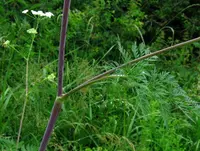
Turnip-root chervil (Chaerophyllum bulbosum) is a cool-season root vegetable in the carrot family, grown mainly for its swollen, sweet, beige root. The plant forms feathery, fern-like foliage above ground and a compact, turnip-shaped root below. It is native to parts of central and eastern Europe and western Asia, and is now a minor crop in some temperate regions. This species can be slow and irregular to germinate, which makes it slightly more challenging than common vegetables. It prefers cool conditions, consistently moist but not waterlogged soil, and a loose, stone-free bed. Gardeners who care for turnip-root chervil usually grow it as an annual, even though it is botanically biennial.

Care Difficulty
Moderate Care

Light Preference
Full Sun

Water Requirements
Regular Water

Temperature Preference
Cool Climate

Hardiness Zone
4–8

Soil Texture
Loamy, Silty, Organic-rich

Soil pH
Acidic (5.5–6.5), Slightly acidic (6.5–7.0)

Soil Drainage
Moist but well-drained

Fertilization
Minimal (feed rarely)
Scan your plant to receive care tips personalized for your specific plant
Available on iOS and Android
This root vegetable prefers cool, bright conditions without harsh midday exposure.
This species needs steady soil moisture to form healthy, swollen roots without becoming waterlogged.
This cool-season plant forms the best roots in moderately cool, stable temperatures.
Humidity is not a major factor for Chaerophyllum bulbosum, which thrives in typical outdoor ambient conditions.
Chaerophyllum bulbosum forms better roots in loose, deep, moisture-retentive but free-draining soil.
This species is only moderately suitable for container growing due to its deep, swelling root system.
This root crop performs best in modest soils and needs only light feeding to support tuber development.
Pruning needs for Chaerophyllum bulbosum are minimal and mainly focused on hygiene.
This species is usually grown in open ground, and transplanting must be done carefully to avoid disturbing the swollen root.
Reproduction of Chaerophyllum bulbosum is most reliable from seed rather than vegetative methods.
This hardy biennial tolerates typical winter conditions in many temperate climates with minimal intervention.

Plant Health Check
Not sure what's wrong with your plant? Check your plant's health inside the app.
The swollen, turnip-like root develops a much sweeter, chestnut-like flavor only after several months of cold storage, because starches gradually convert to sugars at low temperatures.
This species was cultivated as a root vegetable in parts of central and eastern Europe for centuries and was described in 16th–17th century herbals, but later declined in use after the rise of potato cultivation.
The seeds require a prolonged cold period, known as stratification, to break dormancy, which reflects the plant’s adaptation to germinating after winter in temperate European climates.

Modern conservation-oriented seed banks in Europe maintain heritage lines of this root crop to preserve genetic diversity and support small-scale projects that aim to grow Chaerophyllum bulbosum as a niche vegetable again.
Yes, the swollen root is edible and valued as a starchy vegetable with a sweet, chestnut-like flavor after proper storage. Young leaves are sometimes used sparingly as an herb, but roots are the main culinary part.
Keep your plants happy and healthy with plant identification, disease detection, and easy care guidance.


-1-200x150.webp)