candle vine Care (Pothos longipes)

candle vine

About candle vine

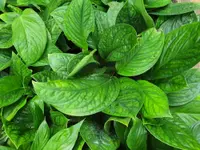
Candle vine, Pothos longipes, is a climbing or trailing aroid grown for its slender, elongated leaves and vining habit. It is typically grown as a container or hanging plant. In nature it occurs in tropical forest habitats, where it scrambles up trees or along the ground. Its growth is relatively fast when conditions are warm and stable. This species is considered moderately easy to grow, as it tolerates some fluctuation in light and moisture, but it does best with consistent care. Understanding how to care for candle vine helps keep its foliage dense and its vines controlled indoors.

Main Plant Requirements

Care Difficulty

Moderate Care

Light Preference

Partial Shade

Water Requirements

Moderate Water

Temperature Preference

Warm Climate

Hardiness Zone

Unknown

Soil Texture

Loamy, Organic-rich

Soil pH

Acidic (5.5–6.5), Slightly acidic (6.5–7.0)

Soil Drainage

Moist but well-drained

Fertilization

Light (every 4–6 weeks)

Get Personalized Care Plan

Scan your plant to receive care tips personalized for your specific plant

Available on iOS and Android

How to Care for the candle vine

Pothos longipes prefers bright, filtered light that mimics dappled forest shade.

  • Provide 4–6 hours of bright, indirect light daily, such as near an east window or under light tree cover outdoors for candle vine.
  • Tolerates partial shade (2–3 hours of low light), but growth slows and internodes stretch if light is consistently low.
  • Avoid harsh midday sun; strong afternoon exposure through glass or in open sites can scorch leaves, causing pale, crispy patches.

This species prefers evenly moist but not saturated soil, with clear drying between waterings.

  • Water only when the top 2–4 cm of soil feels dry; frequency may range from every few days in heat to every 1–2 weeks in cooler periods.
  • Use a free-draining mix and ensure excess water runs out quickly to prevent root rot, which appears as black, mushy roots and yellowing leaves.
  • Underwatering shows as limp, curling leaves and very dry soil; overwatering shows as persistent soggy soil and leaves yellowing from the base upward.

This plant grows best in warm, stable conditions without temperature extremes.

  • Aim for 65–80°F (18–27°C) for active growth; short exposures up to 85°F (29°C) are tolerated if humidity and soil moisture are adequate.
  • Protect from cold; growth slows below 60°F (16°C) and tissue damage can occur near 40°F (4°C), especially in wet, windy conditions.
  • Pothos longipes is not frost-hardy; avoid any frost exposure and shield from hot, drying drafts, which can scorch leaf edges above 86°F (30°C).

This species prefers moderate humidity but usually adapts well to typical indoor levels.

  • Aim for 40–60% humidity to keep foliage growth steady and reduce leaf-edge browning.
  • It tolerates drier air, but prolonged levels below 30% can cause crispy tips and slower growth in candle vine.
  • Increase humidity locally with a nearby humidifier, grouped plants, or a pebble tray rather than misting leaves directly.

This plant prefers a loose, airy, organic-rich mix that drains quickly but holds light, even moisture.

  • Use a mix of 50–60% peat or coco coir, 20–30% perlite, and 10–20% fine bark for structure and aeration.
  • Ensure the soil drains freely; water should flow out within seconds, not pool on the surface or in the pot.
  • Keep pH slightly acidic to neutral, around 6.0–7.0, to support nutrient uptake in Pothos longipes.
  • Avoid heavy, compacted, or clay-based substrates that stay wet for long periods, as these promote root rot and oxygen deprivation.

This species is well suited to container growing for both decorative trailing and climbing displays.

  • Choose a stable, wider container or add support stakes so the vine’s climbing growth does not tip the pot.
  • Select a pot just 2–4 in wider than the root mass to balance moisture retention with rapid drainage.
  • Use lighter plastic pots for hanging displays and heavier ceramic for floor pots to prevent shifting as vines elongate.

Pothos longipes benefits from light, consistent feeding during its active growing season.

  • Use a balanced liquid fertilizer (such as 10-10-10 or 20-20-20) diluted to 1/4–1/2 strength every 4–6 weeks in spring and summer.
  • Alternatively, apply a slow-release fertilizer or a thin layer of compost on the pot surface at the start of the growing season.
  • Pause or reduce feeding to 1 light application for the whole period in fall and winter, when growth slows.
  • When caring for candle vine, always water before applying liquid fertilizer to prevent root burn.

Pothos longipes responds well to light structural pruning that controls length and maintains a full look.

  • Best time for pruning is late winter to early spring, before vigorous new growth starts.
  • Remove dead, damaged, or yellowing leaves and any weak, tangled, or crowded stems with clean, sharp scissors or pruners.
  • Shorten excessively long vines back to a leaf node to encourage branching and denser foliage.
  • Disinfect blades with alcohol before and after cutting to reduce disease spread.

Container-grown plants appreciate occasional repotting to refresh the root zone and support steady growth.

  • Look for roots circling the pot, pushing through drainage holes, or slower growth despite good care as signs it needs a larger container.
  • Plan to repot every 2–3 years in spring, moving to a pot 2–5 cm wider with fresh, well-drained mix.
  • Water the plant 1 day before repotting, gently loosen circling roots, and keep the root ball at the same depth in the new pot.
  • After transplanting, water thoroughly, keep in bright indirect light, and avoid heavy fertilizing for 3–4 weeks to limit stress.

This species is commonly multiplied by stem cuttings, making it straightforward to maintain and share plants.

  • Take 8–12 cm stem cuttings in late spring or early summer, each with at least 2–3 nodes and healthy leaves.
  • Root cuttings in water or in a sterile, moist mix of perlite and peat or coco fiber, keeping temperatures around 70–80°F.
  • Remove the lowest leaf, submerge or bury at least 1 node, and maintain high humidity and bright, indirect light.
  • Once roots reach 2–5 cm, pot the new Pothos longipes plants into small containers and resume light feeding after 2–3 weeks.

This plant is frost sensitive and needs protection in regions with cold winters.

  • Keep outdoor plants only in climates where winter temperatures remain above about 55°F, or treat them as seasonal displays.
  • Move container plants indoors before nights drop below 55°F, placing them in bright, indirect light away from drafts and heaters.
  • Water less often in winter, allowing the top 3–5 cm of potting mix to dry, and stop most fertilizing until spring.

Care Tips

Use vertical support

Provide a moss pole or rough wooden stake and loosely tie stems every 10–15 cm to encourage thicker, more upright growth and larger leaves over time.

Root-tip propagation

When pruning, cut just below a node and place the stem in water or moist mix to root, then replant several cuttings together in the pot to keep the plant looking full and dense.

Rotate for even growth

Turn the pot 90° every 1–2 weeks so all sides receive similar light, which helps prevent one-sided, leggy vines and keeps the plant symmetrical.

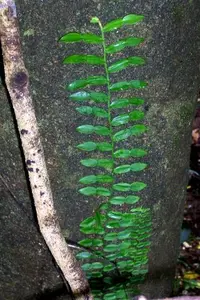
Inspect aerial roots

Check aerial roots along the stems monthly and gently tuck or pin them against the support so they can attach, which improves stability and water uptake from a moss pole.

Prevent sticky pests

Wipe both sides of the leaves with a damp microfiber cloth every 3–4 weeks to remove dust and early pest stages, which is especially useful when caring for candle vine in dry, heated indoor air.

Common Pests and Diseases

Spider mites

This pest often appears on plants kept in warm, dry indoor air, causing stippled, dull leaves and fine webbing on trailing stems.

Solution

Rinse foliage thoroughly with lukewarm water, including the leaf undersides, then repeat every few days; increase humidity around the plant and, for heavier infestations, apply a neem oil or insecticidal soap spray directed to leaf undersides and stem nodes.

Mealybugs

These insects hide along stems and in leaf joints, forming small white cottony clusters that weaken vines and can cause leaf yellowing and stunting.

Solution

Remove visible insects with a cotton swab dipped in 70% isopropyl alcohol, then wash the plant with water and follow up with insecticidal soap or neem oil sprays at 7–10 day intervals until no new clusters appear.

Scale insects

This pest appears as small, tan to brown bumps on stems and leaf midribs, often causing sticky honeydew and a general decline in vigor.

Solution

Gently scrape or wipe off individual scales with a fingernail or cotton pad, prune heavily infested stems, then treat remaining growth with repeated applications of horticultural oil to smother any remaining juveniles.

Bacterial leaf spot

This disease causes water-soaked translucent spots on leaves that may turn dark and irregular, often starting where water sits on the foliage for extended periods.

Solution

Remove and discard affected leaves, avoid overhead watering, improve air movement around vines, and keep foliage dry; disinfect pruning tools and, in severe or persistent cases, discard heavily infected plants to protect nearby specimens when caring for candle vine.

Anthracnose

This disease produces tan to dark brown dead patches along leaf edges and tips, especially on older, shaded foliage in dense indoor displays or outdoor shadehouses.

Solution

Cut off damaged leaves and thin crowded vines to increase light and airflow, avoid wetting the foliage, and keep the plant on the dry side between waterings; in collections where the problem recurs, isolate affected plants and discard those with repeated severe symptoms to reduce spore spread.

Interesting Facts

Endemic New Caledonian climber

Pothos longipes is native to the rainforests of New Caledonia, where it grows as a climbing aroid on trees in warm, very humid habitats.

Distinct elongated foliage

This species is characterized by narrow, elongated leaves compared with many other pothos relatives, reflecting its adaptation to climbing and light capture in shaded forest understories.

Taxonomic position in aroids

Pothos longipes belongs to the Araceae family, a group known for inflorescences made of a spadix and spathe, although this species is most often recognized in cultivation for its foliage rather than its relatively inconspicuous flowers.

FAQs about candle vine

Yellowing leaves usually result from inconsistent moisture, low light, or nutrient depletion. Check drainage, avoid waterlogged soil, and remove old leaves. If many new leaves yellow at once, review fertilizer routine and inspect roots for rot.

Grow Healthy Plants with Botan Care

Keep your plants happy and healthy with plant identification, disease detection, and easy care guidance.

Botan plant care app — identify plants on mobile

Explore More Plants