Early structural training
In the first 3–5 years, select a single central leader and remove or shorten competing upright stems to build a strong main trunk that will better resist storm damage later.

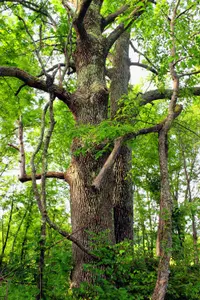
White ash, Fraxinus americana, is a large deciduous tree native to eastern North America. It is commonly grown as a shade and landscape tree. Mature trees develop a tall, straight trunk, a broad rounded crown, and compound leaves that turn purple, red, or gold in fall. Bark on older trees becomes gray and deeply furrowed, giving a strong, textured appearance. This species grows best in full sun with evenly moist, well-drained soil, but it tolerates a range of conditions once established. It suits spacious yards and parks more than small gardens, so care for white ash is easier where there is room for its full size.

Care Difficulty
Moderate Care

Light Preference
Full Sun

Water Requirements
Moderate Water

Temperature Preference
Cold Hardy

Hardiness Zone
3–9

Soil Texture
Loamy, Clay, Organic-rich

Soil pH
Acidic (5.5–6.5), Slightly acidic (6.5–7.0)

Soil Drainage
Moist but well-drained

Fertilization
Minimal (feed rarely)
Scan your plant to receive care tips personalized for your specific plant
Available on iOS and Android
This species prefers full sun but tolerates some light shade, especially in hotter regions.
This tree prefers evenly moist, well-drained soil, especially during establishment.
This hardy tree is adapted to cold winters and warm summers in temperate climates.
Humidity is not a major concern for Fraxinus americana when grown outdoors in its typical range.
Fraxinus americana prefers deep, moist, well-aerated mineral soil with reliable drainage.
This species is generally unsuitable for long-term container growing due to its eventual size and deep root system.
This North American shade tree grows well in average soils and needs only modest fertilization.
Pruning keeps Fraxinus americana structurally sound and safe in landscapes.
This species is usually field-grown or planted directly in the ground, so focus on careful transplanting of young trees.
Fraxinus americana is propagated mainly from seed, often by nurseries rather than home gardeners.
Mature Fraxinus americana trees are cold hardy in much of the US and usually need minimal winter care.

Plant Health Check
Not sure what's wrong with your plant? Check your plant's health inside the app.
Mature white ash often develops a gray bark with a clear diamond-shaped ridge pattern, which helps distinguish it from many other North American ash species.
White ash wood has long been a preferred material for traditional baseball bats in the United States because it combines relatively low weight with high shock resistance and flexibility.
White ash is typically dioecious, meaning individual trees usually produce either male or female flowers, which has implications for seed production and landscape planning.

White ash populations across large parts of eastern North America have been devastated by the invasive emerald ash borer (Agrilus planipennis), leading to intensive conservation, breeding, and long-term genetic preservation efforts to prevent the species from disappearing in many of its native forests.
This species is generally fast-growing under good conditions, adding about 30–60 cm in height per year when young. Growth slows as it matures, and poor soil, drought, or root disturbance can significantly reduce its annual extension.
Keep your plants happy and healthy with plant identification, disease detection, and easy care guidance.