BotaN logo

Canary Island date palm Care (Phoenix canariensis)

Also known as: Canary Island palm, Phoenix palm, Canary Date Palm, pineapple palm
Canary Island date palm

About Canary Island date palm

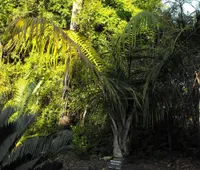
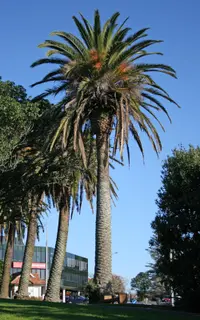
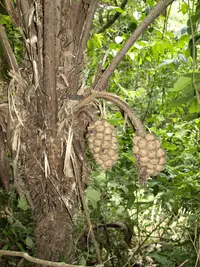
The Canary Island date palm (Phoenix canariensis) is a large, single-trunk palm widely used as a landscape specimen tree in warm climates. It forms a stout trunk with a dense crown of long, arching fronds that create a classic, formal palm silhouette.

This species is native to the Canary Islands, where it grows in mild, maritime conditions. In cultivation it is valued for its robustness, wind resistance, and relatively slow, manageable growth.

It is generally considered easy to moderate to grow if given plenty of light, well-drained soil, and protection from severe frost. Understanding how to care for Canary Island date palm starts with providing space for its eventual size and strong root system.

Main Plant Requirements

Care Difficulty

Moderate Care

Light Preference

Full Sun

Water Requirements

Moderate Water

Temperature Preference

Warm Climate

Hardiness Zone

9–11

Soil Texture

Sandy, Loamy, Organic-rich

Soil pH

Slightly acidic (6.5–7.0), Slightly alkaline (7.0–7.5)

Soil Drainage

Well-drained

Fertilization

Minimal (feed rarely)

Get Personalized Care Plan

Scan your plant to receive care tips personalized for your specific plant

Available on iOS and Android

How to Care for the Canary Island date palm

This palm needs abundant direct light to form a dense, symmetrical crown.

  • Provide 6–8 hours of direct sun daily; full sun from morning through late afternoon is ideal for strong trunk and frond development.
  • Young or newly planted Canary Island date palm can benefit from light afternoon shade in very hot, dry climates to reduce leaf scorch while roots establish.
  • In winter or cloudy coastal areas, choose the brightest, most open spot; sparse, elongated fronds indicate insufficient light and the need for a sunnier exposure.

Phoenix canariensis prefers evenly moist but not saturated soil, especially while establishing.

  • Water when the top 5–8 cm of soil are dry, applying a slow, deep soak so moisture reaches the full root zone rather than frequent shallow sprinkling.
  • In the first 2–3 growing seasons, increase irrigation during hot, dry periods and reduce frequency in cool or rainy weather while ensuring free-draining soil to prevent root rot.
  • Signs of overwatering include yellowing lower fronds and sour-smelling, soggy soil; browning leaf tips and drooping, rigid fronds usually point to underwatering.

This palm thrives in warm, mild climates and dislikes prolonged hard frost.

  • Optimal growth occurs around 70–86°F (21–30°C); it tolerates summer heat up to about 100°F (38°C) if soil moisture is maintained and roots are not waterlogged.
  • Mature plants can survive short drops to about 18–20°F (-8 to -7°C) with some leaf damage, while younger palms are more easily injured below 25°F (-4°C).
  • In regions with occasional frost, site the palm in a warm, sheltered microclimate and protect the crown during cold snaps; prolonged freezing conditions can kill the growing point.

This palm handles a wide humidity range and usually needs no special humidity management indoors or outdoors.

  • Target 30–60% humidity, similar to most heated or air-conditioned homes.
  • Tolerates dry air well; humidity stress appears mainly as brown leaflet tips combined with underwatering or excess heat.
  • If air is very dry and hot, group plants together or place near a tray of water and pebbles to slightly raise local humidity.

This palm prefers deep, well-drained, slightly sandy soil that stays evenly moist but never waterlogged.

  • Use a mix of 50–70% sandy or loamy garden soil with 20–30% coarse sand and 10–20% compost for structure and nutrients.
  • Ensure rapid drainage; water should pass through within seconds and not pool on the surface or in the saucer.
  • Aim for slightly acidic to neutral pH, around 6.0–7.5, which suits most garden soils and general potting mixes.
  • Improve aeration in heavier soils by blending in coarse sand, fine gravel, or pine bark chips, and avoid compacted or clay-heavy ground.

This species can be grown in containers for many years, especially in its juvenile stage.

  • Choose a wide, heavy container that resists tipping as the crown becomes tall and wind-exposed.
  • Select a pot deep enough for a strong taproot, leaving space below for a 5–8 cm drainage layer of coarse material.
  • Use thick-walled clay or concrete containers outdoors in windy sites to add stability and slightly reduce moisture swings.

This palm responds well to moderate feeding in active growth but tolerates lean soils once established.

  • Use a balanced slow-release palm fertilizer or balanced NPK granular with added magnesium and micronutrients in spring.
  • Feed container plants every 6–8 weeks in spring–summer; outdoor in-ground specimens often need only 1–2 light applications.
  • Apply at half the label rate for young or stressed plants to reduce salt burn risk, and water in thoroughly.
  • Stop feeding in fall–winter to avoid tender, frost-prone growth, especially when caring for Canary Island date palm.

Thoughtful pruning keeps Phoenix canariensis tidy and safe without weakening the crown.

  • Prune in late winter or early spring once the coldest weather has passed and before strong new growth starts.
  • Remove only dead, brown, broken, or diseased fronds and spent fruit stalks; leave green fronds at a 9–3 o’clock spread.
  • Use clean, sharp loppers or a pruning saw; disinfect blades between trees to limit disease spread.
  • Avoid excessive “penciling” of the trunk, which reduces photosynthetic area and can stress the palm.

This palm dislikes frequent disturbance, so plan container repotting or landscape transplanting carefully.

  • Look for roots circling the pot, pushing through drainage holes, or noticeably slowed growth as signals to move up 1 pot size.
  • Repot young container plants every 2–3 years in late spring, using a coarse, free-draining mix and a heavy pot for stability.
  • For landscape moves, transplant only small to medium specimens in late spring–early summer when soil is warm.
  • Keep the root ball intact, water deeply after planting, shade temporarily if very sunny, and maintain even moisture until re-established.

Phoenix canariensis is most often propagated from seed, which is slow but reliable under warm, stable conditions.

  • Sow fresh, cleaned seeds in late spring–summer in a sterile, sharply draining mix such as sand and peat or perlite.
  • Maintain bottom heat of 77–86°F and consistent moisture, not saturation, to support germination over 1–3 months or longer.
  • Provide bright, indirect light and good air circulation for seedlings to reduce damping-off, a fungal rotting disease.
  • Division of basal offshoots is rarely practical for home growers because true suckers are uncommon and separation stresses the palm.

Cold sensitivity makes targeted winter care important for Phoenix canariensis in climates with frost or freezing.

  • Mature palms tolerate brief drops to about 20–25°F, but young plants are more vulnerable and can suffer leaf burn.
  • Apply a 5–8 cm mulch layer around the root zone, keeping it off the trunk, to moderate soil temperature.
  • Wrap the crown and trunk with breathable frost cloth or burlap during hard freezes to limit tissue damage.
  • Move container-grown plants into a bright, cool, frost-free space and water sparingly until spring growth resumes.

Care Tips

Support Young Trunk

Stake young palms with two or three sturdy posts and soft ties set outside the root zone to keep the trunk stable in strong wind until the root system is fully anchored.

Manage Leaf Spines

Wear thick gloves and long sleeves when working near the crown and remove lower fronds carefully so the sharp spines do not injure you or damage irrigation tubing, lights, or nearby structures.

Prevent Crown Rot

Avoid piling mulch or soil against the base of the trunk and keep irrigation emitters directed away from the crown area so water does not collect in the leaf bases, which reduces risk of fungal rot.

Winter Protection Plan

In marginal climates, wrap the central spear and crown with breathable frost cloth and use a deep mulch ring over the root zone before hard freezes to protect growing tissue and fine roots.

Inspect For Palm Pests

Check the crown and undersides of fronds monthly for scale, mealybugs, and early signs of palm weevil damage, and treat promptly with an appropriate labeled product to maintain long-term Phoenix canariensis plant care.

Common Pests and Diseases

Red palm weevil

This pest is a large reddish-brown beetle whose larvae tunnel inside the trunk and crown, causing hidden internal damage. Symptoms include wilting or collapsing fronds, oozing sap, and foul odor from the crown area.

Solution

Remove and destroy heavily infested palms, as internal damage is usually severe and progressive. For early or regional management, use pheromone traps, monitor regularly for fresh holes and oozing sap, and apply systemic insecticides labeled for palms into the crown or trunk under guidance from a local arborist or extension service.

South American palm weevil

This pest is a large black weevil whose larvae burrow into the crown and upper trunk, often killing the growing point. Symptoms include sudden spear leaf collapse, frond yellowing, and wet, decomposing tissue in the crown.

Solution

Inspect the crown frequently in regions where this weevil is present and remove any palms showing spear collapse or advanced internal rot. In high-risk areas, use a combination of pheromone traps for population reduction and preventive systemic treatments to protect valuable Phoenix canariensis specimens.

Palm scale

These insects are small, immobile sap-feeders that attach to leaflets and petioles, appearing as tiny bumps or crusty patches. Symptoms include yellow spotting on fronds, reduced vigor, and sticky honeydew that may support sooty mold growth.

Solution

Prune and discard heavily infested fronds, then wash remaining foliage with water and a mild horticultural soap to dislodge scales. For persistent infestations, use targeted systemic insecticides labeled for scale on palms and encourage natural predators by avoiding broad-spectrum sprays.

Fusarium wilt

This disease is a fungal infection that typically starts on one side of the canopy, causing one-sided yellowing and browning of older fronds along one side of the leaf midrib. Symptoms include progressive death of fronds, often spreading asymmetrically up the crown.

Solution

Remove and destroy infected fronds promptly and avoid using the same pruning tools on healthy palms without thorough disinfection in a 10% bleach or 70% alcohol solution. Severely affected palms should be removed to reduce inoculum, and new plantings should come from certified disease-free stock, since there is no reliable cure once infection is advanced.

Pink rot

This disease is caused by a fungus that attacks weakened or wounded tissue in the crown, petiole bases, and wounds, often appearing as soft, rotting areas with pinkish fungal growth. Symptoms include collapsing fronds, crown dieback, and decay around pruning cuts or mechanical injuries.

Solution

Improve growing conditions to reduce stress, avoid overhead watering into the crown, and never leave open, ragged pruning wounds. Remove affected tissue where feasible, dispose of it away from other palms, and apply a labeled fungicide to young or lightly affected plants while also improving drainage and airflow as part of broader Phoenix canariensis care instructions.

Interesting Facts

Volcanic island specialist

This palm is naturally native only to the Canary Islands, where it is most abundant on the wetter, north-facing slopes and ravines of the larger islands, especially Gran Canaria.

Massive solitary crown

Mature plants form a single, very thick trunk topped by a dense crown of over 100 stiff, arching fronds, which gives the tree a heavy, rounded canopy distinct from most other date palms.

Limited fruit value

The orange dates of this species are technically edible but are small, fibrous, and rarely eaten, so the palm is cultivated almost entirely for ornament rather than for fruit production.

Botan icon

Did you know?

In its native range, this species can live for several centuries, and some old specimens in the Canary Islands are treated as protected natural monuments because of their age, size, and cultural importance.

FAQs about Canary Island date palm

Yellowing fronds often result from natural aging of the oldest leaves, nutrient deficiencies (especially magnesium or potassium), water stress, or root damage. Check fertilizer balance, watering pattern, drainage, and inspect roots for rot or constriction.

Grow Healthy Plants with Botan Care

Keep your plants happy and healthy with plant identification, disease detection, and easy care guidance.

Botan plant care app — identify plants on mobile

Explore More Plants