nipplefruit Care (Solanum mammosum)

Also known as: apple of Sodom, fox head, cow's udder, apple-of-Sodom
nipplefruit

About nipplefruit

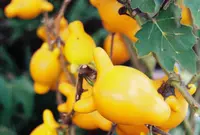
Nipplefruit, Solanum mammosum, is a tropical shrub in the nightshade family grown mainly for its unusual, ornamental fruits. The fruit has bright yellow skin with several nipple-like projections.

This plant is native to tropical regions of South America and the Caribbean but is now also grown in parts of Asia and other warm climates. It is usually treated as an annual outside the tropics.

Nipplefruit prefers warm conditions, strong light, and evenly moist but well-drained soil. Spiny stems and its sensitivity to cold make it a bit tricky for beginners.

Understanding how to care for nipplefruit helps keep the plant compact, healthy, and productive as a striking accent in gardens or containers.

Main Plant Requirements

Care Difficulty

Moderate Care

Light Preference

Full Sun

Water Requirements

Regular Water

Temperature Preference

Tropical / Frost Sensitive

Hardiness Zone

10–11

Soil Texture

Sandy, Loamy, Organic-rich

Soil pH

Acidic (5.5–6.5), Slightly acidic (6.5–7.0)

Soil Drainage

Moist but well-drained

Fertilization

Moderate (every 2–4 weeks)

Get Personalized Care Plan

Scan your plant to receive care tips personalized for your specific plant

Available on iOS and Android

How to Care for the nipplefruit

This tropical shrub needs strong light to flower and fruit well outdoors.

  • Provide 6–8 hours of direct sun daily, ideally with morning sun and light afternoon shade in hot climates to prevent leaf scorch.
  • Tolerates bright partial shade, but flowering and the distinct fruit of nipplefruit decrease if it receives less than 4–5 hours of direct sun.
  • In summer, protect from harsh reflective heat; in cooler seasons, choose the sunniest south- or west-facing spot to extend the light window.

This species prefers steadily moist but not saturated soil during active growth.

  • Water when the top 3–5 cm of soil feels dry, allowing moisture to reach the deeper root zone without leaving the ground soggy.
  • In spring and summer, expect more frequent watering, while in cooler months reduce frequency so the surface dries a bit deeper between soakings.
  • Watch for yellowing, soft leaves as a sign of overwatering and crisp, drooping foliage as a sign of drought stress, and adjust volume or timing accordingly.

This warmth-loving species performs best in consistently mild to hot conditions without frost exposure.

  • Aim for 70–85°F (21–29°C) for fastest growth and flowering, similar to a warm tropical or subtropical summer season.
  • Protect Solanum mammosum from temperatures below 50°F (10°C); brief drops near 40°F (4°C) can stunt growth and any frost can kill top growth.
  • It tolerates short spikes up to 95°F (35°C) if soil moisture is maintained and roots are mulched, but prolonged extreme heat may reduce flowering.

This species prefers moderately humid air but adapts to average indoor levels.

  • Aim for 40–60% humidity to minimize leaf edge browning and flower drop.
  • Tolerates short periods of drier air, but persistent humidity below 30% can cause curled, dull leaves and slower growth.
  • To support nipplefruit indoor care, group plants, place the pot on a pebble tray with water below the pot base, or run a small nearby humidifier.

Solanum mammosum grows best in loose, well-drained, moderately fertile soil.

  • Use a loamy mix with 40–50% composted organic matter, plus perlite or coarse sand to keep it light and crumbly.
  • Ensure fast drainage; the soil should feel moist after watering but not stay waterlogged or smear into a paste.
  • Target slightly acidic to neutral pH around 6.0–7.0, which supports nutrient availability and healthy root development.
  • Avoid heavy clay, compacted ground, or mixes dominated by fine peat that hold water tightly and limit aeration.

This species adapts well to container growing when given ample root space and stable support.

  • Choose a deep, heavy pot that resists tipping, as the plant becomes tall and top-heavy when flowering and fruiting.
  • Select a container with large, unobstructed drainage holes so water exits quickly and salts do not accumulate near the roots.
  • Leave a 3–5 cm gap below the rim for easier deep watering without spillover, which helps wet the full root zone evenly.

Solanum mammosum benefits from moderate feeding during its active warm-season growth.

  • Use a balanced liquid fertilizer (such as 10-10-10 or 20-20-20) diluted to 1/2 strength for potted plants.
  • Apply every 2–3 weeks during late spring and summer while growth is vigorous.
  • For in-ground plants, mix compost or a slow-release balanced fertilizer into the topsoil in spring.
  • Reduce feeding to once every 6–8 weeks, or stop entirely, during cooler dormant periods.

Pruning Solanum mammosum helps maintain a compact shape and supports strong flowering stems.

  • Carry out main pruning in late winter or early spring before vigorous new growth starts.
  • Remove dead, diseased, or damaged branches first, then thin out crowded interior shoots.
  • Shorten excessively long or leggy stems to encourage bushier side branching and more flowers.
  • Use clean, sharp hand pruners and make cuts just above outward-facing buds or side shoots.

Solanum mammosum is usually grown as a seasonal ornamental, but container plants may need one careful move.

  • Check for roots circling the pot, pushing through drainage holes, or for slowed growth as signs it needs more space.
  • Carry out repotting or outdoor transplanting in late spring after all risk of frost has passed.
  • Move to a container only 2–5 cm wider, using well-drained, fertile soil to limit shock and waterlogging.
  • Water thoroughly after moving, keep in bright but slightly filtered light for 3–5 days, and avoid heavy feeding until growth resumes.

Solanum mammosum is most commonly propagated from seeds rather than by cuttings.

  • Collect fully ripe fruit, remove seeds, rinse off pulp, and dry briefly before sowing.
  • Sow seeds in spring on the surface of moist, well-drained seed mix and cover lightly with 2–3 mm of substrate.
  • Maintain 70–80°F, high humidity, and bright indirect light for steady germination over several weeks.
  • Keep the mix just moist, then pot up seedlings once they have 2–3 true leaves and roots holding the plug.

In most climates Solanum mammosum behaves as a tender annual and does not tolerate frost.

  • Plants in the ground usually decline after the first light frost and are not overwintered outdoors.
  • For prized specimens in containers, move indoors before temperatures drop below 50°F.
  • Place in the brightest possible spot indoors and reduce watering so the soil dries slightly between waterings.
  • In mild frost-free zones, add a light mulch around the base to stabilize soil temperature and moisture.

Care Tips

Stake Early

Install a sturdy stake or tomato cage when the plant is still young so the brittle, fruit-laden stems are supported before heavy fruits develop and cause breakage.

Wear Protective Gloves

Always wear nitrile or latex gloves when handling this plant, as its sap can irritate skin and the sharp thorns can easily puncture fingers during pruning or harvesting of ornamental stems.

Timed Flower Pollination

If grown indoors or in a low-insect area, gently tap or shake flowering stems around midday every few days to help move pollen and improve fruit set when growing nipplefruit.

Targeted Pest Monitoring

Inspect the undersides of leaves and young shoots at least weekly for whiteflies, spider mites, or aphids, and treat early with insecticidal soap or horticultural oil before infestations reach the ornamental fruits.

Rotate Container Position

Turn container-grown plants 1/4 turn every 7–10 days so developing fruits color evenly and the plant does not lean strongly toward the strongest light source.

Common Pests and Diseases

Whiteflies

This pest often colonizes the undersides of leaves, especially on young, lush Solanum mammosum growth, causing sap loss and sticky honeydew. Symptoms include leaf yellowing, reduced vigor, and small white insects flying up when the plant is disturbed.

Solution

Control starts with regularly checking leaf undersides and removing heavily infested leaves. Use a strong stream of water to dislodge adults and nymphs, then apply insecticidal soap or a neem oil spray every 5–7 days until populations drop, and avoid excessive nitrogen fertilization that encourages soft, attractive growth.

Spider mites

These insects thrive in hot, dry conditions and can build up quickly on Solanum mammosum foliage, causing fine webbing, stippled leaves, and overall plant stress. Symptoms include bronzing, tiny pale dots on leaves, and premature leaf drop.

Solution

Increase humidity around the plant and rinse foliage thoroughly, paying attention to leaf undersides. Follow with repeated applications of insecticidal soap or horticultural oil, spaced about 5–7 days apart, and isolate badly infested plants to limit spread.

Leaf spot

This disease causes circular to irregular brown or dark spots on Solanum mammosum leaves, sometimes with yellow halos, leading to premature leaf drop in humid or rainy conditions. Symptoms include scattered lesions that can merge into larger dead patches.

Solution

Remove and discard affected leaves to reduce inoculum and avoid overhead watering that keeps foliage wet for long periods. Improve spacing and airflow, and if the problem is persistent outdoors, use a copper-based fungicide according to label directions, focusing on new growth before heavy rain or prolonged humidity.

Powdery mildew

This disease appears as white, powdery growth on leaf surfaces, particularly on shaded or crowded Solanum mammosum plants, leading to distorted leaves and reduced vigor. Symptoms include dull, grayish patches that spread over time and can cover entire leaves.

Solution

Improve light and air circulation, and avoid frequent light misting that keeps leaf surfaces damp. Remove heavily infected leaves and apply a sulfur-based fungicide or potassium bicarbonate spray according to label directions at the first sign of infection, repeating as needed during high-pressure periods.

Interesting Facts

Unusual fruit morphology

The bright yellow fruits carry 3–5 nipple-like projections formed from uneven growth of the ovary tissue, a rare and distinctive fruit shape within the nightshade family.

Toxic yet ornamental

All parts of the plant, including the attractive fruits, contain toxic alkaloids similar to those in other Solanum species, so it is grown for ornamental display rather than for eating.

Short-lived woody shrub

In tropical and subtropical climates this species grows as a short-lived woody shrub up to about 1–2 m tall, often cultivated as an annual in cooler regions where it does not tolerate frost.

Botan icon

Did you know?

In several parts of Asia, especially in Chinese and Southeast Asian folk culture, the multi-lobed fruits are displayed around Lunar New Year as symbols of good fortune and fertility, and are sometimes grafted or arranged onto potted rootstocks to create decorative “fruit trees” for festivals.

FAQs about nipplefruit

All parts of this species are considered poisonous if eaten, especially the fruits and seeds. Ingestion can cause stomach upset and more serious symptoms. Keep it away from children, pets, and livestock, and handle sap-sensitive skin carefully.

Grow Healthy Plants with Botan Care

Keep your plants happy and healthy with plant identification, disease detection, and easy care guidance.

Botan plant care app — identify plants on mobile

Explore More Plants