cooba Care (Acacia salicina)

Also known as: Willow Acacia, Willow Wattle, Sally Wattle
cooba

About cooba

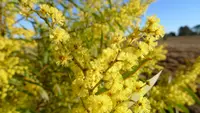
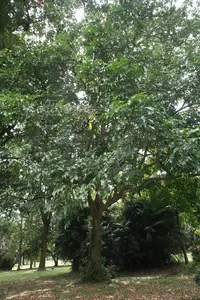
Cooba, Acacia salicina, is a fast-growing evergreen tree from arid and semi-arid regions of Australia. It is often used as a shelter or windbreak tree. The tree has narrow, drooping, willow-like leaves and small, pale cream flower clusters, giving it a fine, graceful outline in the landscape. In suitable climates it can form a dense canopy and reach a substantial height. Cooba tolerates heat, drought, and poor soils, which can make it relatively low-maintenance once established. Understanding how to care for cooba starts with providing full sun, well-drained soil, and controlled watering during its establishment period.

Main Plant Requirements

Care Difficulty

Easy Care

Light Preference

Full Sun

Water Requirements

Low Water

Temperature Preference

Warm Climate

Hardiness Zone

8–11

Soil Texture

Sandy, Loamy, Clay

Soil pH

Slightly acidic (6.5–7.0), Slightly alkaline (7.0–7.5)

Soil Drainage

Well-drained

Fertilization

Minimal (feed rarely)

Get Personalized Care Plan

Scan your plant to receive care tips personalized for your specific plant

Available on iOS and Android

How to Care for the cooba

Acacia salicina thrives in bright, direct sun typical of open, arid landscapes.

  • Provide 6–8 hours of direct sun daily; full sun all day suits established trees in most regions.
  • Young or newly planted cooba benefits from morning sun with light afternoon shade, especially in hot, dry climates above 95°F (35°C).
  • In partial shade (3–4 hours sun), growth slows and canopy thins; excessive intense sun with drought can scorch new foliage, so maintain soil moisture during peak summer.

This drought-tolerant species prefers deep, infrequent watering once established.

  • Outdoors in the ground, allow the top 5–10 cm of soil to dry before watering; then soak the root zone thoroughly to encourage deep roots.
  • During the first 1–2 growing seasons, water when new leaves lose some stiffness or soil feels dry at 5 cm depth; reduce frequency in cool or rainy weather.
  • Avoid poorly drained or compacted soil; persistent soil wetness, yellowing leaves, or dieback of fine twigs indicate overwatering, while crisp leaf tips and early leaf drop suggest underwatering.

This species is adapted to warm, dry climates with mild winters.

  • Optimal growth occurs around 70–90°F (21–32°C); the tree tolerates brief heat spikes up to about 105°F (40°C) if soil moisture is not extremely low.
  • Mature plants usually survive down to about 20–25°F (-6 to -4°C), but young trees and fresh growth are damaged by harder or prolonged freezes.
  • In regions with winter lows near its limit, site the tree in a warm, sheltered position and avoid pruning late in fall so new shoots are not exposed to frost.

Acacia salicina tolerates low humidity and usually thrives in 30–50% household air without special measures.

  • Cooba handles dry indoor air well, only reacting under extremely arid, heated conditions.
  • Low humidity stress appears as crisp leaf tips, premature leaf drop, and slowed new growth rather than wilting.
  • If air is very dry, place the pot on a pebble tray with shallow water or group it near other plants to slightly raise local humidity.

Acacia salicina prefers lean, fast-draining, sandy or loamy soil that does not stay wet.

  • Use a mix of roughly 50–60% sandy or gritty material with 40–50% loam-based potting mix to mimic its naturally poor, mineral soils.
  • Ensure rapid drainage by adding coarse sand, fine gravel, or perlite so water passes through within seconds rather than pooling.
  • Aim for slightly acidic to slightly alkaline pH (6.0–8.0), avoiding strongly acidic or highly saline conditions that restrict root function.
  • Do not use heavy, peat-dominant or clay-rich substrates, which compact, reduce aeration, and greatly increase the risk of root rot.

This species can be grown in containers, especially when young or maintained as a patio specimen.

  • Choose a deep, weighty pot to counteract the tree’s upright, sometimes top-heavy growth and reduce tipping in wind.
  • Use a tall container with a narrow base only if it stands in a sheltered spot, since wind leverage is higher on slender pots.
  • Select a breathable material like unglazed clay if extra evaporation is needed, or a thicker plastic pot where retaining moisture slightly longer is helpful.

Acacia salicina grows in low-nutrient soils and usually needs only light, targeted feeding in cultivation.

  • Use a balanced slow-release fertilizer (around 10-10-10) in early spring at half the label rate, scratched lightly into the soil surface.
  • In poorer soils or containers, supplement with a thin layer of well-rotted compost once per year to support steady growth.
  • Feed only during the active growing season, 1–2 times, and avoid high-nitrogen products that push weak, lanky shoots on cooba.
  • Stop feeding in late summer so new growth can harden before winter, and never fertilize drought-stressed or frozen soil.

Acacia salicina benefits from light structural pruning to maintain a stable canopy and safe branching.

  • Carry out main pruning in late winter to very early spring, before active growth starts.
  • Remove dead, damaged, crossing, or inward-growing branches first to improve airflow and reduce disease risk.
  • Thin crowded interior shoots to maintain a single dominant leader and a balanced, wind-resistant form.
  • Use sharp bypass pruners or a clean pruning saw, making smooth cuts just outside the branch collar without leaving stubs.

This species is usually grown in the ground, so focus on careful transplanting rather than frequent repotting.

  • Transplant young trees in late winter or early spring when soil is workable and temperatures are mild.
  • Look for signs such as roots circling the container, slow growth, or the root ball drying out quickly as indicators it has outgrown its pot.
  • Plan on shifting container plants to a larger pot only every 2–3 years, using a free-draining mix and a pot 5–8 cm wider.
  • Reduce root stress by watering thoroughly before and after transplanting, handling the root ball gently, and shading the tree for 1–2 weeks in hotter climates.

Acacia salicina is most commonly propagated from seed, which gives strong-rooted young trees.

  • Collect mature seeds in late summer to autumn, then store cool and dry until sowing.
  • Scarify seeds lightly with sandpaper or a brief soak in hot (not boiling) water to break hard seed coats and improve germination.
  • Sow in a very well-drained, low-fertility mix, keep at 68–77°F, and maintain even, light moisture without waterlogging.
  • For cuttings, take semi-hardwood pieces in late spring, use rooting hormone, and provide bottom warmth and high humidity until roots form.

This species is tolerant of light frost but needs some winter attention in colder regions, especially in containers.

  • In-ground trees in mild climates usually need no special measures once established, provided soil drains well.
  • In areas below about 20°F, add 5–8 cm of organic mulch around the root zone, keeping it away from the trunk.
  • Shelter young trees from cold, drying winds with temporary windbreaks until trunks thicken and root systems expand.
  • Move container plants indoors or into an unheated but frost-free garage or greenhouse before hard freezes, giving them bright light and slightly reduced watering.

Care Tips

Wind-hardy training

In the first 2–3 years, allow moderate exposure to wind and avoid staking too tightly so the trunk flexes slightly and develops strong wood that better supports the mature canopy.

Deep root encouragement

During the establishment phase, apply water slowly at the drip line through a soaker hose or deep-watering spike to encourage downward root growth that improves drought resistance and anchorage.

Sucker and basal shoot control

Inspect the base of the tree several times a year and cleanly remove any root suckers or basal shoots at their origin to maintain a single strong trunk and reduce competition for resources.

Pod and litter management

In landscapes or streetside plantings, schedule seasonal cleanup of fallen pods and fine leaf litter to prevent self-seeding in unwanted areas and to keep surface mulch or gravel from becoming compacted.

Canopy shaping for clearance

When growing cooba near paths, driveways, or structures, selectively remove low, crossing, or inward-growing branches while young to create a high, open canopy that allows air flow and safe clearance.

Common Pests and Diseases

Acacia psyllids

These insects suck sap from young leaves and shoots, causing leaf curling, yellowing, and honeydew deposits that can lead to sooty mold growth.

Solution

Prune and dispose of heavily infested shoots, then spray foliage thoroughly with a strong stream of water to dislodge nymphs; if needed, use horticultural oil or insecticidal soap, applied in the early morning or evening to cover leaf undersides where psyllids cluster.

Gall rust

This disease causes swollen, woody galls on stems and branches, which can distort growth and weaken affected limbs over time.

Solution

Prune out galled branches during dry weather, cutting well below visible swelling, and dispose of debris away from the planting area; maintain good spacing and air movement around trees to reduce humidity, and avoid overhead irrigation that keeps foliage wet for long periods.

Armillaria root disease

This disease leads to progressive decline, thinning canopy, yellowing foliage, and in advanced stages, sudden branch dieback, often accompanied by white fungal fans under the bark near the root collar.

Solution

Remove and destroy severely affected trees including as much of the root system as possible, avoid replanting susceptible woody species in the same spot, and improve site drainage and soil aeration to lower stress on nearby trees that might be exposed.

Scale insects

These pests appear as small, fixed bumps on stems and leaves, leading to sap loss, yellowing foliage, and sticky honeydew that can attract ants and support sooty mold growth.

Solution

Wipe or gently scrub accessible stems with a cloth or soft brush dipped in diluted insecticidal soap, prune heavily infested twigs, and if needed apply horticultural oil when scales are in their crawler stage to improve control while minimizing impact on beneficial insects.

Interesting Facts

Persistent phyllode foliage

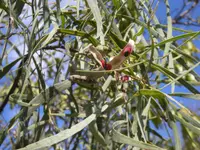
Instead of true leaves, this species carries long, narrow phyllodes, which are leaf-like petiole extensions that stay green and functional for many years, allowing the tree to cope with heat and water stress.

Rapid colonizer of disturbed land

Acacia salicina often establishes quickly along degraded waterways, roadsides, and overgrazed land in its native Australia, where it stabilizes soil and provides shelter for wildlife in semi-arid environments.

Hard, dense heartwood

The wood of this species is notably hard and dense, with a fine texture, which has led to local use for fence posts, tool handles, and fuelwood where it is available.

Botan icon

Did you know?

In parts of the southwestern United States and other regions where it has been introduced, Acacia salicina has naturalized along irrigation channels and floodplains, sometimes forming dense stands that alter local plant communities and hydrology.

FAQs about cooba

Growth is generally fast, often 60–90 cm per year in suitable climates. Rate depends on soil fertility, water availability, and temperature. Young plants establish quickly, then height growth slows as the canopy spreads and the trunk thickens.

Grow Healthy Plants with Botan Care

Keep your plants happy and healthy with plant identification, disease detection, and easy care guidance.

Botan plant care app — identify plants on mobile

Explore More Plants