Caribbean Pine Care (Pinus caribaea)

Also known as: Nicaragua Pine, Pitch Pine, slash pine
Caribbean Pine

About Caribbean Pine

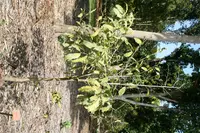
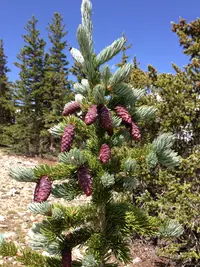
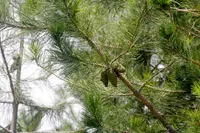
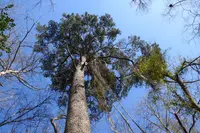
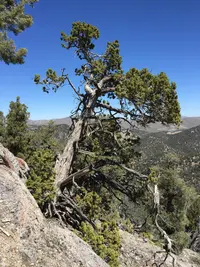
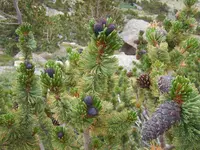
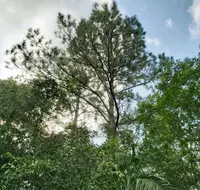
Caribbean pine (Pinus caribaea) is a fast-growing evergreen conifer valued for timber, windbreaks, and large-scale planting. It develops a straight trunk, dense crown when young, and long, slender needles in clusters. Mature trees can become tall and open-crowned in suitable climates.

The species is native to Central America, the Caribbean, and parts of northern South America, thriving in warm, often coastal regions. It tolerates poor, sandy, or rocky soils and seasonal dryness, which can make it relatively adaptable, though it needs full sun and good drainage. These traits influence how to care for Caribbean Pine in both landscape and forestry settings.

Main Plant Requirements

Care Difficulty

Moderate Care

Light Preference

Full Sun

Water Requirements

Low Water

Temperature Preference

Tropical / Frost Sensitive

Hardiness Zone

10–12

Soil Texture

Sandy, Loamy

Soil pH

Acidic (5.5–6.5)

Soil Drainage

Well-drained

Fertilization

Minimal (feed rarely)

Get Personalized Care Plan

Scan your plant to receive care tips personalized for your specific plant

Available on iOS and Android

How to Care for the Caribbean Pine

This pine needs abundant direct light to develop dense, healthy foliage.

  • Provide full sun for 6–10 hours per day; Caribbean Pine performs best in open, unshaded sites such as clearings or south-facing slopes.
  • Tolerates light partial shade, especially in the first 1–2 years, but prolonged shade causes sparse growth, longer needles, and weaker stems.
  • In hot climates, strong afternoon sun is acceptable if soil moisture is adequate; monitor young trees for needle scorch or pale, yellowing foliage.

Watering should support deep rooting while keeping the soil mostly on the dry side between soakings.

  • In the ground, water deeply, then allow the top 5–8 cm of soil to dry before watering again; young trees need more frequent deep soaks during the first 2–3 years.
  • Use sharply drained, sandy or sandy-loam soil so excess water runs off quickly; persistent puddling or sour smell signals poor drainage and overwatering risk for Pinus caribaea.
  • Reduce watering in cool or rainy seasons; signs of underwatering include drooping, dull needles, while overwatering shows as yellowing lower needles and soft, darkened roots.

This species prefers warm, frost-free climates and grows fastest in consistently mild to hot conditions.

  • Ideal growth occurs around 70–90°F (21–32°C); sustained warmth supports rapid trunk thickening and needle production.
  • Mature trees tolerate short dips to about 28–30°F (-2 to -1°C), but young plants are more tender; any hard frost can damage new shoots and buds.
  • Handles heat up to 95–100°F (35–38°C) if soil moisture is not extreme and roots are not waterlogged; avoid planting in low frost pockets or exposed, cold valleys.

This pine prefers relatively dry to moderately humid air and rarely needs special humidity management outdoors.

  • Target 30–50% humidity, which typical outdoor and most indoor environments naturally provide.
  • Tolerates dry air well; only prolonged indoor air below 25% may cause browning needle tips and increased needle drop.
  • If indoor air is very dry, group plants, use a nearby open tray of water and stones, or relocate away from direct heating vents for more stable humidity.

Pinus caribaea prefers loose, fast-draining mineral soils that mimic its native sandy habitats.

  • Use a sandy or sandy-loam mix, such as 50–60% coarse sand, 20–30% pine bark fines, and 10–20% gritty material like perlite or pumice.
  • Aim for slightly acidic to neutral pH around 5.5–7.0, avoiding strongly alkaline mixes that can limit nutrient uptake.
  • Ensure very rapid drainage; raised beds, sloped sites, or coarse aggregates in the top 15–20 cm help prevent waterlogging.
  • Avoid heavy clay, peat-heavy, or compacted soils; incorporate coarse sand and bark to improve aeration and prevent root rot.

This species can be grown in containers for its early years, but only with careful attention to stability and drainage.

  • Choose a deep, heavy container (such as thick-walled clay or concrete) to counter the tall, top-heavy growth and resist tipping in wind.
  • Select a pot with multiple large drainage holes so the coarse, sandy mix can shed water quickly after rain or irrigation.
  • Anchor the container against a wall or with ground stakes in exposed sites to prevent rocking, which can damage anchoring roots.

Pinus caribaea benefits from moderate, targeted feeding when grown in managed landscapes or containers.

  • Use a balanced slow-release fertilizer (around 10-10-10 NPK) or well-aged compost mixed into the root zone in early spring.
  • Feed once each in spring and midsummer during the active growing season, avoiding late-season applications that encourage tender growth.
  • Apply at 1/2–3/4 the label rate for trees, keeping granules off the trunk and needles to prevent burn.
  • Reduce or skip feeding in fall and winter, focusing instead on watering and mulch to maintain stable soil conditions.

Pruning Pinus caribaea is mainly corrective, focused on safety and structure rather than heavy shaping.

  • Carry out light pruning in late winter or very early spring before new growth starts to minimize sap flow and stress.
  • Remove only dead, diseased, storm-damaged, or severely crossing branches using clean, sharp bypass pruners or a pruning saw.
  • Limit live-branch removal to maintain the tree’s natural form and avoid large cuts that increase decay risk.
  • Shorten or thin crowded lower branches if necessary for clearance, but keep a well-tapered crown to preserve stability.

This species is usually grown in the ground, so focus on careful transplanting rather than frequent repotting.

  • Plan transplanting for late winter to early spring, when the tree is relatively dormant and heat stress is low.
  • Move only when growth slows, roots circle a container, or the tree clearly outgrows its space, typically every 3–5 years in nursery culture.
  • Pre-dig and water the planting site, then keep the root ball intact, handling by the root mass rather than the stem.
  • Set the tree at the same soil level, water deeply, mulch 5–8 cm away from the trunk, and maintain consistent moisture to reduce transplant shock.

Pinus caribaea is primarily propagated from seeds under controlled nursery conditions rather than by home methods.

  • Collect mature cones, extract seeds, and stratify if recommended by the seed supplier to improve germination.
  • Sow seeds in late winter to early spring in a well-drained, sterile conifer mix kept evenly moist but not waterlogged.
  • Provide bright light, good air circulation, and temperatures around 68–77°F to support uniform germination and seedling growth.
  • Transplant seedlings carefully once they develop several true needle bundles, disturbing roots as little as possible.

Caribbean pine is suited to warm climates and offers limited cold tolerance, so winter care matters in cooler regions.

  • In areas with light frost, apply a 5–8 cm mulch layer over the root zone, keeping it away from the trunk to moderate soil temperature.
  • For young trees in marginal climates, use breathable tree wraps or windbreaks to reduce bark and needle damage from freezing winds.
  • Container specimens in cold areas should be moved to a bright, sheltered, frost-free space and watered sparingly but not allowed to dry out completely.

Care Tips

Wind-firm training

In the first 2–3 years, avoid staking unless absolutely necessary and instead allow moderate wind exposure so the trunk and root system strengthen naturally for better hurricane resistance.

Root flare monitoring

After planting, check annually that the root flare (where trunk widens at soil line) stays visible by gently removing excess mulch or soil to prevent bark rot and girdling roots.

Thinning for timber

In plantation or windbreak settings, thin crowded young trees so final spacing reaches about 3–4 m between trunks, which improves stem straightness, diameter growth, and airflow.

Resin canal protection

Avoid wounding the trunk with string trimmers, lawnmowers, or unnecessary tapping because damage to bark and resin canals increases vulnerability to borers and fungal cankers.

Nutrient strip management

On sandy or nutrient-poor sites, maintain a 1–1.5 m weed-free strip around the base using mulch or careful spot-spraying so feeder roots can access moisture and nutrients with less competition when growing Caribbean Pine.

Common Pests and Diseases

Pitch canker

This disease is caused by the fungus Fusarium circinatum and produces resin-soaked, sunken cankers on shoots, branches, and sometimes the main stem. Symptoms include dieback of new shoots, crooked or stunted growth, and heavy resin exudation.

Solution

Prune out and destroy infected shoots and branches, cutting well below visible cankers, and disinfect tools between cuts. Avoid wounding the tree, improve spacing and airflow, and in nurseries or young plantations remove and destroy severely affected plants to limit spread; local forestry guidance on how to take care of Caribbean Pine in high-risk areas is recommended.

Pine needle blight

This disease, often caused by fungi such as Dothistroma species, leads to yellowing and browning of needles starting from the tip and moving inward. Symptoms include banded or spotted needles, premature needle drop, and thinning foliage on affected branches.

Solution

Remove and destroy heavily infected lower branches and fallen needles to reduce the source of spores. Improve airflow by avoiding overcrowding, water at soil level rather than over the canopy, and where allowed use a labeled copper- or chlorothalonil-based fungicide during the main infection period on high-value trees.

Pine tip moth

These insects are the larvae of moths whose caterpillars bore into young shoots and buds, causing wilted or dead shoot tips and deformed growth. Symptoms include hollowed shoots with frass (insect waste) inside and bushy, stunted crowns in young trees.

Solution

Prune and destroy infested shoot tips before larvae complete development, focusing on late winter or very early spring where life cycle timing is known. In nurseries or high-value plantings, monitor for adult moths with pheromone traps and, if necessary, use a targeted biological insecticide such as Bacillus thuringiensis (Bt) at the correct timing for young larvae.

Pine aphids

These insects feed on sap of young shoots and needles, causing reduced vigor, needle yellowing, and sticky honeydew on foliage and bark. This pest can also lead to sooty mold growth on honeydew, which darkens needles and reduces photosynthesis.

Solution

Rinse infested shoots with a strong stream of water to knock aphids off where plants are small enough to reach. Encourage natural predators like lady beetles, avoid excess nitrogen fertilization that promotes soft new growth, and on small ornamental trees use insecticidal soap or a light horticultural oil, ensuring thorough coverage of shoot tips.

Pine wilt

This disease involves pinewood nematodes (tiny roundworms) and bark beetles and can cause rapid decline, with needles turning gray-green then brown and the whole tree dying within a single season. Symptoms include sudden wilting, discolored needles, and dry wood with reduced resin flow.

Solution

Promptly remove and destroy (burn, chip, or dispose according to local rules) dead or rapidly declining trees to reduce sources of nematodes and beetles. Avoid moving infested wood or logs, keep trees healthy to reduce stress, and in regions where the disease is established, consult local forestry or extension services for monitoring and resistant stock recommendations when growing Caribbean Pine.

Interesting Facts

Caribbean pine diversity

Pinus caribaea actually comprises several distinct varieties that are native to different parts of the Caribbean and Central America, including populations in the Bahamas, Cuba, and coastal Central America, each adapted to local climate and soils.

Flood‑tolerant roots

Unlike many temperate pines, this species can tolerate seasonally waterlogged or poorly drained coastal plains, thanks to root systems that cope relatively well with low-oxygen substrates compared with most other pines.

Fast tropical softwood

In suitable tropical and subtropical climates, Caribbean pine is one of the fastest-growing conifers used for timber and pulp, forming straight trunks with relatively uniform, light softwood that is easy to process industrially.

Botan icon

Did you know?

In parts of its native range, Caribbean pine forms fire-adapted ecosystems where its thick bark and capacity to regenerate after low- to moderate-intensity burns allow it to persist as a dominant tree in landscapes that experience frequent natural fires.

FAQs about Caribbean Pine

This species is generally fast-growing, especially in warm climates with full sun and well-drained soil. Growth can slow in poor, compacted, or waterlogged sites. Good site preparation and adequate space are important for strong trunk and root development.

Grow Healthy Plants with Botan Care

Keep your plants happy and healthy with plant identification, disease detection, and easy care guidance.


Botan plant care app — identify plants on mobile

Explore More Plants