

field pennycress Identification (Thlaspi arvense)

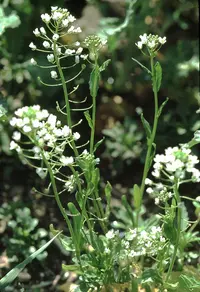
Recognize field pennycress by its upright, unbranched to lightly branched stem, clasping stem leaves with arrow-shaped bases, and flat, round seedpods with a broad notch at the tip.

Plants usually form a single leafy stalk about 8 to 24 inches (20 to 60 cm) tall, topped by small four-petaled white flowers.

Thlaspi arvense Identification

Identify Your Plant with Botan

Upload a plant photo and check the identification in seconds.

Clear images work best. Avoid photos taken too close or too far away

Check the plant’s leaves, flowers, and flat seed pods.

  • An upright, branching annual, usually 8-24 inches (20-60 cm) tall.
  • Lower leaves are stalked and oblong; upper leaves clasp the stem with arrow-shaped bases and coarse teeth.
  • Flowers are tiny, white, and 4-petaled, held in short clusters at stem tips.
  • Seed pods are flat, round to oval, about 1/2 inch (1-1.5 cm) wide, with a small notch at the tip.

The clasping upper leaves and coin-like pods are the fastest clues.

Thlaspi arvense shows clear visual shifts from basal rosette to flowering, fruiting stems.

  • Juvenile plant: Early growth forms a flat basal rosette. Leaves are spoon-shaped to oblong, on short stalks, with smooth or slightly toothed edges.
  • Young plant: An upright central stem emerges from the rosette. Stem leaves become stalkless, clasp the stem at the base, and look narrower than basal leaves.
  • Flowering stage: Plants reach about 1-2 feet (30-60 cm). Small white four-petaled flowers cluster at stem tips, while side branches begin extending below them.
  • Fruiting stage: The flowering tips lengthen into narrow racemes bearing many flat, round to broadly winged seedpods with a shallow notch, replacing the earlier open flowers.

In spring, field pennycress is easier to spot as low basal leaves give way to upright flowering stems. Small white flowers become visible in spring to early summer. By early summer, the flat, round seedpods are the clearest clue. They hang along the stems like small coins and often persist briefly as the plant dries and turns straw-colored.

Several mustard-family weeds can be mistaken for field pennycress.

shepherd's purse(Capsella bursa-pastoris)

Both have small white flowers and clasping upper leaves. Shepherd's purse is told by its flat, heart-shaped seedpods; Thlaspi arvense makes round, coin-like pods with a broad wing.

Virginia pepperweed(Lepidium virginicum)

This species also forms upright stems with tiny white flowers and many small pods. Its fruits are much smaller, about 1/8 inch (3 mm) wide, and not broad, flat discs.

perfoliate clasping pepperweed(Lepidium perfoliatum)

It shares clasping leaves and a pale green, upright habit. The upper leaves join around the stem like a cup, and the fruits are tiny and not rounded, winged discs.

Thlaspi arvense is native across much of Europe and temperate Asia and is now widespread beyond that range. In identification, it is most often encountered in disturbed, open ground rather than intact native plant communities. Typical habitats include fields, field margins, roadsides, rail corridors, vacant lots, and other compacted or recently turned soils. Finding it in lowland agricultural or urban-edge sites helps narrow the ID, especially when a mustard-like annual appears in cool-season weed habitat.

Confirm the Species with Botan

Upload a photo to compare key details and get help identifying the plant or confirming your current ID.

FAQ

The flat, round to broadly oval seedpods are the most reliable clue. They look coin-like with a shallow notch at the tip, a key detail in field pennycress identification once fruits are present.

More Plant Identification Guides

Identify Your Plant and Learn More

Use a photo to identify it with Botan, then see plant details, care information, and common problems for that species.

Botan app identifying a plant from a photo
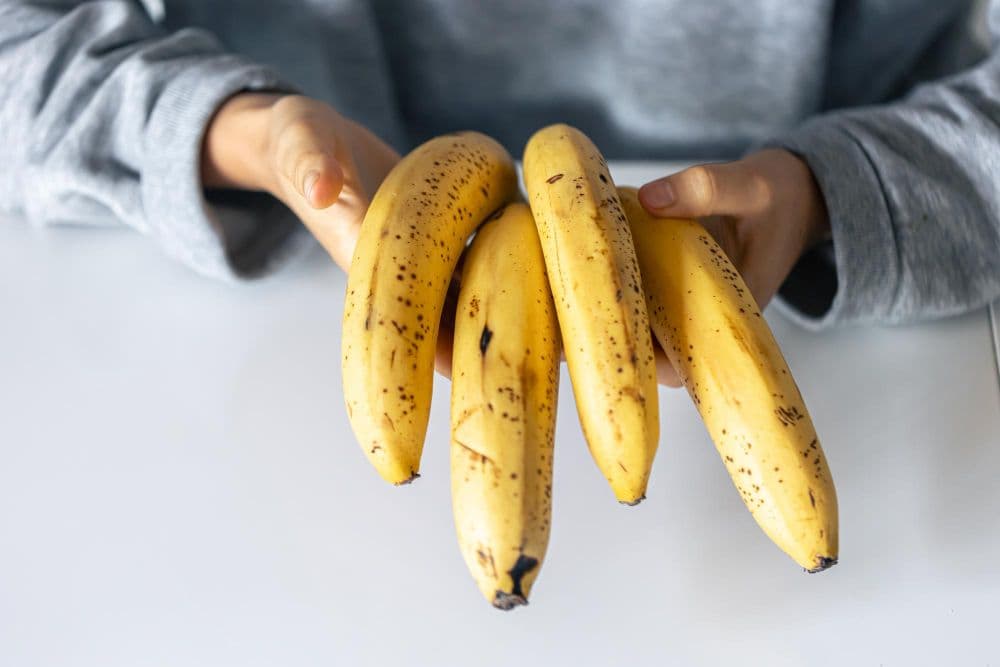
Banana Peel Water for Plants: 5 Things to Know Before Trying It

5 min read · 9 Jul 2026

Banana Peel Water for Plants: 5 Things to Know Before Trying It

Banana water can provide potassium and some nutrients that may support plant growth, but it is not a universal fix. Use it carefully and only when the plant actually shows signs of nutrient deficiency rather than as a routine treatment.

Plant Care
Banana Peel Water for Plants: 5 Things to Know Before Trying It
How to Group Plants in Landscaping: A Practical Layout Guide

8 min read · 31 Aug 2026

How to Group Plants in Landscaping: A Practical Layout Guide

Good plant grouping can mean the difference between a well-planned garden and one that looks sloppy. This guide explores layers, spacing, cluster shapes, and the plants that thrive when you group them.

Plant Care
How to Group Plants in Landscaping: A Practical Layout Guide
Planting Grass Seed in Summer – What Works and What Fails

7 min read · 6 Aug 2026

Planting Grass Seed in Summer – What Works and What Fails

Summer seeding succeeds when the grass type suits the season, and the soil stays moist. Find out how to prepare the seedbed and choose a safe window for planting.

Plant Care
Planting Grass Seed in Summer – What Works and What Fails