Deadly Nightshade Identification (Atropa bella-donna)

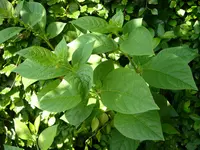
Recognize Atropa bella-donna by its broad, pointed oval leaves, usually paired unevenly on thick branching stems, with one leaf noticeably larger than the other.

Check for solitary, nodding bell-shaped flowers in the leaf axils, each about 1 inch (2.5 cm) long, on a bushy plant often 3 to 5 feet (0.9 to 1.5 m) tall.

Atropa bella-donna Identification

Is This Deadly Nightshade?

Upload a clear image to check whether your plant ID is correct.

Clear images work best. Avoid photos taken too close or too far away

Check the plant’s overall form, leaves, flowers, and berries together.

  • An upright, branching herbaceous plant, often about 3-5 feet (0.9-1.5 m) tall.
  • Leaves are simple, oval to egg-shaped, with smooth edges and pointed tips, often in unequal pairs.
  • Individual leaves are commonly about 4-8 inches (10-20 cm) long and sit on short stalks.
  • Flowers hang singly from the leaf axils, bell-shaped, with 5 fused lobes and a dull purple-brown color.
  • Berries are glossy black, round, and seated in a persistent green, star-like calyx.

Look for the paired leaves plus drooping bell flowers or black berries on the same plant.

Deadly Nightshade shows clear visual shifts from a leafy shoot to a fruiting, branched herb.

  • Young plant: Upright green stems carry broad, pointed leaves in unequal pairs. The plant is still simple in outline, with little branching and no hanging flowers.
  • Flowering stage: Branching increases, and solitary, nodding bell-shaped flowers appear from leaf axils. The dull purple-brown corolla is about 1 inch (2.5 cm) long.
  • Fruiting stage: After flowering, each nodding bloom is replaced by a glossy black berry held in an enlarged green calyx. Fruiting stems look heavier and more open.

In spring, Atropa bella-donna emerges from the rootstock with fresh green shoots and broad leaves, then shows nodding purple-brown flowers from late spring into summer. By late summer to early fall, the flowers give way to shiny black berries held among the leaves. After frost, the top growth dies back, leaving the plant absent above ground through winter.

A few other nightshades can be mistaken for Atropa bella-donna at a glance.

black nightshade(Solanum nigrum)

Both have ovate leaves and dark berries. Black nightshade has small white star-shaped flowers in clusters and berries about 1/4 inch (6 mm) wide. Atropa has larger purple-brown bell-shaped flowers, usually singly or in pairs, and larger berries.

bittersweet nightshade(Solanum dulcamara)

Both are nightshades with purple flowers and red to dark fruit as it matures. Bittersweet nightshade is a twining or scrambling vine, not an upright herb, and its leaves often have basal lobes. Its flowers are reflexed and star-shaped, not bell-shaped.

Atropa bella-donna is native to much of Europe, North Africa, and western Asia. It is most often found in deciduous woodland, forest margins, scrub, and disturbed calcareous ground, especially on limestone-rich soils. That setting helps with identification because this species is more likely in shaded to partly open woodland-edge habitats than in wetlands, open prairie, or dry desert sites. In Britain and parts of Europe, it is especially associated with chalk and limestone districts.

  • Poisonous plant parts: All parts of Atropa bella-donna are poisonous to humans and pets if swallowed, including the berries, leaves, and roots.
  • Highest confusion risk: The shiny black berries can attract children and pets. Ingestion is the main concern, not skin contact.
  • Hazardous look-alike context: Mistaking it for edible berries creates a real poisoning risk. The fruit is typically a single glossy black berry held beneath a star-shaped green calyx, not berries in clusters.

Check Your Plant ID

Use Botan to analyze a photo and help verify the plant, so you can compare with more confidence before making decisions.

FAQ

A strong clue is the nodding, bell-shaped flower, dull purple to brownish-purple with greenish tones, followed by a single shiny black berry held in a persistent green calyx. This combination supports Deadly Nightshade identification.

More Plant Identification Guides

Identify Your Plant and Learn More

Use Botan to identify a plant from a photo, then get species-specific care information, safety notes, and common problems.

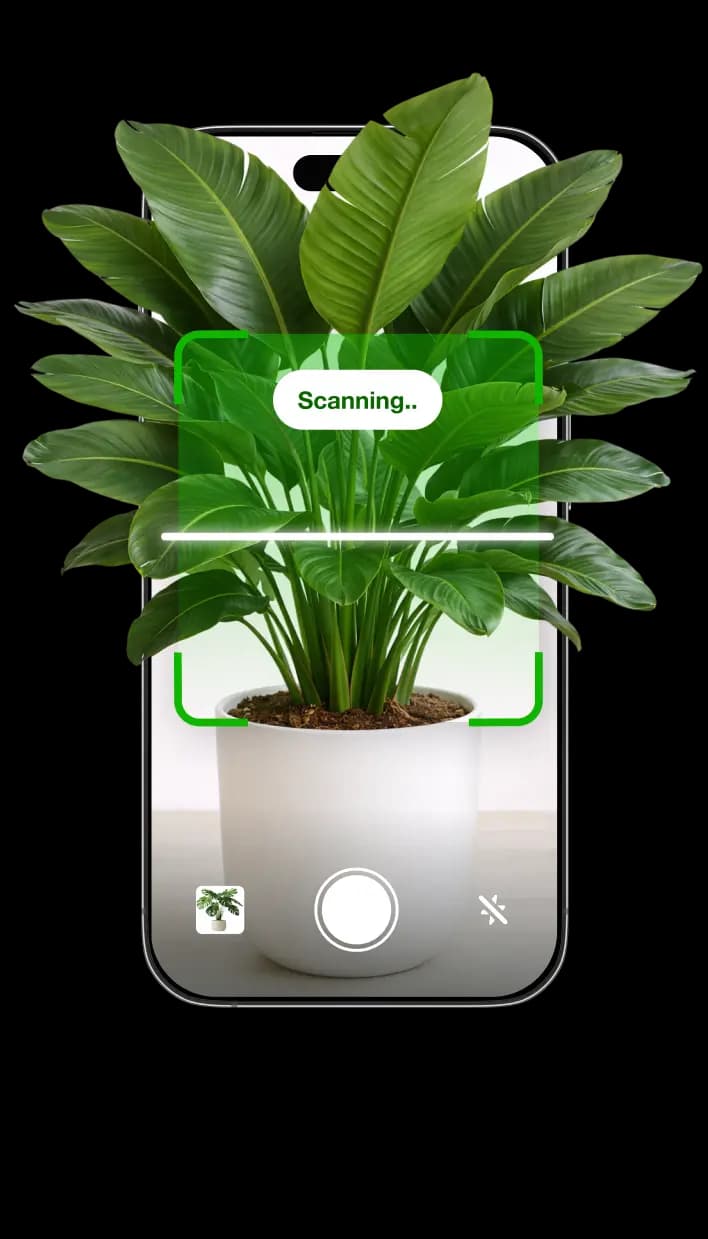
Botan app identifying a plant from a photo
Best Fertilizer for Grass in Summer: How to Choose the Right One

6 min read · 18 Aug 2026

Best Fertilizer for Grass in Summer: How to Choose the Right One

The right fertilizer in summer can make a lawn thrive. The wrong one can damage it. Here, you’ll learn the best NPK ratios by grass type, when and how to apply your formula, and how to recognize the signs of over- or under-fertilizing.

Plant Care
Best Fertilizer for Grass in Summer: How to Choose the Right One
Top 5 Best Indoor Plants for Air Quality

5 min read · 11 Sept 2026

Top 5 Best Indoor Plants for Air Quality

Indoor plants can make a room feel fresher thanks to their air-purifying qualities. Here are 5 of the most suitable choices for your routine and living space.

Plant Recommendations
Top 5 Best Indoor Plants for Air Quality
13 Best Front Yard Trees for Every Home and Yard

12 min read · 7 Aug 2026

13 Best Front Yard Trees for Every Home and Yard

A front yard tree can stay for decades. Therefore, choosing one deserves serious consideration. Here are 13 trees that have proven themselves, sorted by their purpose. You'll also find five species to avoid and basic planting information.

Plant Recommendations
13 Best Front Yard Trees for Every Home and Yard