
Japanese Knotweed Identification (Reynoutria japonica)

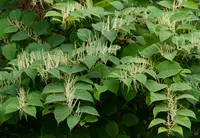
To recognize Japanese Knotweed, look for upright, hollow, bamboo-like stems with distinct swollen nodes and alternate leaves. The leaves are broad, nearly flat-based, and taper to a short point.

Dense sprays of small white flowers rise from the leaf axils along the stems.

Reynoutria japonica Identification

Check Your Plant with Botan

Not sure about your plant ID? Upload a photo and check it with Botan.

Clear images work best. Avoid photos taken too close or too far away

Use a few easy structure checks before looking closer.

  • Forms dense, upright clumps with many hollow, bamboo-like stems, often 6-10 feet (1.8-3 m) tall.
  • Leaves are alternate, broadly oval to almost triangular, with a flat base and a pointed tip, often 3-6 inches (8-15 cm) long.
  • Stems are smooth, green to reddish, and clearly jointed with swollen nodes.
  • Tiny creamy-white flowers appear in branched clusters from the leaf axils, where the leaf meets the stem.

Check several stems and leaves, since clumps can vary in size.

Japanese Knotweed shows clear structural changes from early shoots to flowering and fruiting stems.

  • Young plant: New shoots emerge reddish and stout, then extend into upright, bamboo-like green stems with swollen nodes and alternately arranged leaves that broaden quickly.
  • Mature plant: Established clumps form dense, cane-like stems often 6-10 feet (1.8-3 m) tall, with broad leaf blades and more branching in the upper portions.
  • Flowering stage: Upper leaf axils carry many small creamy white flowers in loose, branched clusters, adding a fine, airy look absent on nonflowering stems.
  • Fruiting stage: After flowering, the clusters hold small winged fruits that persist along the branchlets, replacing the fresh flower sprays with papery seed structures.

In spring, Japanese Knotweed sends up stout reddish shoots that quickly unfold broad, fresh green leaves. By late summer to early fall, airy clusters of small creamy-white flowers become visible above the foliage. After frost, the leaves yellow and drop. Winter leaves standing tan to brown, hollow, bamboo-like stems, which often persist and make dense patches easy to spot even when leafless.

A few large, thicket-forming plants are often mistaken for Japanese knotweed.

giant knotweed(Reynoutria sachalinensis)

Often confused because it has the same bamboo-like canes and dense colonies. The quickest check is leaf size and shape: giant knotweed has much larger leaves, often 10 to 16 inches (25 to 40 cm) long, with a heart-shaped base.

Bohemian knotweed(Reynoutria × bohemica)

This hybrid is commonly misidentified because it blends traits of the parent knotweeds. It usually has leaves intermediate in size and shape, often broader and more heart-based than R. japonica, but not as large as giant knotweed.

Reynoutria japonica is native to East Asia, including Japan, Korea, Taiwan, and parts of China. In its native range, it occurs on open mountain slopes, along streambanks, beside roads, and on disturbed ground, often from low elevations into montane areas. That habitat context helps with identification because the species commonly forms dense stands in sunny, repeatedly disturbed places rather than shaded forest interior. Finding it on river edges, embankments, roadsides, or similar open sites can help narrow the ID.

Confirm It from a Photo

Use Botan to identify or verify the plant from a photo so you can make decisions with more confidence.

FAQ

The clearest clue is its bamboo-like, hollow green stems with swollen nodes, paired with broad, flat-based leaves that end in a short pointed tip. In late summer, sprays of small creamy-white flowers add another strong Japanese Knotweed identification cue.

More Plant Identification Guides

One Photo. More About Your Plant.

Identify a plant from a photo with Botan, then get plant details, care information, and common problems for that species.

Botan app identifying a plant from a photo
12 Most Wanted Rare Houseplants to Grow at Home

6 min read · 21 Sept 2026

12 Most Wanted Rare Houseplants to Grow at Home

Rare houseplants can turn an ordinary corner in your apartment into a living botanical collection. This guide covers 12 most admired picks, what makes them special, and how to grow them successfully at home.

Plant Recommendations
12 Most Wanted Rare Houseplants to Grow at Home
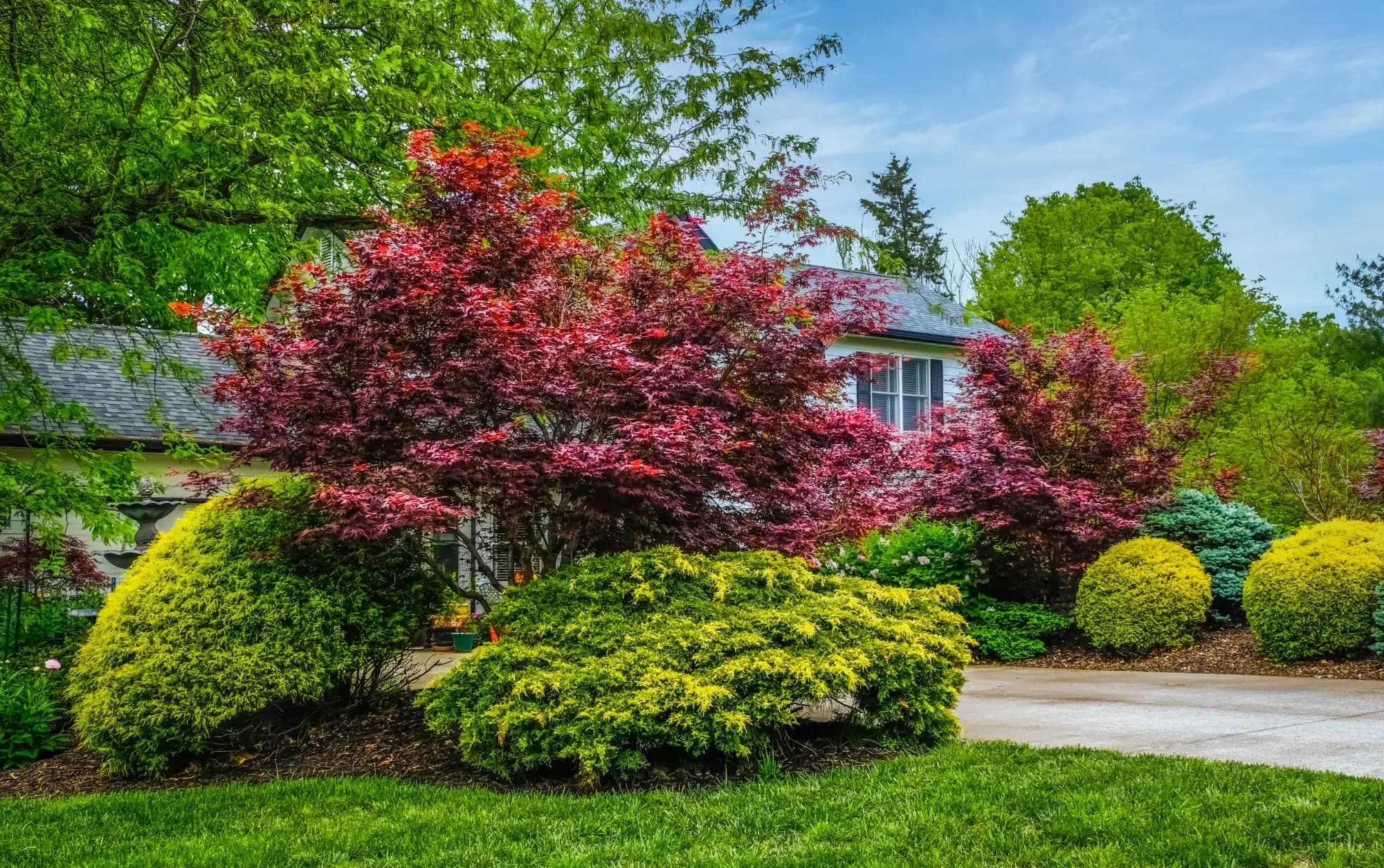
13 Best Front Yard Trees for Every Home and Yard

12 min read · 7 Aug 2026

13 Best Front Yard Trees for Every Home and Yard

A front yard tree can stay for decades. Therefore, choosing one deserves serious consideration. Here are 13 trees that have proven themselves, sorted by their purpose. You'll also find five species to avoid and basic planting information.

Plant Recommendations
13 Best Front Yard Trees for Every Home and Yard
How Long Can Flowers Go Without Water? Everything You Need to Know

6 min read · 10 Jul 2026

How Long Can Flowers Go Without Water? Everything You Need to Know

Flowers can survive without water anywhere from 1-2 hours to several months, depending on the plant type, species, and growing conditions. Some strong-looking flowers are drought-sensitive, while delicate-looking plants may tolerate long dry periods surprisingly well.

Plant Care
How Long Can Flowers Go Without Water? Everything You Need to Know