
Wood Avens Identification (Geum urbanum)

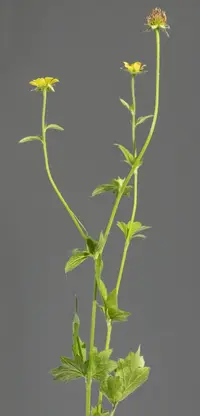
To recognize Wood Avens, look for a low basal rosette of lyrate leaves with a large rounded end leaflet and smaller side leaflets, plus upright branching stems about 1 to 2 feet (30 to 60 cm) tall.

The flowers are small, yellow, and five-petaled, usually held on slender stalks above the leaves.

Geum urbanum Identification

Identify a Plant by Photo

Use a clear photo to confirm what plant you have.

Clear images work best. Avoid photos taken too close or too far away

Check the leaves, flowers, and seedheads first.

  • Basal leaves form a low rosette and are divided, with a large rounded end leaflet and 2-4 much smaller side leaflets.
  • Flowering stems are upright, branched, and softly hairy, usually reaching 1-2 feet (30-60 cm) tall.
  • Flowers are small, about 1/2 inch (1-1.5 cm) across, with 5 yellow petals held open above a green calyx.
  • Seedheads turn into rounded burr-like clusters with many hooked styles that cling to clothing or fur.

The hooked seedhead is often the quickest confirming feature.

Wood Avens shows clear visual shifts from basal rosettes to flowering stems and hooked fruits.

  • Juvenile plant: The plant begins as a low basal rosette. Leaves are rounded to kidney-shaped, softly hairy, and shallowly lobed, without any upright flowering stem.
  • Mature plant: Before flowering, the rosette is broader and leaves become lyrate, with a large terminal leaflet and smaller side leaflets. Stems start to rise.
  • Flowering stage: Upright, branched stems lift the plant to about 1-2 feet (30-60 cm). Small yellow five-petaled flowers sit loosely along the upper stems.
  • Fruiting stage: After flowering, each bloom head turns into a rounded cluster of achenes, each with a persistent hooked style that gives the fruiting head a burr-like look.

In spring, Wood Avens shows a low rosette of softly hairy, unevenly lobed leaves. From late spring into summer, slender stems carry small yellow five-petaled flowers above the foliage, making the plant easier to spot. After flowering, the seed heads become obvious: rounded burr-like clusters with hooked styles that cling to clothing or fur. Winter often leaves only the basal rosette visible, with no showy stems or flowers.

A few yellow-flowered rosaceous weeds can be mistaken for Wood Avens.

barren strawberry(Waldsteinia fragarioides)

Confusion comes from the low basal leaves and small yellow flowers. It stays as a creeping groundcover, while Geum urbanum makes upright flowering stems. Its leaves are mostly 3 separate leaflets, not a large end leaflet with smaller side leaflets.

silverweed cinquefoil(Argentina anserina)

Both can have toothed basal leaves and yellow 5-petaled flowers. Silverweed has pinnate leaves with many paired leaflets and a silvery underside. Geum urbanum has fewer, broader leaflets and lacks the distinctly silver leaf back.

Geum urbanum is native across much of Europe, western Asia, and parts of North Africa, and it is widely naturalized elsewhere. It is most often found in shaded or partly shaded woodland edges, hedgerows, scrub, pathsides, and other disturbed places. That habitat helps narrow identification because this species commonly appears in dry, shady, human-influenced sites rather than open wetlands or alpine ground.

Check Your Plant ID

Upload a photo to Botan to identify the plant or confirm your result before you label it or compare similar species.

FAQ

The stems are slender, green to reddish, softly hairy, and usually branched above. They rise from a basal leaf rosette and often reach about 12-24 inches (30-60 cm) tall. This helps when identifying Wood Avens.

More Plant Identification Guides

Identify Your Plant and Learn More

Use a photo to identify it with Botan, then view species details, care information, and common problems.

Botan app identifying a plant from a photo
12 Most Wanted Rare Houseplants to Grow at Home

6 min read · 21 Sept 2026

12 Most Wanted Rare Houseplants to Grow at Home

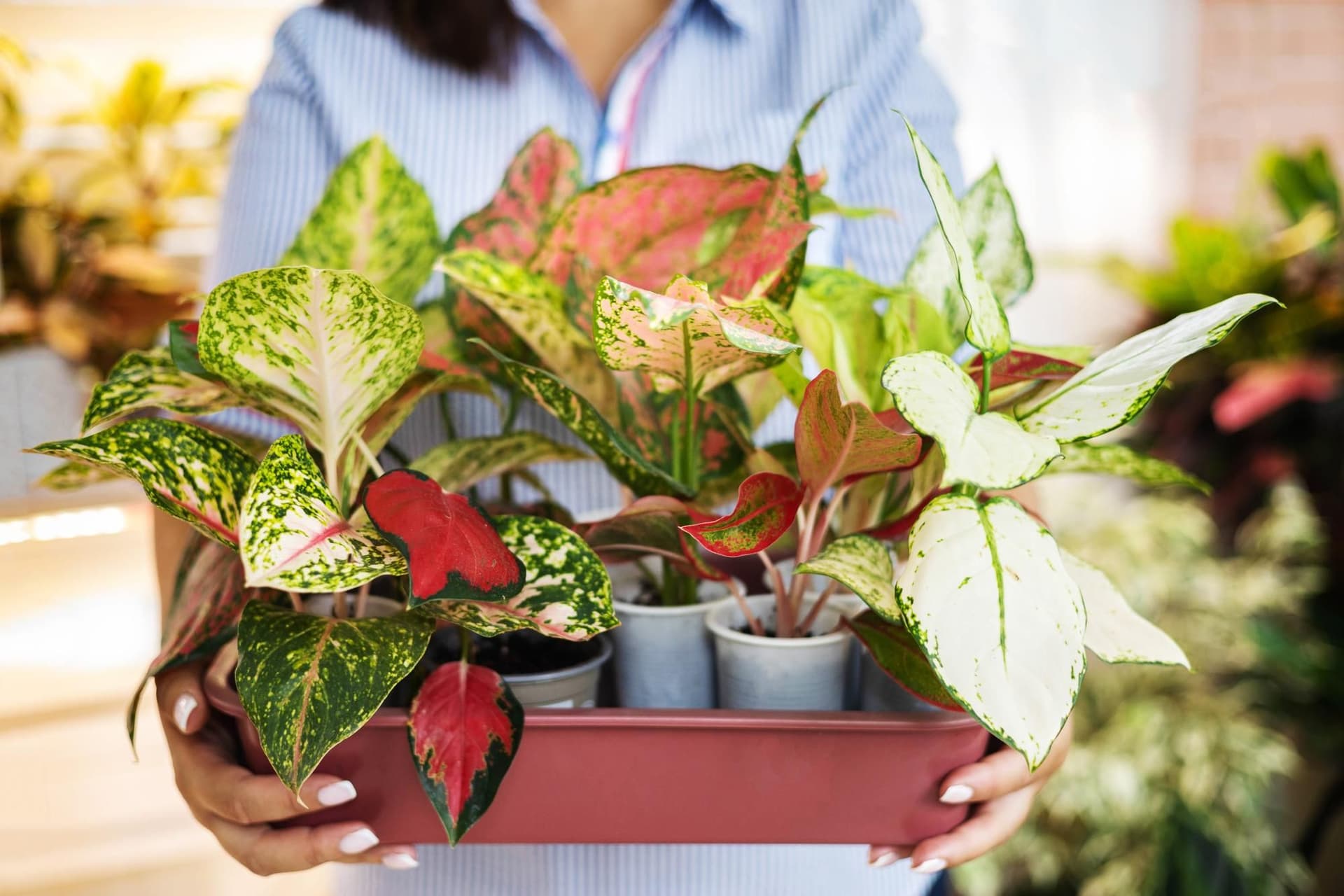
Rare houseplants can turn an ordinary corner in your apartment into a living botanical collection. This guide covers 12 most admired picks, what makes them special, and how to grow them successfully at home.

Plant Recommendations
12 Most Wanted Rare Houseplants to Grow at Home
Best Fertilizer for Grass in Summer: How to Choose the Right One

6 min read · 18 Aug 2026

Best Fertilizer for Grass in Summer: How to Choose the Right One

The right fertilizer in summer can make a lawn thrive. The wrong one can damage it. Here, you’ll learn the best NPK ratios by grass type, when and how to apply your formula, and how to recognize the signs of over- or under-fertilizing.

Plant Care
Best Fertilizer for Grass in Summer: How to Choose the Right One
13 Best Front Yard Trees for Every Home and Yard

12 min read · 7 Aug 2026

13 Best Front Yard Trees for Every Home and Yard

A front yard tree can stay for decades. Therefore, choosing one deserves serious consideration. Here are 13 trees that have proven themselves, sorted by their purpose. You'll also find five species to avoid and basic planting information.

Plant Recommendations
13 Best Front Yard Trees for Every Home and Yard