Host tree selection
Establish the fungus near suitable host trees such as birch, beech, or oak, as this mycorrhizal species depends on close association with compatible roots to fruit reliably.

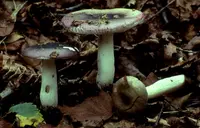
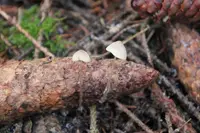
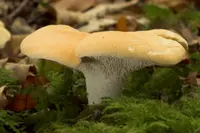
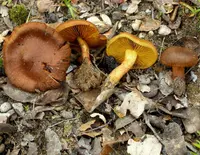
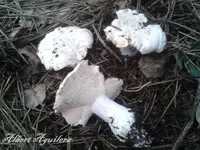
Fragile brittlegill, Russula fragilis, is a small woodland mushroom, not a typical houseplant. It belongs to the Russula group, known for brittle, snap-prone stems and caps. The cap is often pale lilac, pink, or cream, with white gills and a delicate, easily crumbling texture. It grows on the forest floor, usually under hardwoods or conifers in damp, mossy areas. This fungus forms mycorrhizae, a nutrient-sharing partnership with tree roots, which makes it difficult to cultivate at home. Anyone wanting to learn how to care for fragile brittlegill should understand that it depends on a healthy, established forest habitat rather than pot culture.

Care Difficulty
Hard Care

Light Preference
Partial Shade

Water Requirements
Keep Soil Moist

Temperature Preference
Cool Climate

Hardiness Zone
Unknown

Soil Texture
Loamy, Peaty, Organic-rich

Soil pH
Strongly acidic (4.5–5.5), Acidic (5.5–6.5)

Soil Drainage
Moist but well-drained

Fertilization
Minimal (feed rarely)
Scan your plant to receive care tips personalized for your specific plant
Available on iOS and Android
This woodland mushroom prefers dappled forest light rather than direct open sun.
This ectomycorrhizal mushroom relies on consistently moist, not waterlogged, forest soil.
This species thrives in cool to mild woodland temperatures with moderate seasonal shifts.
This mycorrhizal fungus fruits best in consistently moist, cool air around 70–90% humidity in its woodland habitat.
This species requires naturally structured forest soil rather than a constructed potting mix.
This woodland mushroom is not suitable for container growing because it depends on complex mycorrhizal relationships with tree roots and stable forest soil structure.
Russula fragilis is a wild mycorrhizal fungus that usually does not need direct fertilizing when growing in natural soil with suitable host trees.
Russula fragilis is a mushroom-forming fungus and does not benefit from pruning in the way vascular plants do.
This species is not suited to conventional repotting, since Russula fragilis depends on symbiosis with tree roots and is seldom grown in containers.
Propagation of Russula fragilis under controlled conditions is technically challenging and rarely attempted by home growers.
This ectomycorrhizal fungus is generally as cold hardy as its host trees and needs no specific winter care in the ground.

Plant Health Check
Not sure what's wrong with your plant? Check your plant's health inside the app.
This species has very thin, brittle gills that snap cleanly at a light touch, which is how it gained its common name fragile brittlegill.
The cap often shows pale lilac, pink, or violet tones when young, then tends to fade toward whitish or buff with age, especially after sun exposure or rain washout.
Although sometimes mistaken for edible brittlegills, this species is considered inedible and mildly toxic, causing gastrointestinal upset rather than life‑threatening poisoning.

Fragile brittlegill often fruits in small scattered groups in mossy, acidic woodland soils, and its presence is used by some field mycologists as an indicator of nutrient‑poor, undisturbed forest microhabitats.
This mushroom is considered inedible and potentially toxic. It has a very acrid, burning taste and can cause gastrointestinal upset such as nausea, vomiting, and diarrhea. It should not be collected for food.
Keep your plants happy and healthy with plant identification, disease detection, and easy care guidance.