Use fresh woodchips
Renew the top 5–10 cm of hardwood or mixed-conifer woodchips each season so the fungus always has fresh, partially decomposed substrate to colonize and fruit from.

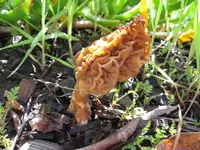
Woodchip morel (Morchella rufobrunnea) is a saprobic fungus, not a leafy plant, valued for its distinctive honeycombed caps and culinary use when properly cooked. It typically fruits on woodchips, landscaping mulch, or disturbed soil, often in urban or suburban areas rather than deep forests.
Caps are conical to oval, tan to brown, and attached directly to a hollow, pale stem, giving a lightweight but sturdy structure. This species is known for appearing in newly mulched beds, garden paths, and similar sites.
Woodchip morel can be challenging to cultivate because it depends on specific wood-based substrates, moisture patterns, and temperature cues. Understanding these ecological needs is key to how to care for Woodchip Morel in a controlled setting.

Care Difficulty
Hard Care

Light Preference
Partial Shade

Water Requirements
Keep Soil Moist

Temperature Preference
Warm Climate

Hardiness Zone
Unknown

Soil Texture
Sandy, Organic-rich

Soil pH
Slightly acidic (6.5–7.0)

Soil Drainage
Moist but well-drained

Fertilization
Minimal (feed rarely)
Scan your plant to receive care tips personalized for your specific plant
Available on iOS and Android
This woodchip-dwelling morel prefers bright, indirect outdoor light that mimics open woodland edges.
This fungus needs consistently moist, not saturated, woodchip or soil layers to fruit well.
This species fruits best in mild, cool conditions typical of late winter to spring in many temperate regions.
Morchella rufobrunnea requires high, stable humidity for reliable fruiting.
This fungus needs a loose, organic-rich, well-drained substrate rather than conventional potting soil.
This species can be grown in containers, but management of depth and moisture is demanding.
This fungus grows on nutrient-rich wood debris and usually needs no additional fertilizer in home culture.
Morchella rufobrunnea does not require true pruning, but some hygiene management helps maintain healthy fruiting beds.
For Morchella rufobrunnea, management focuses on renewing outdoor woodchip beds rather than classic repotting.
Reproducing this morel at home is challenging and usually attempted only by dedicated growers.
Outdoor beds of Morchella rufobrunnea are moderately cold tolerant and often need only simple winter management.

Plant Health Check
Not sure what's wrong with your plant? Check your plant's health inside the app.
This morel is strongly associated with disturbed urban and suburban habitats, fruiting abundantly in fresh landscaping woodchips, construction sites, and along sidewalks rather than in undisturbed forests.
The fruiting bodies typically show a distinct pinkish to reddish-brown bruising when handled or with age, a color change that helps distinguish it from several visually similar morel species.
In mild climates this species often appears very early in the year, sometimes in mid-winter to early spring, taking advantage of moist, recently disturbed substrates before many other macrofungi are active.

This species is one of the few morels reliably cultivated on a commercial scale, and research on its life cycle and nutritional needs has made it a key model organism for attempts to grow Morchella rufobrunnea under controlled conditions.
Yes, this species is edible when fully cooked and correctly identified. Raw or undercooked morels can cause digestive upset. Always avoid specimens with signs of decay, contamination, or confusion with toxic false morels, and cook thoroughly.
Keep your plants happy and healthy with plant identification, disease detection, and easy care guidance.