


Use decaying mulch
Place small pieces of well-rotted wood chips or decaying bark around existing colonies to provide a steady substrate they can slowly colonize without disturbing the main patch.

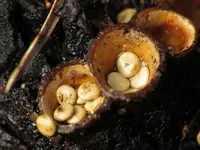
Crucibulum crucibuliforme, often called the common bird’s nest fungus, is a small saprophytic fungus that grows on decaying wood, bark, or plant debris. It forms tiny cup-shaped fruiting bodies that hold lentil-like “eggs” containing spores.
This species occurs widely in temperate regions, including North America and Europe, especially in mulched beds, woodland gardens, and damp, shaded sites. It is not a traditional ornamental plant, but understanding how to care for Crucibulum crucibuliforme helps gardeners recognize it and maintain the moist, organic-rich substrates where it naturally thrives.
Once established, it tends to persist without intervention, as long as the habitat remains humid, shaded, and rich in decomposing plant material.

Care Difficulty
Moderate Care

Light Preference
Partial Shade

Water Requirements
Keep Soil Moist

Temperature Preference
Cool Climate

Hardiness Zone
Unknown

Soil Texture
Loamy, Organic-rich

Soil pH
Acidic (5.5–6.5), Slightly acidic (6.5–7.0)

Soil Drainage
Moist but well-drained

Fertilization
Minimal (feed rarely)
Scan your plant to receive care tips personalized for your specific plant
Available on iOS and Android
This fungus prefers low, filtered light that mimics a shaded forest floor.
Moist, but not waterlogged, conditions support healthy development of this bird’s nest fungus.
Cool to mild conditions favor reliable fruiting of this species.
This fungus develops best in moderately moist air but adapts to a fairly wide humidity range.
This saprobic fungus thrives on moist, organic-rich substrates rather than traditional garden soil.
This species can be grown in shallow containers that hold consistently moist, organic debris.
This saprophytic fungus usually grows on nutrient-rich woody debris and does not need additional fertilization in typical garden or outdoor settings, so caring for Crucibulum crucibuliforme focuses more on substrate choice and moisture than on added nutrients.
This small bird’s nest fungus does not require pruning, trimming, or shaping in managed settings, as its fruiting bodies are short-lived and naturally replaced by new growth on decaying organic matter.
Management of this fungus is mainly about providing suitable decaying organic material rather than repotting or transplanting in the usual horticultural sense.
Propagation of this fungus is not usually managed directly, as it spreads naturally via spores and colonizes fresh decaying organic matter without specific horticultural intervention.
This outdoor saprophytic fungus is generally cold hardy and does not need specific winter care in most temperate climates.

Plant Health Check
Not sure what's wrong with your plant? Check your plant's health inside the app.
Its cup-shaped fruiting bodies collect rain droplets, which splash out the tiny spore-filled “eggs” (peridioles) and fling them away from the parent fungus. This splash-cup dispersal mechanism relies on precise cup shape and droplet impact angle to maximize distance.
Each peridiole is attached to a fine cord called a funiculus that can uncoil and stick to nearby twigs or plant debris when splashed out. This adhesive cord helps anchor the spore package in an elevated position, improving wind exposure for later spore release.
This species lives on dead wood, bark mulch, and plant debris as a saprobe, meaning it feeds on non-living organic matter. By breaking down lignocellulosic material in wood, it contributes to nutrient cycling in forest floors and in garden mulches.

Molecular studies have shown that this species, once placed in a broad and artificial group of so-called gasteroid fungi, actually belongs within the Agaricales, the same large order that includes many typical gilled mushrooms, highlighting how DNA evidence has reshaped its taxonomic placement.
This fungus spreads locally where there is consistently damp, decaying organic matter such as mulch or rotting wood. It is not considered aggressive and usually remains confined to its substrate, disappearing once the material dries or decomposes fully.
Keep your plants happy and healthy with plant identification, disease detection, and easy care guidance.

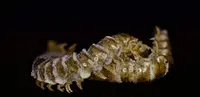
Arthrophaga myriapodina
Arthrophaga myriapodina
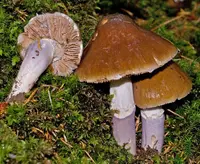
wrinkled webcap
Cortinarius elatior
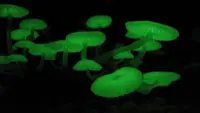
green pepe
Mycena chlorophos
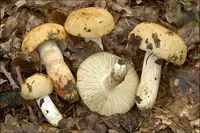
Almond-scented Russula
Russula grata
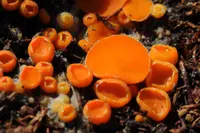
Byssonectria terrestris
Byssonectria terrestris
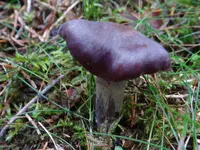
silky webcap
Cortinarius evernius

Slimy-Girdled Cort
Cortinarius glutinosoarmillatus
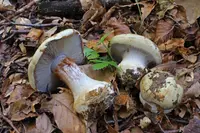
Cortinarius anserinus
Cortinarius anserinus