Spore dispersal planning
Harvest mature caps by cutting rather than pulling, and leave a few healthy, older specimens in place each season to ensure ongoing spore release and stable colony renewal when growing Bitter Brown Leucopax.

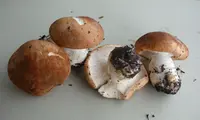
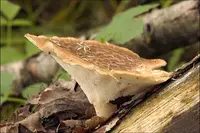
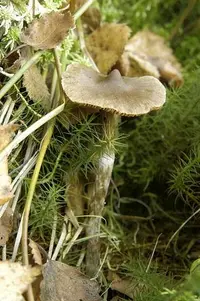
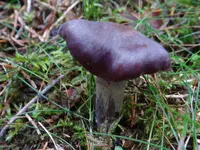
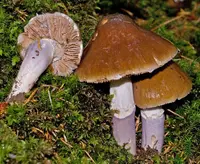
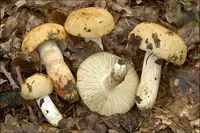
Leucopaxillus gentianeus, commonly called bitter brown leucopax, is a terrestrial mushroom-forming fungus rather than a leafy plant. It produces sturdy, medium to large brown caps with thick, pale gills and a robust stem, often forming scattered groups on the ground.
This species occurs mainly in temperate forests of Europe and North America, usually in soil rich in decaying leaf litter. Its firm texture and pronounced bitter taste make it undesirable as an edible mushroom, which is an important point when considering how to care for Bitter Brown Leucopax in mixed garden or woodland settings.
It typically favors cool, moist conditions and undisturbed, humus-rich soil, which makes it more suited to naturalistic woodland gardens than to controlled indoor cultivation.

Care Difficulty
Moderate Care

Light Preference
Partial Shade

Water Requirements
Keep Soil Moist

Temperature Preference
Cool Climate

Hardiness Zone
Unknown

Soil Texture
Loamy, Silty, Organic-rich

Soil pH
Acidic (5.5–6.5), Slightly acidic (6.5–7.0)

Soil Drainage
Moist but well-drained

Fertilization
Minimal (feed rarely)
Scan your plant to receive care tips personalized for your specific plant
Available on iOS and Android
Leucopaxillus gentianeus prefers cool, forest-like light conditions rather than strong, open sun.
Watering for Leucopaxillus gentianeus focuses on maintaining consistently moist, not saturated, forest-floor conditions.
This species prefers cool to mild conditions similar to shaded woodland ground.
Humidity is not a major factor for Leucopaxillus gentianeus, which mainly responds to overall soil moisture and climate.
This fungus develops best in consistently moist, well-aerated forest-type soil with high organic content.
This species is not suitable for typical container growing, as it relies on complex soil and ecosystem relationships that containers cannot replicate.
Leucopaxillus gentianeus is a wild fungus that typically obtains all nutrients from its growing substrate and does not benefit from added fertilizer in garden or container culture.
Pruning is not applicable to Leucopaxillus gentianeus, since it is a mushroom-forming fungus rather than a woody or leafy garden plant.
Transplanting suits this fungus only when moving colonized substrate, since individual Bitter Brown Leucopax fruiting bodies do not survive transplanting.
Propagation of this species is specialized and is normally handled by fungal specialists rather than typical home growers.
Winter care is generally unnecessary, as this fungus is adapted to natural seasonal cycles in temperate climates.

Plant Health Check
Not sure what's wrong with your plant? Check your plant's health inside the app.
The gills of this mushroom have a distinctly bitter taste, which has contributed to it being considered inedible despite not being strongly poisonous in typical field reports.
Fresh fruiting bodies often emit a strong farinaceous, or mealy, smell similar to raw flour or wet grain, which helps distinguish it from superficially similar white or cream mushrooms in mixed woodland.
This species is frequently found on the ground in coniferous or mixed forests, where it fruits among moss and needle litter, indicating a close association with acidic, nutrient-poor forest soils.

Molecular work in recent decades has led to taxonomic reshuffling of several Leucopaxillus species, and L. gentianeus has been an important reference taxon in studies testing whether some traditionally defined white, clitocyboid genera actually represent natural evolutionary lineages.
This mushroom is considered inedible and potentially mildly toxic. It has a very bitter taste and can cause digestive upset if eaten. It should never be collected for food or used in any culinary context.
Keep your plants happy and healthy with plant identification, disease detection, and easy care guidance.