Wood Hedgehog Care (Hydnum repandum)

Also known as: Sweet Tooth
Wood Hedgehog

About Wood Hedgehog

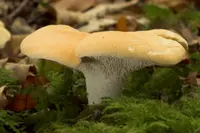
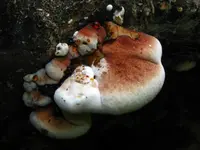
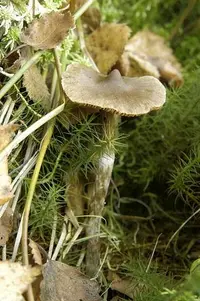
Wood hedgehog, Hydnum repandum, is a wild, mycorrhizal mushroom that lives in partnership with trees rather than growing as a typical houseplant. It forms fleshy, irregular caps with a pale cream to orange tint and a distinctive underside covered in soft spines instead of gills. In nature it occurs across temperate forests of Europe, North America, and parts of Asia, usually on the ground among leaf litter or moss. This species is considered a choice edible in many regions, which encourages foraging rather than home cultivation. It is not easy to cultivate because it depends on complex root associations, so attempts to care for Wood Hedgehog at home focus mainly on handling and storing harvested mushrooms, not actively growing them.


Main Plant Requirements

Care Difficulty

Hard Care

Light Preference

Partial Shade

Water Requirements

Keep Soil Moist

Temperature Preference

Cool Climate

Hardiness Zone

3–8

Soil Texture

Loamy, Silty, Organic-rich

Soil pH

Strongly acidic (4.5–5.5), Acidic (5.5–6.5)

Soil Drainage

Moist but well-drained

Fertilization

Minimal (feed rarely)

Get Personalized Care Plan

Scan your plant to receive care tips personalized for your specific plant

Available on iOS and Android

How to Care for the Wood Hedgehog

This woodland fungus prefers gentle, filtered light similar to a mixed forest floor.

  • Provide dappled shade or light shade with 2–4 hours of gentle morning sun; avoid harsh midday and afternoon sun to prevent drying of the substrate.
  • Choose sites under deciduous trees where summer canopy provides 50–80% shade, but some early-spring light still reaches the ground for Hydnum repandum.
  • In hot, bright climates, increase shade during June–August; excessive direct sun reduces moisture, limiting fruiting of Wood Hedgehog.

Hydnum repandum depends on consistently moist, not waterlogged, forest soil to fruit well.

  • Aim for evenly moist ground; the top 2–5 cm should feel slightly damp but not muddy when pressed between fingers.
  • Improve drainage with leaf litter or loose organic matter so excess rain can drain away, reducing risk of standing water, rot, and reduced mycelial health.
  • Increase moisture support in late summer–fall with mulch that holds humidity; deep cracks in soil and brittle leaf litter indicate dryness and possible reduced fruiting.

This species fruits best in cool to mild conditions typical of temperate forests.

  • Optimal fruiting often occurs around 50–65°F (10–18°C), especially in late summer to autumn when days cool and soil retains moisture.
  • The underground mycelium tolerates winter cold well, often down to 10–20°F (-12 to -6°C) under insulating leaf litter and snow cover.
  • Sustained heat above 80°F (27°C) with dry soil shortens the fruiting period; shade, mulch, and steady moisture help buffer summer temperature swings.

Hydnum repandum requires consistently moist, cool air similar to a shaded forest floor.

  • Aim for 60–80% humidity, avoiding hot, dry locations such as near heaters or strong sun-exposed walls.
  • Dry air causes caps to crack, edges to curl, and growth to stall or abort prematurely.
  • Increase humidity by using sheltered, wind-protected spots, moist leaf litter, and nearby damp logs or mulched areas.

Hydnum repandum grows best in loose, humus-rich, free-draining soil that mimics a forest floor.

  • Use a mix of sandy loam with 30–50% well-decomposed leaf mold or compost to provide structure and organic matter.
  • Maintain soil that drains freely yet holds moisture; avoid compacted clay, standing water, or heavily fertilized substrates.
  • Target a slightly acidic pH around 5.0–6.5, similar to many coniferous or mixed woodland soils.
  • Improve aeration and drainage by incorporating coarse sand, fine bark, or small gravel into the top 10–15 cm of soil.

This species is generally unsuitable for long-term container growing because it depends on stable mycorrhizal partnerships with tree roots in undisturbed soil.

Hydnum repandum is a mycorrhizal forest fungus that obtains most nutrients through its tree partners, so it needs no routine fertilization.

Pruning is generally not applicable to Hydnum repandum, as it is a wild mycorrhizal mushroom rather than a garden shrub or houseplant.

This species is not suited to normal repotting because it depends on living tree roots in soil, not on container culture.

  • Transplanting attempts usually fail, as the fungus forms a mycorrhiza, a nutrient-sharing partnership, with specific host trees.
  • If a colony must be moved, transfer a generous block of native soil around associated roots with minimal disturbance.
  • Carry out any soil transfer in cool, moist weather to reduce stress on the host tree and fungal hyphae.
  • Avoid frequent disturbance; long-term success depends on stable woodland-like conditions rather than container care.

Propagation of Hydnum repandum in gardens is difficult, since it spreads mainly via spores and mycelium associated with suitable trees.

Hydnum repandum is naturally cold hardy in temperate forests and generally needs no special winter care in the ground.

Care Tips

Site inoculation method

Introduce mycelium to a new site by mixing cleaned, chopped pieces of older hedgehog fruiting bodies or spawn into a shallow layer of fresh, non-compacted leaf litter over an undisturbed, host-tree root zone, then cover lightly with local forest duff to maintain contact and moisture.

Protect mycelial zone

Mark and avoid stepping on the area where the mushrooms fruit, keeping traffic, digging, and raking away from this zone so the fine mycelial network in the upper 5–10 cm of soil is not crushed or broken.

Selective harvest practice

Cut mushrooms at the base with a clean knife instead of pulling them up, leave very small or overmature specimens in place, and never take more than about 30–40% of visible fruiting bodies from a patch to support long-term productivity when growing Wood Hedgehog.

Microclimate moisture management

Use a loose layer of hardwood leaves or fine bark to mimic forest-floor duff and place low windbreaks such as short log edges to reduce drying winds and help keep the fruiting area evenly moist without waterlogging.

Seasonal monitoring routine

During the local fruiting season, check the patch after 2–3 days of steady rain and mild temperatures, and keep simple notes on rainfall, temperature, and fruiting response to better predict future flushes and fine-tune Hydnum repandum care.

Common Pests and Diseases

Mycena parasitica

This disease is caused by a small parasitic bonnet mushroom that fruits directly on Wood Hedgehog caps and can deform or weaken the host fruiting bodies. Symptoms include clusters of tiny gray to brown Mycena mushrooms emerging from the cap surface.

Solution

Remove and discard infected fruiting bodies as soon as the small Mycena mushrooms are noticed to limit spore spread. Avoid collecting or moving contaminated substrate and maintain a diverse, undisturbed woodland habitat to reduce stress on Hydnum repandum colonies.

Hypomyces infection

This disease is caused by parasitic ascomycete fungi in the genus Hypomyces that overgrow hedgehog mushrooms with a whitish to yellow crust, leading to distorted, non-sporulating fruiting bodies. Symptoms include a felt-like or powdery coating that gradually covers spines and cap surfaces.

Solution

Carefully remove and dispose of infected mushrooms and nearby debris to reduce the local spore load. Do not disturb the surrounding soil and mycelium more than necessary, and avoid moving contaminated material to other sites where you hope to grow Hydnum repandum.

Fly larvae (maggots)

These insects are typically fungus gnat or mushroom fly larvae that tunnel inside the caps and stems, leaving brownish tunnels and soft, water-soaked tissue. Symptoms include small entry holes, spongy flesh, and rapid decay of affected fruiting bodies.

Solution

Harvest mushrooms promptly when young and firm, trimming away any infested portions and discarding heavily damaged specimens away from the patch. In managed settings, use fine mesh or netting to reduce adult fly access to developing fruiting bodies and keep fruiting areas free of decomposing mushrooms that attract egg-laying adults.

Slugs and snails

These pests feed on the soft caps and spines, leaving irregular holes, scraped surfaces, and slime trails on and around the mushrooms. Symptoms include missing pieces of cap margin and damaged spore-bearing spines, especially in damp, shaded spots.

Solution

Hand-pick slugs and snails during cool, damp periods and relocate them away from the fruiting area. Use simple barriers such as rough mulch rings or copper tape in small managed patches, and promptly remove heavily damaged or decomposing mushrooms that attract more grazing mollusks.

Interesting Facts

Toothed spore surface

Instead of gills or pores, this mushroom has dense, pale spines or “teeth” under the cap that release spores, a trait that helps distinguish it from many toxic look-alikes in the forest.

Mycorrhizal forest partner

It forms ectomycorrhizal associations with broadleaf and conifer trees, exchanging mineral nutrients from the soil for sugars from the host, which supports both tree health and overall forest productivity.

Low-insect, firm flesh

The thick, brittle flesh often contains fewer insect larvae than many other wild mushrooms and keeps a firm texture when cooked, which is one reason it is favored in European wild mushroom cuisine.

Botan icon

Did you know?

This species has long been collected across Europe as a choice edible, and in some regions it has traditional market status, meaning it is officially recognized and regulated as safe to sell fresh alongside cultivated mushrooms.

FAQs about Wood Hedgehog

This fungus is considered a choice edible and is widely foraged. The caps are usually sautéed, stewed, or dried. Always confirm identification with an expert, harvest from unpolluted areas, and cook thoroughly before eating.

Grow Healthy Plants with Botan Care

Keep your plants happy and healthy with plant identification, disease detection, and easy care guidance.

Botan plant care app — identify plants on mobile

Explore More Plants