Host tree selection
Establish this mycorrhizal fungus under compatible hosts like beech, oak, or other hardwoods, since successful Hydnum albidum plant care depends on pairing it with trees it can form root partnerships with.

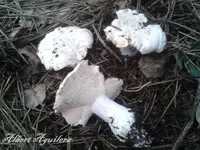
Hydnum albidum, commonly called white hedgehog, is a mycorrhizal mushroom that forms a symbiotic relationship with trees rather than a typical leafy plant. It produces pale, irregular caps with distinctive soft spines or “teeth” on the underside instead of gills. In nature it is found in temperate forests, often in mossy or well-drained woodland soils, usually near conifers or mixed hardwoods. It is considered an edible species, but identification requires care and local expertise. For those who want to care for white hedgehog in cultivation, success usually depends on recreating cool, moist, shaded forest-like conditions and suitable host trees.

Care Difficulty
Hard Care

Light Preference
Partial Shade

Water Requirements
Regular Water

Temperature Preference
Cool Climate

Hardiness Zone
Unknown

Soil Texture
Loamy, Silty, Organic-rich

Soil pH
Strongly acidic (4.5–5.5), Acidic (5.5–6.5)

Soil Drainage
Moist but well-drained

Fertilization
Minimal (feed rarely)
Scan your plant to receive care tips personalized for your specific plant
Available on iOS and Android
This ectomycorrhizal fungus prefers cool, shaded forest conditions rather than open sun.
This woodland species relies on consistently moist, not waterlogged, soil to fruit reliably.
This species fruits best in cool to mild conditions typical of shaded temperate forests.
Humidity is not a primary control factor for Hydnum albidum compared with moisture and substrate conditions.
Hydnum albidum requires a loose, moist, forest-like substrate rather than standard garden soil.
This species is generally unsuitable for long-term container cultivation because it depends on stable woodland soil and tree-root associations.
Hydnum albidum forms mycorrhizal partnerships with trees and usually needs no direct fertilization when growing in suitable forest soil.
Pruning is not applicable to Hydnum albidum, as it is a mycorrhizal fungus that produces a seasonal fruiting body rather than a woody or leafy plant.
Transplanting white hedgehog is rarely successful because the fungus depends on living host tree roots in stable woodland soil.
Hydnum albidum propagation is specialized and usually left to experienced mycologists or commercial spawn producers.
Direct winter care is generally unnecessary, as the fungus persists underground while only the fruiting bodies die back.

Plant Health Check
Not sure what's wrong with your plant? Check your plant's health inside the app.
This species forms white to pale cream fruiting bodies with downward-pointing spines (teeth) instead of gills, a diagnostic feature that helps distinguish it from look-alike gilled mushrooms on the forest floor.
It forms ectomycorrhizal associations with hardwoods and sometimes conifers, exchanging mineral nutrients and water from the soil for sugars produced by trees, which helps support forest health and resilience.
The spines and flesh of this fungus tend to remain whitish and do not strongly bruise or stain when handled, a trait that mycologists use to separate it from some closely related Hydnum species that show noticeable color changes when damaged.
This fungus is generally regarded as edible when correctly identified and harvested young, before the flesh becomes tough or bitter. Always confirm identification with an experienced mycologist and avoid collecting from polluted or contaminated areas.
Keep your plants happy and healthy with plant identification, disease detection, and easy care guidance.