Wild Asparagus Care (Asparagus cochinchinensis)

Wild Asparagus

About Wild Asparagus

Wild asparagus, Asparagus cochinchinensis, is a perennial vine-like plant grown for its fleshy roots and fine, rush-like foliage. It forms twining stems that can scramble over supports or along the ground.

In the wild it occurs in East and Southeast Asia, often in sunny, open habitats and light woodland edges. Gardeners value it for its tolerance of heat, modest drought, and generally low maintenance needs.

It prefers well-drained soil with moderate moisture and does best in bright light with some protection from harsh afternoon sun. These traits make it a practical choice for those who want to care for Wild Asparagus without demanding daily attention.

Main Plant Requirements

Care Difficulty

Moderate Care

Light Preference

Partial Sun

Water Requirements

Moderate Water

Temperature Preference

Warm Climate

Hardiness Zone

7–10

Soil Texture

Sandy, Loamy, Organic-rich

Soil pH

Acidic (5.5–6.5), Slightly acidic (6.5–7.0)

Soil Drainage

Well-drained

Fertilization

Minimal (feed rarely)

Get Personalized Care Plan

Scan your plant to receive care tips personalized for your specific plant

Available on iOS and Android

How to Care for the Wild Asparagus

Asparagus cochinchinensis prefers bright, indirect light and tolerates some direct morning sun in most climates.

  • Provide 3–5 hours of gentle morning sun with light shade or filtered light during intense midday and afternoon periods.
  • Tolerates partial shade, especially in hot regions, but growth becomes sparse and stems weaker in deep shade or under dense tree canopies.
  • In summer, protect Wild Asparagus from strong afternoon sun to prevent leaf scorch; in cooler seasons it can handle a bit more direct exposure.

This species prefers evenly moist but not saturated soil, with short dry intervals between waterings.

  • Water when the top 3–5 cm of soil feels dry; roots like consistent moisture but suffer if the soil stays soggy.
  • Use well-drained, sandy or loamy soil so excess water runs off easily, reducing risk of root rot and yellowing, mushy stems.
  • In hot, active growth periods, drying signs include drooping or crisp tips; in cooler seasons allow slightly longer drying and reduce volume to avoid rot.

This hardy perennial tolerates a range of outdoor temperatures but grows best in mild conditions.

  • Optimal growth occurs around 65–80°F (18–27°C), supporting steady shoot development and healthy root systems.
  • Mature plants can usually survive short drops to about 20–25°F (-6 to -4°C) if mulched, but repeated hard frosts may damage new shoots.
  • Handles summer heat up to about 90–95°F (32–35°C) if soil moisture is maintained; prolonged heat with drought stress leads to leaf scorch and stunted growth.

This species tolerates a broad humidity range but grows best with moderate moisture in the air.

  • Aim for 40–60% humidity, which suits most homes and supports steady foliage growth for Wild Asparagus.
  • Dry indoor air may cause browning tips, finer leaves dropping, and slowed new growth, especially near heating vents.
  • Increase humidity by grouping plants, placing the pot on a pebble tray with water below the pot base, or using a small room humidifier nearby.

Asparagus cochinchinensis prefers loose, well‑drained, slightly sandy soil that does not stay waterlogged.

  • Use a mix of roughly 50% all‑purpose potting mix, 30% coarse sand, and 20% compost to balance drainage and nutrient supply.
  • Ensure a crumbly, friable texture so roots and tubers receive both air and consistent but not excessive moisture.
  • Target a slightly acidic to neutral pH around 6.0–7.0, avoiding strongly acidic or alkaline soils that can limit nutrient uptake.
  • Improve drainage and aeration by adding perlite or fine bark if the mix compacts or holds water for longer than 2–3 days.

This species adapts well to container growing when given enough root depth and reliable drainage.

  • Choose a pot at least 25–30 cm deep so the developing tuberous roots can extend without curling tightly at the base.
  • Select a slightly heavy container, such as thick terracotta or ceramic, to keep spreading foliage from tipping the pot.
  • Water thoroughly, then lift or tilt the pot after 15–20 minutes to discard any water collected in the outer cachepot or saucer.

Asparagus cochinchinensis benefits from modest, well-timed feeding but does not need heavy fertilization.

  • Apply a balanced liquid fertilizer at half strength every 4–6 weeks during spring and summer while growth is active.
  • Use a slow-release, low- to medium-strength granular product or light compost dressing on outdoor plants at the start of spring.
  • Avoid high-nitrogen formulas that push soft foliage at the expense of roots and underground tubers.
  • Reduce or stop feeding in fall and winter when growth slows or foliage dies back.

Pruning Asparagus cochinchinensis focuses on hygiene and light shaping rather than heavy cutting.

  • Carry out main pruning in late winter or early spring before new shoots emerge.
  • Remove dead, yellow, diseased, or badly damaged stems at the base using clean, sharp pruners.
  • Thin crowded or tangled stems to improve air flow and maintain a neat, arching clump form.
  • Light trimming after flowering can tidy the plant but avoid cutting healthy green shoots too hard.

This species forms fleshy roots and tubers that dislike frequent disturbance, so transplant only when clearly needed.

  • Check for roots circling the pot, pushing out of drainage holes, or noticeably slowed growth as signals to move up a size.
  • Plan repotting or garden transplanting for early spring as new growth starts, typically every 3–4 years at most.
  • Lift the plant gently, keeping as much soil around the root mass as possible to limit mechanical root damage.
  • Replant at the same depth in fresh, well-drained soil, water thoroughly, then shade and keep evenly moist for 1–2 weeks to reduce stress.

Asparagus cochinchinensis is usually propagated by division or seeds under controlled conditions.

  • Divide mature clumps in early spring, ensuring each section has healthy roots and at least 1–2 buds.
  • Replant divisions into well-drained, slightly moist substrate and keep them shaded until strong new shoots form.
  • Sow seeds in spring in a warm (68–75°F), bright, sheltered spot using a free-draining seed mix.
  • Maintain lightly moist conditions and be patient, as seed germination can be slow and uneven.

Wild Asparagus is moderately cold tolerant in the ground but benefits from simple winter protection in colder regions.

  • In climates with frost, allow top growth to yellow, then cut it back to a few cm above soil level.
  • Apply a 5–8 cm layer of dry mulch over the root zone to insulate tubers from freeze–thaw cycles.
  • Move container-grown plants into a cool, frost-free area, and water only lightly to keep the root ball from drying out completely.

Care Tips

Rhizome Division

Lift established clumps every 3–4 years in late winter, then divide the rhizomes into firm, healthy sections with at least 2–3 buds each to maintain vigor and control spread.

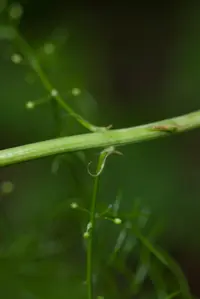
Targeted Root Mulching

Apply a 3–5 cm layer of fine, well-composted mulch only around the root zone, keeping it a few cm away from stems to conserve moisture and suppress weeds without encouraging stem rot.

Flowering Shoot Management

After flowering and fruit set, selectively remove weak, congested shoots to direct energy into stronger stems and roots, improving next season’s flowering quality.

Soil Monitoring Tube

Insert a narrow, bottomless plastic tube into the soil near the root zone to act as a monitoring port so you can check subsurface moisture and root health without disturbing the whole plant.

Low-Tunnel Winter Protection

In colder regions, use a simple low tunnel made from hoops and breathable frost fabric over in-ground plants to buffer temperature swings and protect buds, especially when growing Wild Asparagus near its hardiness limits.

Common Pests and Diseases

Asparagus beetles

These insects feed on young shoots and cladodes, leaving chewed tips, brown scars, and weakened stems that may bend or die back. This pest is more common in outdoor plantings and can quickly reduce plant vigor if not controlled.

Solution

Hand-pick adults and larvae into soapy water and prune off heavily damaged shoots. For persistent problems, use a contact insecticidal soap or neem oil on the stems and foliage in the evening, and keep surrounding weeds and volunteer asparagus plants removed to lower beetle pressure.

Scale insects

This pest appears as small, hard, brown or gray bumps along stems and at cladode joints, often causing yellowing, stunted growth, and sticky honeydew that may lead to sooty mold. Infestations tend to build up on older, woody stems of established plants.

Solution

Physically scrape or wipe off scales with a cotton pad dipped in alcohol, then cut back and discard heavily infested stems. Follow up with repeated applications of horticultural oil or neem oil, making sure to coat stems thoroughly, and improve light and airflow to reduce reinfestation risk as part of ongoing Asparagus cochinchinensis care.

Rust

This disease causes yellow spots on cladodes and stems that develop into orange-brown pustules, leading to premature yellowing and dieback of foliage. Symptoms include weakened plants and reduced root and tuber development over time.

Solution

Promptly remove and destroy affected stems to lower the spore load, and avoid overhead watering so foliage dries quickly. Improve spacing and airflow, keep the bed free of plant debris, and in severe outdoor cases use a labeled copper or sulfur-based fungicide during the growing season.

Fusarium crown and root rot

This disease leads to gradual yellowing, wilting, and decline, often starting on older stems, with brown discoloration in the crown and roots when cut open. Infected plants may show poor new shoot emergence and reduced vigor year after year.

Solution

Remove and discard severely affected plants and any obviously rotted crowns, and avoid replanting asparagus in the same soil for several years. Improve drainage, avoid overwatering and mechanical injury to crowns, and use clean, disease-free planting stock in well-drained, slightly raised beds to prevent new infections.

Interesting Facts

Buried storage roots

This species forms spindle-shaped tuberous roots that develop deep in the soil and act as storage organs for water and carbohydrates, helping it survive seasonal drought in its native East Asian habitats.

Fragrant night flowers

Its small, creamy-white flowers open mainly in the evening and release a noticeable fragrance, which is thought to attract nocturnal pollinators such as moths.

Red berry fruits

After flowering, it produces glossy red berries that each usually contain 1–2 seeds; these berries are eaten by birds, which then disperse the seeds across the landscape.

Botan icon

Did you know?

In East Asia, especially China and Korea, the thickened roots of this species have been documented for centuries in traditional medicine texts and are still used today, making it one of the more culturally significant wild asparagus species in the region.

FAQs about Wild Asparagus

Lack of flowers is often due to insufficient maturity, low light, or depleted nutrients. This species usually needs several seasons to establish strong roots. Consistent, moderate feeding and stable outdoor-like conditions support reliable flowering over time.

Grow Healthy Plants with Botan Care

Keep your plants happy and healthy with plant identification, disease detection, and easy care guidance.

Botan plant care app — identify plants on mobile

Explore More Plants