Mark Spring Emergence
Flag or lightly stake the clump in late fall so you do not disturb the shallow crown when cleaning beds or dividing nearby perennials in early spring.

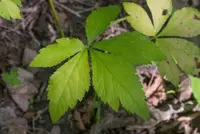
Largefruit blacksnakeroot (Sanicula trifoliata) is a woodland perennial native to eastern North America. It grows in shaded forests, often forming loose colonies on moist, rich soils. The plant has divided, three-part leaves on slender stems and produces small, rounded clusters of greenish flowers that develop into relatively large, burr-like fruits. Its modest size and slow, steady growth make it a subtle understory plant rather than a bold focal point. Because it prefers stable shade, consistent moisture, and undisturbed soil, it is best suited to naturalistic woodland gardens. Gardeners who learn how to care for largefruit blacksnakeroot usually find it reliable once established.

Care Difficulty
Moderate Care

Light Preference
Partial Shade

Water Requirements
Moderate Water

Temperature Preference
Cold Hardy

Hardiness Zone
4–8

Soil Texture
Loamy, Silty, Organic-rich

Soil pH
Acidic (5.5–6.5), Slightly acidic (6.5–7.0)

Soil Drainage
Moist but well-drained

Fertilization
Minimal (feed rarely)
Scan your plant to receive care tips personalized for your specific plant
Available on iOS and Android
This woodland perennial prefers dappled light that mimics a forest understory.
This species prefers consistently moist, well-drained soil rather than cycles of drought and saturation.
This woodland plant is cold-hardy but grows best in cool to mild temperatures.
Sanicula trifoliata handles typical outdoor humidity but benefits from slightly moist air in dry climates.
Sanicula trifoliata prefers moist, humus-rich woodland soil with steady drainage.
This woodland perennial can be grown in containers if moisture and shade are managed carefully.
Sanicula trifoliata, or largefruit blacksnakeroot, is a woodland native that usually needs minimal fertilization in garden soils rich in organic matter.
Pruning needs for Sanicula trifoliata are low and mainly focus on tidying and plant health.
This species is usually grown in the ground, so care focuses on thoughtful transplanting rather than frequent repotting.
Propagation of Sanicula trifoliata is possible but modest in speed, relying mainly on seeds and careful division.
Sanicula trifoliata is cold hardy across much of its native range and usually needs little special winter care.

Plant Health Check
Not sure what's wrong with your plant? Check your plant's health inside the app.
This species is among the earlier-flowering herbs in Eastern North American deciduous forests, often blooming from late spring into early summer while tree canopies are still letting in more light than later in the season.
It produces small, ball-like fruits covered with hooked bristles that can cling to fur and clothing, which helps the plant disperse its seeds through animals and human movement.
The plant typically grows in moist, shady, nutrient-rich forest understories, often on slopes or ravine edges, and tends to occur in scattered, small colonies rather than forming dense carpets.
This woodland perennial forms small clumps and spreads slowly by short rhizomes and self-seeding. It is not considered aggressive under typical garden conditions and usually coexists well with other shade perennials and native woodland species.
Keep your plants happy and healthy with plant identification, disease detection, and easy care guidance.