violet coral fungus Care (Clavaria zollingeri)

Also known as: violet coral
violet coral fungus

About violet coral fungus

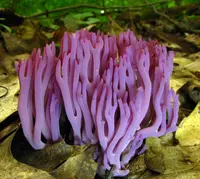
Violet coral fungus, Clavaria zollingeri, is a small club-shaped fungus, not a true plant, valued for its unusual branching, coral-like form and violet to lavender color. It typically appears in tufts on soil or moss in woodlands and grasslands, often in late summer and autumn.

This species is found in parts of North America, Europe, Asia, and Australia, usually in undisturbed, moist habitats with rich organic matter. It is considered challenging to cultivate because it depends on complex relationships with soil organisms, so most people do not try to care for violet coral fungus indoors.

In nature, it tends to favor shaded to lightly filtered light, consistently moist but not waterlogged conditions, and well-drained, humus-rich soil or leaf litter.

Main Plant Requirements

Care Difficulty

Hard Care

Light Preference

Partial Shade

Water Requirements

Keep Soil Moist

Temperature Preference

Warm Climate

Hardiness Zone

Unknown

Soil Texture

Loamy, Peaty, Organic-rich

Soil pH

Strongly acidic (4.5–5.5), Acidic (5.5–6.5)

Soil Drainage

Moist but well-drained

Fertilization

Minimal (feed rarely)

Get Personalized Care Plan

Scan your plant to receive care tips personalized for your specific plant

Available on iOS and Android

How to Care for the violet coral fungus

This fungus grows best in cool, shaded woodland conditions with indirect light.

  • Provide dappled or filtered light under trees, avoiding direct midday sun that dries the substrate quickly.
  • Allow weak morning or late-afternoon sun for 1–3 hours, but protect violet coral fungus from strong sun between 11 am and 4 pm.
  • In summer, increase shade using leaf litter or understory plants; in autumn, when canopy thins, natural lower light is usually still sufficient.

This woodland fungus depends on consistently moist, not waterlogged, soil to form fruiting bodies.

  • Aim for evenly moist leaf litter and topsoil; if the top 1–2 cm feel dry, natural rainfall may be insufficient and gentle supplemental moisture may help.
  • Ensure soil drains freely; standing water, sour smell, or slimy mycelium indicate overwatering and poor aeration.
  • During dry, warm spells, increase moisture through light, frequent wetting of the surrounding litter; reduce additions in cool, rainy seasons for Clavaria zollingeri.

This species develops fruiting bodies during cool, moist periods in temperate climates.

  • Optimal temperatures for visible growth are about 50–68°F (10–20°C), often in autumn or cool, wet seasons.
  • It tolerates down to around 32°F (0°C), but hard frost and repeated freeze–thaw cycles can damage fruiting bodies and shorten their lifespan.
  • Sustained heat above 77–82°F (25–28°C) with low humidity slows or stops fruiting; cooler, shaded, moist microclimates buffer against short warm spells.

This fungus needs consistently moist, humid conditions to fruit well.

  • Aim for 70–90% humidity, mimicking a damp forest floor environment.
  • Dry air causes shriveling, pale tips, and rapid collapse of violet coral fungus fruiting bodies.
  • Increase local humidity by using deep leaf litter, regular gentle misting at ground level, and avoiding direct airflow over the colony.

This species prefers a loose, organic-rich substrate that mimics decaying forest litter rather than standard potting soil.

  • Use a mix of shredded leaf litter, well-rotted wood chips, and a small amount of loamy garden soil to provide structure and nutrients.
  • Ensure very high drainage while retaining moisture by layering coarse bark or twig fragments beneath the main substrate.
  • Keep pH slightly acidic to neutral (pH 5.5–7.0) by favoring hardwood leaf litter and avoiding lime or wood ash additions.
  • Avoid compacted, clay-heavy, or peat-only mixes that restrict air flow and hold stagnant water, which can suppress Clavaria zollingeri development.

This species is generally unsuitable for conventional container growing, as it depends on complex soil and fungal community interactions that are difficult to maintain in pots.

This fungus relies mainly on natural soil nutrients and usually does not benefit from added fertilizer in cultivation.

Pruning is not part of Clavaria zollingeri care because the visible coral structure is a temporary fruiting body, not a long-lived plant canopy.

Transplanting focuses on moving the entire colonized substrate rather than the delicate fruiting bodies.

  • Shift only when necessary, such as when growth appears at container edges or the substrate becomes compacted and poorly aerated.
  • Time any move to just after a fruiting flush, when the mycelium is less stressed by disturbance.
  • Transfer the intact substrate block into a slightly larger, clean container with similar, evenly moist organic material surrounding it.
  • Handle gently to avoid breaking the mycelium network, and maintain stable moisture and temperature for several weeks after the move.

Propagation of Clavaria zollingeri is specialized and usually handled by experienced fungal growers rather than casual plant owners.

Outdoor colonies in mild to cool climates usually overwinter without special attention, so winter care is minimal for violet coral fungus.

Care Tips

Use host substrate

Introduce small chunks of well-rotted hardwood or conifer litter from an area where this fungus already grows, mixing them into your outdoor bed to inoculate the site with compatible microorganisms that support its fruiting.

Leaf litter layering

Maintain a thin, loose layer of deciduous leaf litter above the soil so the mycelium is shaded, buffered from temperature swings, and supplied with a slow, steady flow of organic matter.

Gentle site marking

Discreetly mark known fruiting spots with low labels or stones placed outside the cluster area so feet, tools, or pets do not compact or disturb the mycelium zone.

Careful harvesting technique

If collecting fruiting bodies, cut them cleanly at the base with a knife instead of pulling, and avoid disturbing the surrounding soil to protect the underground mycelium for future flushes.

Moisture microclimate

Create a localized humid pocket by using low edging or logs around the patch to slow wind over the surface, helping when caring for violet coral fungus in exposed garden corners.

Common Pests and Diseases

Mycophagous springtails

These insects feed on fungal tissue and can graze the surface of fruiting bodies and mycelium, especially in very moist substrates. Symptoms include pitted, roughened, or partially eaten coral branches and reduced vigor of the colony.

Solution

Reduce constant surface wetness by improving drainage and ventilation, and avoid over‑irrigating cultivation beds or containers. Where damage is significant, carefully disturb and dry the top 0.5–1 in of substrate between waterings and use fine mesh or physical barriers to limit access from surrounding leaf litter while maintaining the cool, moist microclimate needed for Clavaria zollingeri care.

Fungivorous mites

These pests feed on fungal hyphae and young fruiting tips, which can lead to deformed, blunted, or collapsing branches. This pest is favored by warm, stagnant, and very humid microhabitats rich in organic debris.

Solution

Gently rinse affected colonies with clean, cool water to dislodge mites and remove excess decaying organic matter from around the fungal patch. Improve airflow across the substrate surface and, if grown in a controlled setup, introduce predatory mites that target fungivorous species without harming the coral fungus.

Competing saprobic fungi

This disease pressure arises when fast‑growing decomposer fungi overrun the same woody or leaf‑litter substrate, outcompeting the coral fungus for space and nutrients. Symptoms include declining or disappearing violet fruiting bodies and visible colonization by other molds, crusts, or bracket fungi.

Solution

Remove and discard heavily colonized substrate and any obvious competing sporocarps, then refresh with clean, well‑aged but not moldy leaf litter or small wood fragments. Maintain moderate, not saturated, moisture and avoid adding kitchen scraps or very rich compost that strongly favors aggressive competitor fungi when trying to grow Clavaria zollingeri.

Bacterial blotch

This disease causes localized, water‑soaked, dark or brownish patches on branches, which may become slimy and collapse under persistently wet conditions. Symptoms include rapid softening of tissue where water collects or where soil splashes frequently hit the fruiting bodies.

Solution

Limit overhead watering and avoid direct splashing on the coral structures by irrigating the substrate level only. Remove and discard affected clusters, increase air movement, and allow the surface to dry slightly between waterings while keeping the deeper substrate evenly moist.

Slugs and snails

These pests chew soft fungal tissue, creating irregular holes, missing branch tips, and sometimes complete loss of young fruiting bodies overnight. This pest pressure is strongest in cool, damp outdoor sites with dense ground cover and leaf litter.

Solution

Hand‑pick slugs and snails during evening or early morning, and use collars, copper tape, or coarse mulch barriers around the main colony to reduce access. In heavier infestations, set out beer or yeast traps at a distance from the coral fungus patch to draw pests away without contaminating the immediate substrate.

Interesting Facts

Branching coral shape

This fungus forms vividly branched, lilac to violet clubs that resemble small underwater coral, with tips often fading to a paler tone as they age or dry.

Saprotroph in leaf litter

It lives as a saprotroph, breaking down dead leaf litter and other organic debris on forest floors, and contributes to nutrient recycling in temperate woodland ecosystems.

Color from carotenoid pigments

The violet coloration is linked to carotenoid-type pigments and related compounds in the fruiting body, which can shift toward duller brownish tones as the tissue ages or is exposed to light and weathering.

Botan icon

Did you know?

Molecular studies have shown that this species, once grouped broadly within coral fungi, belongs to a more narrowly defined genus Clavaria, illustrating how DNA evidence reshaped understanding of coral-like fungi diversity and classification.

FAQs about violet coral fungus

This species is generally considered inedible or of very low culinary value. Identification errors with similar fungi can be dangerous, so it is safest to treat it as non-edible and avoid consumption.

Grow Healthy Plants with Botan Care

Keep your plants happy and healthy with plant identification, disease detection, and easy care guidance.

Botan plant care app — identify plants on mobile

Explore More Plants