red-cage fungus Care (Clathrus ruber)

Also known as: Red Cage Stinkhorn, latticed stinkhorn, basket stinkhorn
red-cage fungus

About red-cage fungus

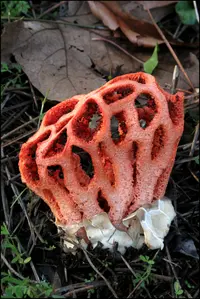
Red-cage fungus, Clathrus ruber, is a saprophytic fungus, not a true plant. It grows on decaying wood, mulch, or rich organic debris, helping break down dead material. The fruiting body forms a hollow red lattice or cage that emerges from a white, egg-like base and releases a strong odor to attract insects for spore dispersal.

This species is native to parts of Europe but now appears in mild, coastal regions of North America and other temperate areas. It tends to appear in moist, shaded sites with plenty of organic matter, and can be unpredictable, so learning how to care for red-cage fungus mainly involves maintaining suitable habitat rather than managing the fungus directly.

Main Plant Requirements

Care Difficulty

Moderate Care

Light Preference

Partial Shade

Water Requirements

Keep Soil Moist

Temperature Preference

Warm Climate

Hardiness Zone

9–11

Soil Texture

Loamy, Silty, Organic-rich

Soil pH

Acidic (5.5–6.5), Slightly acidic (6.5–7.0)

Soil Drainage

Moist but well-drained

Fertilization

Minimal (feed rarely)

Get Personalized Care Plan

Scan your plant to receive care tips personalized for your specific plant

Available on iOS and Android

How to Care for the red-cage fungus

This saprobic fungus grows best in bright, indirect light similar to dappled woodland conditions.

  • Provide 2–4 hours of gentle morning sun with bright, filtered light the rest of the day; avoid harsh afternoon sun that can dry the substrate too quickly.
  • Plant in partial shade under shrubs, trees, or among groundcovers so the fruiting bodies of red-cage fungus are shaded but the soil surface still receives scattered light.
  • In hot summers, increase shade during 12–4 pm to limit overheating; in cooler seasons, allow slightly more direct morning light to support fungal activity.

Clathrus ruber relies on consistently moist, well-drained organic soil rather than a fixed watering schedule.

  • Water when the top 2–4 cm of soil feel just barely damp, not wet; surface should not crack or become powder-dry, which slows fungal growth and fruiting.
  • Use rich, loose, compost-based soil or mulch that drains freely; avoid standing water or compacted clay, which increase rot risk in the mycelium network.
  • In warm, dry weather, check moisture every 2–3 days; in cool or rainy seasons, reduce added water and watch for sour smell or slimy patches as signs of overwatering.

This fungus develops best in mild, stable temperatures that do not drop below freezing.

  • Optimal growth and fruiting occur around 60–77°F (16–25°C), typical of cool to warm seasons with moderate soil warmth and moisture.
  • The mycelium may survive brief dips to about 28–32°F (-2–0°C), but repeated hard frosts damage tissue and reduce future fruiting.
  • In hot periods above 86°F (30°C), provide shade and maintain moist, mulched soil to buffer heat stress and prevent the substrate from drying out.

This fungus develops well outdoors in 50–80% humidity but tolerates short drier spells.

  • Red-cage fungus can persist in 30–40% air humidity if the substrate stays evenly moist, not soggy.
  • Low humidity stress appears as rapid drying and collapse of the gelatinous egg stage before the cage expands.
  • Increase local humidity by mulching around the growth site and lightly misting surrounding leaf litter, not the fruiting body.

Clathrus ruber fruits best in loose, organic-rich, well-drained substrate.

  • Use a crumbly mix of leaf litter, compost, and sandy garden soil to mimic decaying woodland debris.
  • Ensure fast drainage; water should pass through within seconds, leaving the mix moist but never waterlogged.
  • Aim for slightly acidic to neutral pH, around 6.0–7.0, which supports active decomposer microbes.
  • Improve aeration by layering coarse bark or chunky wood chips beneath the main mix and avoid compacted clay sites.

This species can be grown in containers outdoors if the substrate and drainage closely mimic decomposing ground litter.

  • Choose a wide, shallow container so the woody, debris-rich substrate remains evenly aerated rather than forming dense pockets.
  • Drill or use multiple drainage holes and elevate the pot on feet so excess water escapes quickly after rain or irrigation.
  • Use a thick top layer of leaf litter or wood chips in the pot to stabilize moisture while still allowing air movement through the substrate.

Clathrus ruber is a saprophytic fungus that gains nutrients from decaying organic matter and does not benefit from conventional fertilizing.

Clathrus ruber is not pruned in the usual horticultural sense, as the visible lattice structure is a short-lived fruiting body.

Transplanting focuses on relocating the underground egg-like structures rather than managing a typical root system.

  • Transplant in cool, moist weather, ideally in autumn, when growth is less active and soil disturbance is better tolerated.
  • Move egg-like structures with surrounding soil using a hand trowel, disturbing them as little as possible to limit stress.
  • Space transplants into well-drained, organic-rich ground where decaying wood or mulch is available as a nutrient source.
  • Water lightly after transplanting to settle soil, then keep the site evenly moist but not waterlogged while the fungus re-establishes.

Propagation of Clathrus ruber is specialized and usually left to natural spore dispersal rather than home techniques.

Clathrus ruber typically persists as underground structures and usually needs no special winter care in mild to moderate climates.

Care Tips

Use decaying mulch

Establish the fungus in a shallow layer (3–5 cm) of well-rotted wood chips or leaf mold over the soil, because the mycelium feeds on this decaying organic matter and fruits more reliably when a constant food source is present.

Maintain discreet moisture

In outdoor beds or containers, place a thin, permeable mulch such as shredded bark over the colonized area to slow evaporation, then water at soil level so the substrate stays evenly moist without waterlogging.

Encourage spore spread

After fruiting, leave some mature, collapsed fruiting bodies in place for several days so insects can spread the spores naturally, then lightly rake the top 1–2 cm of substrate to help spores contact fresh organic matter when caring for red-cage fungus.

Manage strong odor

Site the colony downwind and at least several meters from seating areas or open windows, and if needed, harvest and dispose of mature, slimy fruiting bodies in a sealed bag once you have observed them, to limit odor around the garden.

Control unintended spread

If the fungus begins to appear in unwanted beds, promptly remove young fruiting bodies before the slime develops and reduce surface organic debris in that area, which lowers the chance of further establishment while allowing you to grow Clathrus ruber where it is desired.

Common Pests and Diseases

Bacterial soft rot

This disease turns the spongy fruiting body into a watery, foul-smelling mass, often accelerating collapse of the lattice structure. Symptoms include slimy tissue, stronger than usual odor, and rapid disintegration.

Solution

Remove and dispose of affected fruiting bodies promptly using gloves, and avoid leaving decomposing material on the soil surface. Improve air circulation, avoid overhead watering in cultivation setups, and keep surrounding organic debris thinned to limit moisture buildup and bacterial spread.

Fungal parasitism

This disease occurs when other fungi colonize and overgrow the fruiting body, causing discoloration, surface mold, and premature decay. Symptoms include patches of white, gray, or green mold and loss of the typical bright red color.

Solution

Carefully remove and discard parasitized fruiting bodies and any heavily moldy organic mulch nearby. Reduce excessive moisture, avoid overcrowding of organic waste, and maintain moderate air movement around cultivation trays or beds to discourage opportunistic fungi when trying to grow Clathrus ruber.

Fly larvae damage

This pest issue is caused by fly maggots that develop inside the fruiting body after adults are attracted to the odor, leading to rapid internal tunneling and breakdown. This pest activity can shorten the life span of the visible cage and distort its structure.

Solution

In managed or display areas, harvest and dispose of aging fruiting bodies before heavy fly activity begins, and use fine mesh covers if display specimens must be protected. Remove strongly decomposed organic matter that attracts flies, and in enclosed culture spaces use physical barriers and good sanitation rather than insecticides as part of Clathrus ruber care instructions.

Interesting Facts

Lattice-like fruiting body

The mature fruiting body forms a bright red, hollow lattice structure that emerges from a whitish, egg-like sac in the soil or leaf litter.

Odor-driven spore dispersal

Its inner lattice surface is coated with a dark, foul-smelling slime that mimics carrion and attracts flies, which then carry spores to new locations.

Mediterranean origin, global spread

Originally described from Mediterranean regions, this species is now naturalized in parts of western Europe, Australia, and North America, often appearing in mulch-rich urban and suburban landscapes.

Botan icon

Did you know?

Clathrus ruber belongs to the stinkhorn family (Phallaceae) and can complete its dramatic transformation from a buried egg stage to a fully expanded red lattice in just a few hours under warm, moist conditions, making its appearance seem almost overnight to observers.

FAQs about red-cage fungus

This species spreads locally where there is ample decaying organic matter and consistent moisture, but it is not usually aggressive. It appears in patches from buried egg-like structures, then disappears once fruiting bodies decay and conditions change.

Grow Healthy Plants with Botan Care

Keep your plants happy and healthy with plant identification, disease detection, and easy care guidance.

Botan plant care app — identify plants on mobile

Explore More Plants