Clavaria falcata Care

Clavaria falcata

About Clavaria falcata

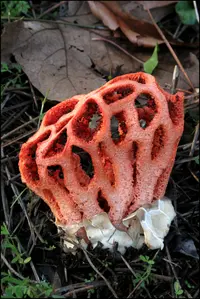
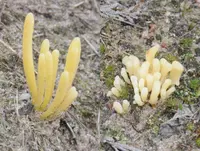
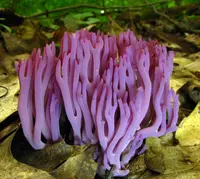
Clavaria falcata is not a typical leafy plant but a coral fungus, forming slender, club-shaped branches that rise directly from the ground. Its fruiting bodies are usually pale to yellowish and often appear in small clusters.

This species occurs mainly in woodland habitats, often in leaf litter or mossy ground, in temperate regions of North America and Europe. It plays a role in breaking down organic matter in the soil.

Because it is a fungus with specific habitat needs, it is not commonly cultivated and can be challenging for beginners who want to care for Clavaria falcata. It generally prefers cool, moist, shaded conditions with undisturbed, humus-rich soil.

Main Plant Requirements

Care Difficulty

Hard Care

Light Preference

Partial Shade

Water Requirements

Keep Soil Moist

Temperature Preference

Cool Climate

Hardiness Zone

Unknown

Soil Texture

Loamy, Silty, Organic-rich

Soil pH

Strongly acidic (4.5–5.5), Acidic (5.5–6.5)

Soil Drainage

Moist but well-drained

Fertilization

Minimal (feed rarely)

Get Personalized Care Plan

Scan your plant to receive care tips personalized for your specific plant

Available on iOS and Android

How to Care for the Clavaria falcata

This woodland fungus prefers soft, filtered light similar to a shaded forest floor.

  • Provide dappled or light shade with 1–3 hours of gentle morning sun and no direct afternoon sun to prevent drying and bleaching of the clubs.
  • Site Clavaria falcata under deciduous shrubs or trees where leaf cover filters strong summer sun but still allows bright shade or speckled light.
  • In hotter months, increase shade or leaf litter cover; in low-light seasons, ensure it still receives open, indirect daylight, not deep, continuous darkness.

Moist, cool, and consistently damp conditions are essential for stable fruiting of this fungus.

  • Maintain evenly moist soil or forest duff, allowing only the top 1–2 cm to start drying before the next thorough soak from rainfall or gentle hand-watering.
  • Favor porous, humus-rich, well-drained ground so water moves through quickly; standing water or soggy patches encourage rot and reduce healthy fruiting.
  • In hot, dry periods, watch for shriveling or collapsing clubs as a sign of moisture stress, while limp, darkening, or foul-smelling bases indicate overwatering or stagnation.

This species favors cool to mild conditions similar to a temperate woodland floor.

  • Aim for 50–68°F (10–20°C) as the main active range, where mycelium growth and fruiting bodies tend to be most reliable.
  • Clavaria falcata tolerates brief drops near 32°F (0°C), but repeated hard frosts or frozen, exposed soil reduce future fruiting and may damage surface structures.
  • Sustained heat above 80°F (27°C), especially with dry air, shortens lifespan of clubs, so provide shade, mulch, and stable moisture in hotter seasons.

This fungus is adapted to moist forest floors, so humidity matters mainly to keep its substrate from drying out.

  • Aim for ambient humidity around 60–90% to prevent the fruiting bodies and substrate from drying and hardening.
  • Tolerates only brief dips into drier air; persistent humidity below 50% often leads to shriveling and premature collapse.
  • Increase humidity by misting the surrounding area, using a nearby tray of damp leaf litter, or covering loosely to trap moisture without sealing completely.

Clavaria falcata naturally fruits from consistently damp, organic-rich substrates rather than standard potting soil.

  • Use a loose, spongy mix of well-decayed leaf litter, fine bark, and a small amount of garden soil to mimic forest duff.
  • Ensure the substrate drains freely but never dries out completely; it should feel moist and springy, not waterlogged or sticky.
  • Maintain a slightly acidic to neutral pH around 5.5–7.0, avoiding liming materials that push the mix strongly alkaline.
  • Improve aeration by mixing in shredded hardwood leaves or fine bark rather than dense compost, and avoid compacted or heavily clay-based soil.

This species is generally unsuitable for standard container growing, as it depends on complex soil and wood decay processes best replicated in the ground or specialized cultivation setups.

This saprophytic fungus normally gains nutrients from decaying wood and soil and does not need fertilization in garden or container culture, so added nutrients often do more harm than good.

Clavaria falcata needs no planned structural pruning; manage only by removing undesirable fruiting bodies.

  • Cut off faded or damaged fruiting clusters at the base using clean scissors or a sharp knife to keep the site tidy.
  • Remove any decaying organic debris only if it encourages unwanted mold, leaving enough wood litter to support the fungus.
  • Avoid disturbing the underlying mycelium, the hidden feeding network, because cutting or digging into it can reduce future fruiting.

This fungus is not suited to typical pot culture, so management focuses on moving colonized substrate rather than classic repotting.

  • Transplant only if the colonized wood or soil must be relocated, as Clavaria falcata responds poorly to disturbance.
  • Move sections in cool, moist weather to limit drying of the substrate and hidden mycelium.
  • Lift a generous block of colonized material with minimal breakage, then re-set it at the same depth in similar shade and moisture.
  • Water gently after moving and keep the area evenly moist for several weeks to reduce stress and support re-establishment.

Propagation of this fungus is specialized and rarely attempted by home growers, as it depends on spores and suitable decaying wood or soil conditions.

In climates where it occurs naturally, this fungus is cold hardy and usually needs no targeted winter care beyond maintaining a stable, organic-rich habitat.

  • Leave leaf litter and rotting wood undisturbed through winter to support the underground mycelium.
  • Avoid deep digging or site renovation during the dormant season, which can destroy the fungal network.
  • Container experiments should stay in a cold, shaded, frost-exposed but not wind-scoured spot to mimic outdoor conditions.

Care Tips

Use host substrate

Establish this fungus on small, partially decayed hardwood sticks or well-rotted wood chips rather than plain soil, as a stable lignin-rich substrate supports more reliable fruiting.

Maintain shaded microclimate

Create a low, shaded microclimate with leaf litter, moss, or a rotting log to buffer against rapid drying and temperature swings that quickly damage the delicate clubs.

Gentle surface misting

When conditions are very dry, lightly mist the immediate fruiting area rather than soaking the whole bed to raise local humidity without waterlogging the underlying substrate.

Minimize disturbance

Mark or edge the colonized patch and avoid raking, digging, or stepping in the area, since disturbing the mycelium network can reduce or stop future fruiting.

Seasonal debris layering

Each autumn, add a thin layer of clean, pesticide-free leaf litter over the established patch to provide fresh organic matter and help maintain the long-term vigor of the fungus when caring for Clavaria falcata.

Common Pests and Diseases

Mycophagous springtails

These insects feed on fungal tissues and can graze developing fruit bodies, leaving them scarred, collapsed, or partially eaten. This pest is often found in consistently moist, organic substrates where Clavaria falcata develops.

Solution

Reduce excess surface moisture by improving drainage and ventilation, and avoid overwatering nearby plants or substrates supporting the fungus. For heavy infestations, gently disturb and thin the surrounding leaf litter, use sticky traps nearby to monitor populations, and, if needed, apply a targeted insecticidal soap or horticultural oil to the surrounding substrate rather than directly on fruit bodies.

Fungal grazing slugs

This pest chews soft fungal clubs, leaving irregular bite marks, missing tips, and slime trails on or near the colonies. Damage is usually worst in cool, wet conditions or in dense ground cover where they hide during the day.

Solution

Hand‑remove slugs during evening or early morning checks and reduce dense ground cover or debris where they shelter. If damage continues, place iron phosphate slug bait around, not on, the fungal patch, and maintain moderate site dryness by avoiding unnecessary surface watering.

Competing saprobic fungi

This disease pressure appears as overgrowth by faster‑growing decomposer fungi that colonize the same wood or litter, gradually suppressing or displacing Clavaria falcata fruiting. Symptoms include reduced density of clubs, distorted growth, or replacement by dense mats of other fungi or molds.

Solution

Limit disturbance of the substrate to reduce opportunities for aggressive competitors, and maintain a stable, moderately moist but not waterlogged environment. Remove thick layers of fresh organic material that favor competitor overgrowth, and retain the partially decomposed wood or litter layer that originally supported the colony to support longer‑term Clavaria falcata care instructions.

Fungal gnats

These insects lay eggs in moist, organic substrates, and larvae feed on fine fungal tissues and surrounding microflora, sometimes tunneling through developing clubs. High humidity, stagnant air, and continuously wet substrates favor population buildup.

Solution

Improve airflow and avoid keeping the substrate saturated by allowing slight surface drying between water events in associated plantings. Use yellow sticky traps to capture adults, and if larvae are abundant, apply a biological control such as Bacillus thuringiensis israelensis (Bti) to the surrounding substrate while avoiding direct drenching of fruit bodies.

Interesting Facts

Coral-like fruiting bodies

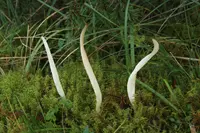
This species forms slender, curved, club-shaped fruiting bodies that arise in dense clusters from decaying wood or rich leaf litter, creating a coral-like appearance on the forest floor.

Woodland decomposer role

It functions as a saprotroph, meaning it feeds on dead organic matter and helps break down leaf litter and woody debris, contributing to nutrient recycling in temperate forest ecosystems.

Moist microhabitat specialist

Populations are typically found in shaded, humid forest sites with stable moisture, such as mossy logs and well-rotted stumps, where the fungal mycelium can remain active over long periods.

FAQs about Clavaria falcata

This fungus is not considered a common edible species. Identification is difficult, and confusion with similar coral fungi is possible. For safety, avoid consumption unless verified by a local expert mycologist with region-specific knowledge.

Grow Healthy Plants with Botan Care

Keep your plants happy and healthy with plant identification, disease detection, and easy care guidance.

Botan plant care app — identify plants on mobile

Explore More Plants