Wind-hardening saplings
Expose young trees to increasing wind over several weeks by gradually reducing shelter, which encourages thicker stems and better anchorage before planting in a windy site.

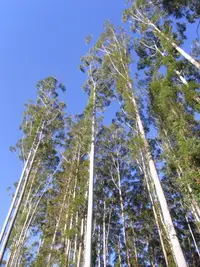
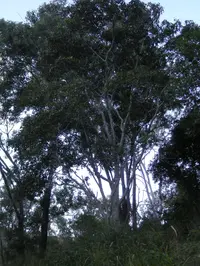
Grand eucalyptus, Eucalyptus grandis, is a fast-growing evergreen tree known for its tall, straight trunk and smooth, peeling bark in pale cream to bluish tones. It carries narrow, aromatic leaves that release a strong eucalyptus scent when crushed.
This species is native to eastern Australia, where it grows in warm, moist forests and along river valleys. It can reach impressive heights outdoors, so it is usually grown only as a landscape or forestry tree, not a long-term houseplant.
Eucalyptus grandis prefers full sun, consistent moisture, and well-drained soil, and it dislikes prolonged drought or waterlogging. These traits make it vigorous but demanding, so it is important to learn how to care for grand eucalyptus before planting.

Care Difficulty
Moderate Care

Light Preference
Full Sun

Water Requirements
Moderate Water

Temperature Preference
Tropical / Frost Sensitive

Hardiness Zone
9–11

Soil Texture
Sandy, Loamy, Organic-rich

Soil pH
Strongly acidic (4.5–5.5), Acidic (5.5–6.5)

Soil Drainage
Well-drained

Fertilization
Minimal (feed rarely)
Scan your plant to receive care tips personalized for your specific plant
Available on iOS and Android
This fast-growing eucalyptus performs best in bright, open sites with consistent direct sun.
This species prefers evenly moist, well-drained soil while young, then more drought tolerance as roots deepen.
This tree thrives in warm, frost-free to light-frost climates with mild winters and warm summers.
This species prefers moderately dry air and usually does not need special humidity control indoors.
This tree needs fast-draining, aerated soil that mimics its naturally sandy, slightly acidic habitats.
This species can be grown in containers for a limited time, especially as a young, regularly pruned tree.
Fertilization supports faster early growth of Eucalyptus grandis in containers or managed plantings, but established trees in fertile ground often need little input.
Pruning Eucalyptus grandis helps manage height, crown shape, and structural safety in landscapes.
Eucalyptus grandis is usually grown as a landscape tree, so transplanting young stock at the right stage is more important than long-term container repotting.
Propagation of Eucalyptus grandis is most reliable from seed, while cuttings are technically possible but more challenging for beginners.
Winter care needs for Eucalyptus grandis depend strongly on local climate, since this species is not fully hardy in cold regions.

Plant Health Check
Not sure what's wrong with your plant? Check your plant's health inside the app.
This fast-growing tree can reach over 60 m in its native range of eastern Australia and is a major plantation timber species in Brazil, South Africa, and other warm, humid regions due to its straight trunk and uniform wood.
The tree has smooth, pale bark that sheds in long strips or patches, an adaptation that helps remove lichens, insects, and surface pathogens while exposing a fresh, light-colored surface that reflects sunlight.
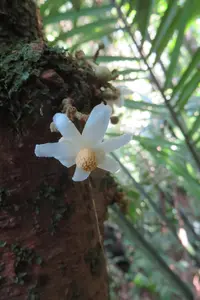
Its flowers produce abundant nectar that supports a range of pollinators, including honeyeater birds and insects, and the seeds are an important food source for some Australian parrots and other granivorous wildlife.

In suitable climates, carefully managed plantations of this species can produce some of the highest wood volume yields of any hardwood tree, which is why Eucalyptus grandis plant care and silviculture research are a major focus in commercial forestry programs.
This species is very fast-growing, often adding 1–3 m per year in suitable climates. Growth is quickest in deep, well-drained soil with regular moisture and full sun, especially during the first 5–10 years.
Keep your plants happy and healthy with plant identification, disease detection, and easy care guidance.