


Strategic formative pruning
After flowering, thin out some of the oldest, woodiest stems at the base to keep the shrub open, which improves air movement and reduces fungal problems over time.

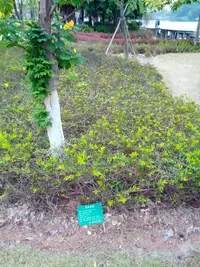
Senna bicapsularis, often called Christmasbush, is a small to medium shrub or compact tree grown mainly for its bright yellow flowers. It has a rounded, branching habit with light green, divided leaves that give it a soft, airy look.
This species is native to tropical and subtropical regions of the Americas but is now widely used as an ornamental plant in warm climates. It flowers heavily in late season, often around winter holidays, which adds to its appeal.
Christmasbush is generally easy to grow in suitable climates. It prefers full sun, moderately moist but well-drained soil, and benefits from occasional pruning, which simplifies how to care for Christmasbush.

Care Difficulty
Easy Care

Light Preference
Full Sun

Water Requirements
Moderate Water

Temperature Preference
Warm Climate

Hardiness Zone
9–11

Soil Texture
Sandy, Loamy, Organic-rich

Soil pH
Slightly acidic (6.5–7.0), Neutral (7.0)

Soil Drainage
Well-drained

Fertilization
Minimal (feed rarely)
Scan your plant to receive care tips personalized for your specific plant
Available on iOS and Android
Senna bicapsularis thrives in bright outdoor conditions with plenty of direct sun.
This shrub prefers steadily moist, well‑drained soil and handles short dry spells once established.
This warm‑climate shrub grows best in mild to hot conditions without frost exposure.
Senna bicapsularis handles a wide humidity range and rarely needs special humidity management.
This shrub prefers loose, well‑drained soil that stays aerated around the roots.
This species is suitable for container growing when given enough root space and fast drainage.
This shrub responds well to moderate feeding during its active growing season.
Pruning helps keep Senna bicapsularis compact and encourages heavy flowering.
This species is usually grown in the ground, so transplanting is more common than container repotting.
New Senna bicapsularis plants are commonly raised from both seeds and semi-ripe cuttings.
This warm-climate shrub is frost sensitive and needs protection in cooler regions.

Plant Health Check
Not sure what's wrong with your plant? Check your plant's health inside the app.
This shrub often flowers in late fall to winter in mild climates, producing bright yellow, 5-petaled blossoms when many other ornamentals are dormant.
Its slender, slightly curved pods have a distinct constriction between each seed chamber, a feature reflected in the name bicapsularis, meaning roughly two-capsuled or divided pods.
In parts of its range, the leaves serve as a food source for the caterpillars of several sulfur butterfly species, linking the shrub directly to local butterfly life cycles.

Although widely grown as an ornamental, this species has escaped cultivation and naturalized in several warm regions, where it can behave as an invasive shrub that displaces local vegetation if not managed carefully.
Lack of flowers usually comes from insufficient light, heavy pruning at the wrong time, or excess nitrogen fertilizer. Avoid cutting stems late in the season, reduce high-nitrogen feeding, and provide several months of warm, bright outdoor exposure.
Keep your plants happy and healthy with plant identification, disease detection, and easy care guidance.

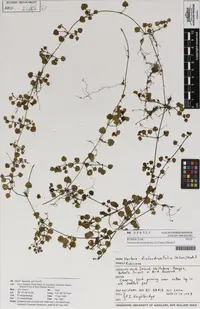
Nertera dichondrifolia
Nertera dichondrifolia
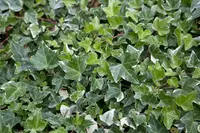
English Ivy
Hedera helix 'Glacier'

Spine-leaved Monkey Orange
Strychnos pungens
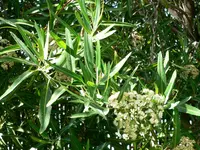
Arizona rosewood
Vauquelinia californica
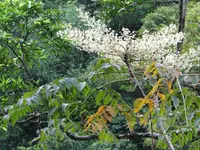
Aralia decaisneana
Aralia decaisneana
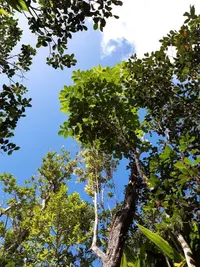
Polyscias repanda
Polyscias repanda
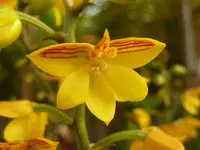
Hairy-lipped Polystachya
Polystachya pubescens

Zygophyllum glutinosum
Zygophyllum glutinosum