Coastal-style exposure
If possible, site plants where they receive light wind and excellent air movement, which mimics their native coastal habitat and helps keep foliage dry and less prone to fungal problems when growing dwarf coastweed.

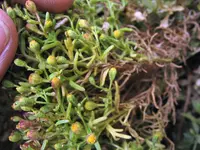
Dwarf coastweed (Amblyopappus pusillus) is a small annual wildflower in the daisy family, often found in sandy or rocky coastal habitats. It forms low, branching clumps with tiny yellow flower heads and narrow, aromatic leaves.
This species is native to coastal regions of western North America, especially California, where it thrives in dry, exposed sites. Its short life cycle and tolerance of poor, fast-draining soils make it relatively undemanding in cultivation.
Gardeners who care for dwarf coastweed should note that it prefers full sun, lean soil, and only light to moderate moisture, similar to other coastal annuals.

Care Difficulty
Easy Care

Light Preference
Full Sun

Water Requirements
Low Water

Temperature Preference
Warm Climate

Hardiness Zone
8–11

Soil Texture
Sandy, Loamy, Rocky

Soil pH
Slightly acidic (6.5–7.0), Neutral (7.0)

Soil Drainage
Well-drained

Fertilization
Minimal (feed rarely)
Scan your plant to receive care tips personalized for your specific plant
Available on iOS and Android
This annual coastal species thrives in bright, open conditions with strong sun exposure.
This drought-adapted annual prefers infrequent, light watering and fast-drying soil.
This coastal annual favors mild, dry conditions and does best in cool to warm temperatures.
Humidity is rarely a limiting factor for this coastal annual, which thrives in dry, airy conditions.
This species prefers lean, sharply draining soil that mimics sandy, coastal habitats.
This small, shallow-rooted annual is suitable for containers if the pot is set up to drain and dry rapidly.
Amblyopappus pusillus is a small annual native to poor soils and usually needs no supplemental fertilizer in the ground.
Pruning Amblyopappus pusillus is light and mainly hygienic, aimed at keeping small plants tidy.
This annual is rarely repotted long term; handling focuses on gentle transplanting of young plants.
Propagation of Amblyopappus pusillus is done almost entirely from seed, mimicking its natural life cycle.
As a short-lived annual adapted to mild coastal climates, Amblyopappus pusillus generally does not need special winter care once seeds are set.

Plant Health Check
Not sure what's wrong with your plant? Check your plant's health inside the app.
This small annual herb is native to sandy coastal habitats of California and Baja California, where its resinous, sticky foliage helps reduce water loss and may deter small herbivores in a salty, windy environment.
Crushed leaves and stems release a strong, resin-like odor produced by glandular hairs, a trait common in the aster family that likely protects tissues from insects and intense sun exposure.
Seeds typically germinate with winter rains and plants complete their life cycle by late spring, allowing them to exploit brief periods of higher moisture in unstable dune and coastal bluff soils.
This species behaves as a short-lived annual in nature, completing its life cycle in a single season. After flowering and seed set, plants typically die back and are replaced by new seedlings the following year.
Keep your plants happy and healthy with plant identification, disease detection, and easy care guidance.