Alkanna strigosa Care

Alkanna strigosa

About Alkanna strigosa

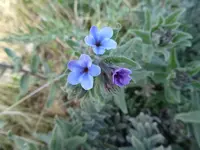
Alkanna strigosa is a small, drought-tolerant perennial herb in the borage family, valued mainly as a hardy wild or ornamental groundcover. It typically forms low clumps with narrow, hairy leaves and small bluish flowers, giving it a modest but attractive appearance in dry landscapes.

This species is native to arid and semi-arid regions of the Mediterranean and Middle East, where it is adapted to poor, stony soils and irregular rainfall. It suits gardeners looking to care for Alkanna strigosa in rock gardens, dry borders, or naturalistic plantings.

The plant generally prefers full sun, sharply drained soil, and low to moderate watering, which makes it easier to manage in hot, dry climates than in humid or waterlogged sites.

Main Plant Requirements

Care Difficulty

Moderate Care

Light Preference

Full Sun

Water Requirements

Moderate Water

Temperature Preference

Warm Climate

Hardiness Zone

Unknown

Soil Texture

Sandy, Loamy, Rocky

Soil pH

Slightly acidic (6.5–7.0), Neutral (7.0)

Soil Drainage

Well-drained

Fertilization

Minimal (feed rarely)

Get Personalized Care Plan

Scan your plant to receive care tips personalized for your specific plant

Available on iOS and Android

How to Care for the Alkanna strigosa

This drought-tolerant Mediterranean perennial thrives in strong light and open exposures.

  • Provide 6–8 hours of direct sun daily; morning to early afternoon sun gives best flowering and compact growth for Alkanna strigosa.
  • Plant in an open, unshaded spot; it tolerates light afternoon shade in very hot climates, but dense shade leads to lanky growth and fewer blooms.
  • In summer, monitor for leaf scorch or bleaching on reflected-heat sites; in winter, choose a position with maximum sun and avoid north-facing deep shade.

This species prefers dry, well-drained conditions and is sensitive to excess moisture around the roots.

  • Allow the top 3–5 cm of soil to dry fully before watering; in sandy ground this may mean deep watering every 7–14 days during hot, dry weather.
  • Use sharply drained soil or a sloping bed so water does not pool; persistently wet soil, yellowing leaves, or a musty smell indicate overwatering and possible root rot.
  • Reduce watering sharply in cooler months, providing only occasional deep drinks when foliage begins to lose turgor or the soil is completely dry at spade depth.

This plant is adapted to warm, dry climates with mild winters and does best without temperature extremes.

  • Aim for 65–80°F (18–27°C) during active growth; flowering and foliage quality are strongest in this range under full sun and low humidity.
  • Mature plants can survive brief drops to about 20–25°F (-6 to -4°C) if soil is very well drained, but repeated hard frosts or frozen, wet ground greatly increase loss risk.
  • In hot regions, plants tolerate 90–100°F (32–38°C) provided soil is dryish and roots are mulched; prolonged heat with high humidity increases stress and disease pressure.

This species tolerates relatively dry air but grows best with moderate ambient humidity.

  • Aim for 30–50% humidity; typical indoor levels suit Alkanna strigosa if soil moisture is managed carefully.
  • Crisping leaf edges, slow growth, and premature leaf drop can signal air that is too dry or inconsistent.
  • Increase humidity locally with a nearby tray of water and stones or grouped plants rather than misting, which adds little lasting moisture.

This species prefers lean, well-drained, mineral-rich soil that never stays waterlogged.

  • Choose a sandy or gritty loam with plenty of mineral content and low to moderate organic matter to mimic its native rocky habitats.
  • Ensure very sharp drainage by mixing roughly 50–60% coarse sand or grit with 20–30% loam and 10–20% compost.
  • Target a slightly alkaline to neutral pH around 7.0–8.0, avoiding strongly acidic mixes that can reduce vigor.
  • Improve aeration and reduce compaction with coarse sand, fine gravel, or perlite, and avoid dense clay-based soils that hold standing water.

This species can be grown in containers if the pot and substrate are chosen to keep roots dry and well aerated.

  • Use a wide, shallow pot to accommodate a spreading root system and reduce the risk of soggy lower layers.
  • Select unglazed terracotta to allow excess moisture to evaporate faster than in plastic or glazed containers.
  • Elevate the pot slightly on feet or blocks so drainage holes stay clear and water cannot pool under the container.

This drought-adapted perennial usually needs only light feeding in poor soils.

  • Use a balanced NPK granular or slow-release fertilizer at half strength at the start of spring growth for Alkanna strigosa.
  • In lean, sandy beds, supplement with a thin layer of compost once in spring.
  • Feed container plants every 6–8 weeks in the growing season with a diluted liquid balanced fertilizer.
  • Stop feeding in late summer to allow growth to harden before winter.

Pruning is mainly used to keep Alkanna strigosa tidy and to support flowering performance.

  • Cut back spent flower stems in late spring or early summer to encourage a neater mound and potential rebloom.
  • Remove dead, damaged, or diseased shoots whenever noticed using clean, sharp hand pruners or scissors.
  • Lightly trim straggly or floppy growth after flowering to maintain compact shape without cutting into old woody bases.
  • Avoid heavy pruning into very old wood; focus on green, flexible stems for best regrowth.

This deep-rooted perennial prefers to stay in place, so transplanting should be infrequent and careful.

  • Transplant in early spring or early fall, when temperatures are mild and the plant is not under peak heat stress.
  • Look for roots circling the pot, drainage holes clogged with roots, or stalled growth as signs a container-grown plant needs more space.
  • Shift to a slightly larger, deep pot or a well-drained garden spot, disturbing the root ball as little as possible.
  • Water thoroughly after planting, then keep soil just moist for 1–2 weeks to ease root stress and support reestablishment.

Propagation of Alkanna strigosa is most reliable from seed under the right conditions.

  • Sow fresh seeds in late fall or very early spring outdoors so they experience natural cold stratification, which improves germination.
  • Use a gritty, well-drained mix and cover seeds very lightly, since fine seeds can struggle when buried deeply.
  • Keep the seed tray just moist, in bright light and cool conditions, until seedlings appear.
  • Transplant young plants carefully once they have several true leaves, preserving as much root as possible.

This species is moderately cold hardy and usually needs only simple winter care in most mild to cool climates.

  • In regions with frost, apply a 3–5 cm layer of dry mulch around the crown to buffer freeze–thaw cycles.
  • Ensure soil drains well over winter; standing water increases root rot risk in cold conditions.
  • For plants in containers, move pots to a sheltered, unheated but frost-sheltered spot such as a cold frame or against a protected wall.

Care Tips

Encourage compact form

Lightly pinch back soft shoot tips after flowering to keep plants dense and low, which reduces lodging and exposes more foliage to light for better regrowth the following season.

Improve drainage band

In heavier soils, create a 5–8 cm gravel or coarse sand band just beneath the planting zone to prevent crown rot and keep the woody crown dry during wet winters.

Use reflective mulch

Apply a pale gravel or light-colored mineral mulch around the base to reflect light into the lower canopy, suppress weeds, and keep foliage drier, which helps limit foliar diseases when growing Alkanna strigosa.

Plan for self-seeding

Leave a few spent flower stems to mature if natural reseeding is desired, then thin the seedlings in late winter or early spring so that the strongest plants remain spaced 20–30 cm apart.

Protect winter crowns

In colder or very wet climates, cover the crown area with a thin, airy layer of coarse grit or small stones in late autumn to protect it from freeze–thaw damage and excessive moisture around the root collar.

Common Pests and Diseases

Leaf spot

This disease causes small brown to dark-purple lesions on older leaves, often with a dry, papery center, especially in dense or humid plantings.

Solution

Remove and discard affected leaves, avoid overhead watering, and increase spacing or airflow around plants; in persistent cases, apply a copper-based or chlorothalonil foliar fungicide according to label directions during humid periods.

Powdery mildew

This disease appears as a white, powdery coating on the upper leaf surface and young stems, leading to reduced vigor and premature leaf drop in dry climates with cool nights and warm days.

Solution

Improve air circulation, reduce overcrowding, avoid heavy late-day watering, and treat early outbreaks with sulfur, potassium bicarbonate, or horticultural oil products labeled for powdery mildew, applying in cool conditions to avoid leaf burn.

Rust

This disease produces small orange to rust-brown pustules on the undersides of leaves, with yellowing patches visible on the upper surface and gradual leaf decline.

Solution

Promptly remove and destroy infected leaves, keep foliage as dry as possible, and, where rust recurs, protect new growth with a preventative fungicide labeled for rust, rotating active ingredients if multiple treatments are needed.

Root-knot nematodes

These microscopic roundworms cause swollen galls on roots, leading to stunted growth, poor flowering, and wilting in sandy or repeatedly cropped soils.

Solution

Solarize infested beds where possible, incorporate organic matter to support beneficial organisms, rotate with non-host or resistant cover crops, and consider soil-applied biological nematode suppressants when growing Alkanna strigosa in known problem sites.

Leaf-chewing caterpillars

These insects feed on foliage and young shoots, leaving irregular holes or notched leaf edges, and can defoliate small clumps when populations are high.

Solution

Hand-pick caterpillars where practical, encourage natural predators, and if damage becomes significant, use a targeted biological product containing Bacillus thuringiensis (Bt) applied in the evening to young larvae on actively growing foliage.

Interesting Facts

Mediterranean dry-steppe specialist

This species is naturally adapted to very dry, rocky, and disturbed habitats in the eastern Mediterranean and Middle East, where it often grows in degraded rangelands and on compacted soils.

Tough, bristly foliage

The leaves and stems are covered with stiff, rough hairs that help reduce water loss and grazing, an adaptation typical of many Boraginaceae species but particularly marked in this plant.

Resistant to overgrazing

In heavily grazed landscapes it often persists where more palatable species disappear, so its local abundance can indicate long-term grazing pressure and land degradation.

FAQs about Alkanna strigosa

This species is a short-lived perennial in mild climates, forming a woody base that survives for several seasons. In colder areas it can behave like a biennial, flowering once, setting seed, then declining.

Grow Healthy Plants with Botan Care

Keep your plants happy and healthy with plant identification, disease detection, and easy care guidance.

Botan plant care app — identify plants on mobile

Explore More Plants