Douglas' silverpuffs Care (Microseris douglasii)

Douglas' silverpuffs

About Douglas' silverpuffs

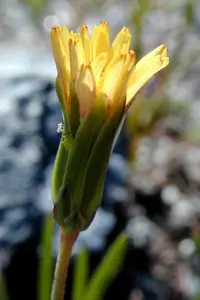
Douglas' silverpuffs (Microseris douglasii) is a small annual wildflower from grasslands and open slopes of western North America, especially California. It forms low rosettes of narrow leaves and sends up slender stems topped with yellow, dandelion-like flower heads that turn into soft, silvery seed puffs. In gardens, it behaves as a delicate seasonal accent, often completing its life cycle as conditions dry and heat up. It is generally easy to grow where winters are cool and moist and summers are dry, especially in well-drained, low-fertility soil. Those who want to learn how to care for Douglas' silverpuffs should consider its preference for sunny, open sites that mimic its natural habitat.

Main Plant Requirements

Care Difficulty

Moderate Care

Light Preference

Full Sun

Water Requirements

Low Water

Temperature Preference

Cool Climate

Hardiness Zone

6–10

Soil Texture

Sandy, Loamy, Rocky

Soil pH

Slightly acidic (6.5–7.0), Neutral (7.0)

Soil Drainage

Well-drained

Fertilization

Minimal (feed rarely)

Get Personalized Care Plan

Scan your plant to receive care tips personalized for your specific plant

Available on iOS and Android

How to Care for the Douglas' silverpuffs

This species prefers open, sunny sites similar to its native grassland habitat.

  • Provide 6–8 hours of direct sun daily; morning sun with light afternoon shade works well in hot, inland areas.
  • Tolerates light partial shade (3–4 hours sun), but flowering and compact growth decline if shaded for longer periods.
  • In very hot summers, strong afternoon sun can scorch leaves of Douglas' silverpuffs on dry, shallow soils, so use neighboring plants or terrain for slight shade protection.

This shallow-rooted annual prefers moist winters and springs followed by drier summer conditions.

  • Allow the top 3–5 cm of soil to dry between waterings during active growth, then water deeply so excess drains away quickly.
  • Reduce or stop watering once foliage yellows and seeds mature, as Microseris douglasii naturally dries down and excess moisture can cause root rot.
  • Signs of overwatering include soft, collapsing stems and a sour soil smell; drought stress shows as limp, dull leaves that recover after a thorough soak.

This species is adapted to mild, wet winters and warm, dry summers in Mediterranean-type climates.

  • Optimal growth occurs in cool to mild weather around 50–70°F (10–21°C), especially during germination and rosette development.
  • Plants tolerate light frost down to about 25°F (−4°C) once established, but repeated hard freezes below this can damage foliage and reduce flowering.
  • During hot spells above 90°F (32°C), growth slows; established plants usually survive if soil is not waterlogged and roots can remain slightly moist but not saturated.

This dryland perennial prefers low to moderate ambient humidity and rarely needs special humidity management.

  • Aim for 30–50% humidity, similar to most heated indoor homes or dry outdoor summer air.
  • Douglas' silverpuffs tolerates dry air well, but prolonged humidity above 60% can promote leaf spots or crown rot.
  • If grown in very humid regions, increase air movement around plants and avoid crowding to reduce moisture lingering on foliage.

This species prefers lean, fast-draining soil that mimics open grassland or rocky slope conditions.

  • Use a gritty mix such as 50–60% sandy or loamy soil combined with 40–50% coarse material like pumice, perlite, or small gravel for strong drainage.
  • Maintain slightly acidic to neutral pH around 6.0–7.0, avoiding heavy liming or strongly acidic peat-based mixes without mineral amendment.
  • Incorporate only a thin layer of compost, as overly rich organic soil encourages weak, lush growth prone to disease and lodging.
  • Avoid compacted clay or poorly drained beds; raise the planting area or use mounded rows to improve aeration and prevent standing water around Microseris douglasii roots.

This species can be grown in containers if the pot is prepared to stay sharply drained and not overly rich.

  • Choose a container at least 20–25 cm deep to accommodate the taproot and prevent deforming storage roots.
  • Select unglazed terracotta or another porous material to help excess moisture evaporate quickly between waterings.
  • Elevate the pot on feet or bricks so drainage holes stay clear and water does not pool under the container after rain or irrigation.

Microseris douglasii is adapted to lean soils and needs very little supplemental nutrition in garden settings.

  • In average garden soil, rely mainly on a thin top-dressing of compost in early spring rather than synthetic products.
  • Where growth is weak, apply a balanced NPK fertilizer at 1/4–1/2 strength once at the start of the growing season.
  • Avoid feeding during summer dormancy or winter, as inactive roots cannot use extra nutrients and may be damaged.

Pruning needs for Microseris douglasii are minimal and focus on tidiness rather than shaping.

  • In late spring or once flowering finishes, remove spent flower stalks with clean scissors to reduce unwanted self-seeding.
  • Gently pull or clip away dead or yellowing leaves at the base to limit fungal issues and keep the clump neat.
  • Avoid heavy cutting into green, active foliage, as this short-lived perennial focuses energy on its roots and seeds.

This species is usually grown in the ground, so care focuses more on careful transplanting than on frequent repotting.

  • Transplant young plants in early fall or very early spring, when temperatures are mild and soil is evenly moist.
  • Choose a sunny, well-drained site; loosen soil 15–20 cm deep to accommodate the taproot with minimal bending.
  • Lift seedlings with a trowel, keeping as much soil around the root as possible to limit shock.
  • After transplanting, water gently but thoroughly, then keep soil lightly moist until new growth confirms establishment.

Propagation of Microseris douglasii is most reliable from seed, reflecting its natural life cycle in the wild.

  • Collect seeds when seed heads are dry and fluffy, then store in a cool, dry place until sowing.
  • Sow in fall outdoors or in late winter under cool conditions to allow natural or light cold stratification.
  • Use a gritty, well-drained mix, pressing seeds lightly into the surface and keeping moisture even but not waterlogged.
  • Thin crowded seedlings to reduce competition, then transplant carefully while still small to preserve the developing taproot.

Douglas' silverpuffs is relatively cold tolerant in its native range and generally needs little deliberate winter care.

  • In mild climates, allow foliage to die back naturally, leaving the crown undisturbed in well-drained soil.
  • In areas with wet winters, prioritize drainage; avoid waterlogged sites that can rot the dormant root system.
  • Container-grown plants in colder zones can be moved to a cold, bright, frost-free spot and watered very sparingly.

Care Tips

Mimic natural dormancy

Allow foliage to yellow and dry naturally after flowering in late spring, then stop watering and keep containers dry over summer to mimic the plant’s natural dry-season dormancy.

Deep container setup

If growing in pots, use tall, narrow containers or deep plugs to accommodate the long taproot and reduce the risk of deformation or root stress.

Careful transplant timing

Transplant only very young seedlings at the 2–4 true leaf stage, moving the entire root plug without disturbing the taproot to avoid transplant shock.

Seed stratification aid

For more reliable germination, place cleaned seeds in slightly moist sand in a labeled bag and refrigerate for 4–6 weeks before sowing in late fall.

Self-seeding management

If you want the population to expand, leave some seed heads to mature and fall naturally, but if controlling spread is important, deadhead faded blooms before the seed parachutes fully develop when caring for Douglas' silverpuffs.

Common Pests and Diseases

Aster leafhopper

This pest is a small, wedge-shaped insect that migrates through native grasslands and can feed on Douglas' silverpuffs, weakening growth and transmitting pathogens such as aster yellows phytoplasma. Symptoms include pale, stunted foliage and distorted flower stalks.

Solution

Monitor plants in spring for small, jumping insects on leaves and stems, and reduce nearby lush weed growth that attracts leafhoppers. Where pressure is high, use fine insect netting over valuable stands and remove and destroy any clearly infected, deformed plants to limit spread of aster yellows in future seasons.

Aster yellows

This disease is caused by a phytoplasma spread by leafhoppers and can infect Microseris douglasii in mixed native plantings. Symptoms include yellowing, rosetting foliage, stunted plants, and misshapen or sterile flower heads.

Solution

Promptly remove and discard any plants showing strong aster yellows symptoms, including the root, to reduce the local source of infection. Limit leafhopper activity by keeping surrounding vegetation less congested, and avoid overhead irrigation that encourages dense, succulent growth highly attractive to vector insects.

Powdery mildew

This disease occasionally affects Douglas' silverpuffs in crowded or irrigated plantings, producing white, powdery patches on leaves and stems. Symptoms include dull, grayish foliage, reduced vigor, and premature leaf drop in late season.

Solution

Improve air circulation by avoiding overcrowding and by removing dense neighboring vegetation, and water at soil level rather than overhead to keep foliage dry. If needed, apply a sulfur or potassium bicarbonate spray labeled for ornamental natives at the first sign of mildew, repeating as directed until new growth stays clean.

Aphids

These insects cluster on tender stems and undersides of leaves, sucking sap and excreting sticky honeydew that can attract sooty mold. Symptoms include curled or deformed leaves and reduced flower production, especially in nutrient-rich or irrigated sites.

Solution

Dislodge colonies with a firm stream of water and encourage natural predators such as lady beetles by avoiding broad-spectrum insecticides nearby. On persistent colonies, spot-treat with insecticidal soap or a light horticultural oil, coating the insects thoroughly and repeating as needed according to Microseris douglasii care guidelines for low-input native plantings.

Interesting Facts

Spring annual strategy

This species behaves as a cool-season annual in much of its range, germinating with winter rains in western North America and completing its life cycle by late spring before soils fully dry.

Taproot drought coping

The plant develops a relatively deep taproot for its small size, allowing it to access moisture in well-drained, seasonally dry grasslands and foothill habitats.

Specialist grassland resident

It is characteristic of open, often serpentine or nutrient-poor grasslands in California and the Pacific Northwest, where it contributes to early-season floral diversity before taller vegetation shades the ground.

FAQs about Douglas' silverpuffs

This species behaves as a cool-season annual or short-lived perennial, depending on climate and subspecies. Many garden forms act as annual wildflowers, germinating with fall or winter rains and completing their life cycle by late spring or early summer.

Grow Healthy Plants with Botan Care

Keep your plants happy and healthy with plant identification, disease detection, and easy care guidance.

Botan plant care app — identify plants on mobile

Explore More Plants