Establish firebreaks
In fire-prone areas, maintain a 1.5–3 m cleared, nonflammable strip around plant groupings to reduce fuel load and protect trunks from heat damage during wildfire or controlled burns.

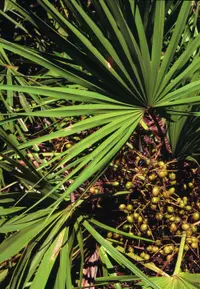
Saw palmetto, Serenoa repens, is a slow-growing, clumping palm native to the southeastern United States, especially Florida’s sandy coastal plains and pine flatwoods. It forms dense, low thickets with fan-shaped, stiff fronds and a shrubby, sprawling habit rather than a tall trunk. The plant is long-lived and tolerant of poor, dry, and sandy soils, which makes it resilient but slow to establish in garden settings. It prefers sun to light shade and good drainage, and once settled, it tolerates drought and wind well. These traits make it relatively low-maintenance in suitable climates, as long as conditions match its natural habitat and you understand how to care for saw palmetto.

Care Difficulty
Easy Care

Light Preference
Full Sun

Water Requirements
Low Water

Temperature Preference
Warm Climate

Hardiness Zone
8–11

Soil Texture
Sandy, Loamy, Rocky

Soil pH
Acidic (5.5–6.5), Slightly acidic (6.5–7.0)

Soil Drainage
Well-drained

Fertilization
Minimal (feed rarely)
Scan your plant to receive care tips personalized for your specific plant
Available on iOS and Android
This slow-growing palm prefers bright, direct sun but copes with some shade once established.
This species is drought-tolerant once established but benefits from thoughtful watering in the first years.
This palm is adapted to warm climates but withstands more cold than many other palms.
Serenoa repens handles a wide humidity range and usually does not need special humidity control indoors or outdoors.
Serenoa repens thrives in loose, fast-draining, sandy substrates that never stay waterlogged.
This species can be grown in containers, but requires careful attention to stability and drainage.
Serenoa repens grows slowly and usually needs only light supplemental nutrition in poor or long-cultivated soils.
Pruning for Serenoa repens is minimal and mainly cosmetic, aimed at maintaining safety and a tidy clump.
Transplanting saw palmetto is challenging due to its deep, fibrous root system and slow recovery after disturbance.
Propagation of Serenoa repens is slow and technically demanding, so it is not commonly attempted by home growers.
This palm is relatively cold hardy for a subtropical species and usually needs little winter care in mild climates.

Plant Health Check
Not sure what's wrong with your plant? Check your plant's health inside the app.
Serenoa repens is one of the most abundant native palms in the southeastern United States, forming vast, nearly monospecific thickets in pine flatwoods and coastal scrub habitats.
Its creeping, often underground stem and ability to resprout from protected buds allow this species to survive and persist in landscapes that experience frequent, low-intensity fires.
The fruits and dense foliage provide food and shelter for many animals, including black bears, white-tailed deer, gopher tortoises, and numerous birds and insects, making it an important structural and nutritional component of its ecosystems.

Individual clumps of Serenoa repens can be extremely long-lived, with some genetic individuals estimated from growth and fire-history studies to be several hundred years old, effectively functioning as ancient, slowly creeping shrubs in their native landscapes.
Leaf tips or entire fronds brown from old age, drought stress, salt spray, or fertilizer burn. Check soil moisture, flush excess salts with thorough watering, and remove only fully dead fronds to reduce stress.
Keep your plants happy and healthy with plant identification, disease detection, and easy care guidance.